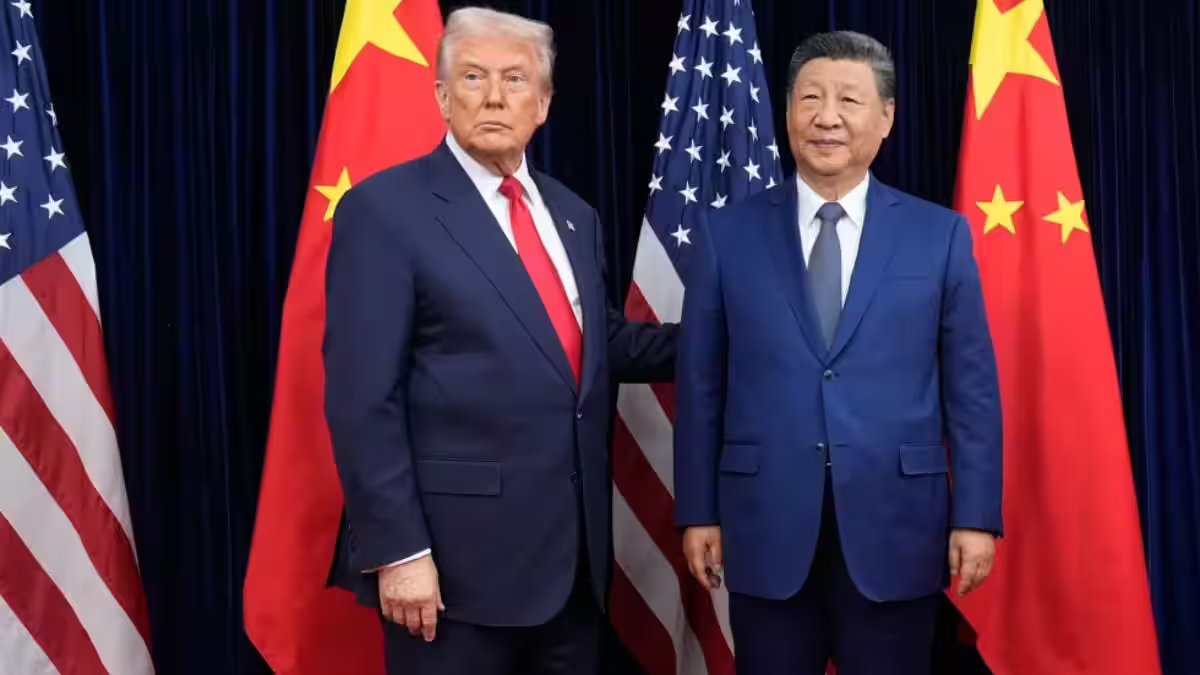
US Supreme Court invalidates Trump’s broad tariffs on China, giving Xi Jinping stronger leverage ahead of the March 31 Beijing summit. Analysts say it weakens US position in trade negotiations.
President Donald Trump approaches his first visit to Beijing since his 2017 trip on March 31 with reduced bargaining power following a pivotal US Supreme Court decision striking down his administration’s sweeping emergency tariffs on China.
The ruling, which invalidated tariffs that had spiked to as high as 145 per cent last year, reverts duties to a uniform 15 per cent rate applied globally including to US allies with a 150-day expiration looming. This shift hands Chinese President Xi Jinping a strategic advantage, stripping Trump of his signature tool to pressure Beijing on issues like soybean purchases, Boeing jets, energy imports and rare earth metal supplies critical to American manufacturing.
The tariffs, imposed under emergency powers, were central to Trump’s trade warfare playbook in his second term, aiming to force concessions amid escalating tensions over technology transfers, intellectual property theft and market access.
Now, with these levies neutralised, Trump lacks the immediate threat of escalation, complicating efforts to extract commitments from Xi. Short-term relief may come for US exporters facing retaliation but long-term dynamics favour China as Beijing conducts talks without the sword of higher duties hanging overhead.
The judicial blow to ‘tariff diplomacy’
The foundation of Trump’s “America First” trade strategy, the aggressive use of executive power to impose sweeping tariffs—hit a significant legal roadblock. The US Supreme Court’s ruling which questioned the procedural validity of certain duty hikes has forced a tactical retreat by the White House. This judicial pivot has not only paused the immediate economic pressure on Chinese exports but has also signalled a vulnerability in Trump’s domestic policy execution.
For Beijing, this is more than a legal victory; it is a diplomatic lifeline. By entering the summit without the immediate threat of escalating duties hanging over the negotiation table, Xi Jinping is no longer operating from the defensive posture that characterised the early months of the Trump 2.0 administration. Analysts suggest that the reversal has effectively “disarmed” the US side of its most potent short-term weapon, allowing China to demand concessions rather than merely offering them to avoid economic pain.
Before the ruling, Trump could use the threat of broad tariffs to extract commercial concessions on issues such as soybean purchases, aircraft sales and rare earth minerals, leverage that now appears diminished. “If those tariffs are now deemed illegal, the ‘soybean card’ is back in China’s hand,” said a China policy expert, highlighting the reversal in strategic leverage.
China’s calculated response
Despite the apparent strengthening of its position, Beijing has been measured in its early response to the tariff reversal. Official statements were notably restrained, and state media coverage focused on themes of cooperation and stability ahead of the meeting. Analysts suggest that while China stands to benefit from diminished US leverage, its leadership is likely to calibrate its diplomatic tone to ensure smooth talks in April.
Observers note that China could use its strengthened hand to press for expanded access to semiconductors, fewer trade restrictions on Chinese tech firms and more favourable language on sensitive issues such as Taiwan, topics expected to surface during bilateral discussions. Also, China may leverage ongoing investigations under Section 301 against its trade conduct to counterbalance US pressure, a strategy that could feature in summit agendas.
A new blueprint for US-China relations?
The implications of this newfound leverage extend beyond the immediate summit. The tariff reversal has exposed the limits of unilateral executive action in the US trade system, potentially forcing the Trump administration to seek a more traditional, negotiated settlement. For China, the goal is clear: to secure a “grand bargain” that stabilises the relationship on terms that recognize China’s economic sovereignty.
However, the road ahead remains fraught. While Xi holds the upper hand regarding the tariff ruling, the Trump administration remains committed to decoupling in critical sectors like AI and semiconductors. The upcoming summit will determine if this leverage can be converted into a long-term strategic advantage for China, or if it is merely a temporary reprieve in an otherwise escalating cold war. For now, the momentum has undeniably shifted toward the East, leaving the White House to recalibrate its approach before the two leaders sit across from each other.
End of Article