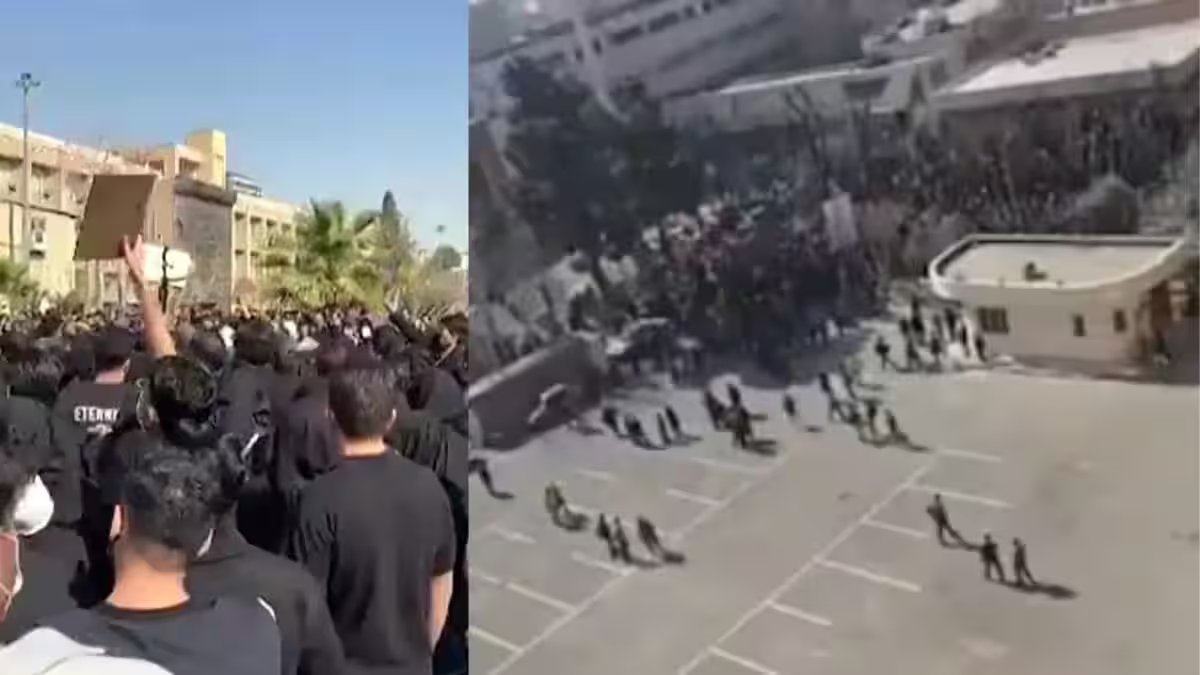
Iranian universities have become the front line of a massive new protest movement as students defy a brutal government crackdown and morality policing. This surge of domestic anger comes at the worst possible time for Tehran, as the Trump administration deploys a powerful naval “armada” to the region and issues a strict 15-day deadline for a new nuclear deal
As the new university term commences across Iran, the familiar sound of rhythmic chanting and organised dissent has once again filled campus squares. Thousands of students at multiple leading institutions held protests, the first such rallies on this scale since last month’s
crackdown by the authorities.
The protests come as the Iranian leadership faces a “perfect storm” of internal defiance and external pressure. In Washington, the Trump administration has intensified its “maximum pressure” campaign, issuing a series of diplomatic deadlines regarding Iran’s nuclear programme while simultaneously ramping up military strike groups in the Persian Gulf.
A convergence of grievances
The driving forces behind the current unrest are multifaceted, blending social outcries with economic desperation. Students are primarily protesting the renewed enforcement of morality policing on campuses and the installation of advanced surveillance systems designed to monitor student activity. Furthermore, the continued detention of student activists from previous waves of unrest remains a central rallying cry.
However, the anger is not limited to civil liberties. Iran’s suffocating economic climate—characterised by runaway inflation and a bleak job market for graduates—has left the youth feeling they have little to lose. “We study for a future that does not exist,” read one placard at Tehran University.
The historical cradle of dissent
The significance of these campus demonstrations cannot be understated. Universities have historically been the starting point of Iranian protest movements—including the 1999 student unrest and the nationwide demonstrations following the death of
Mahsa Amini in 2022.
However, security analysts are closely monitoring the “contagion” factor. While the protests are currently contained within academic walls, the critical watchpoint is whether the movement spreads beyond campuses into the traditional bazaars or among powerful labour unions. If the merchant class and industrial workers join the students, the Iranian authorities are expected to pivot from campus containment to a much more aggressive, nationwide security crackdown.
The shadow of the blackout
The memory of the state’s previous responses looms large over the current demonstrations. During the last major wave of unrest, Iran imposed a prolonged internet blackout to stifle coordination and mask the scale of the state’s response.
Human rights organisations allege that thousands of protesters were killed during that period of enforced silence. As the current term begins, many fear that a similar digital iron curtain may descend if the protests continue to gain ground.
End of Article