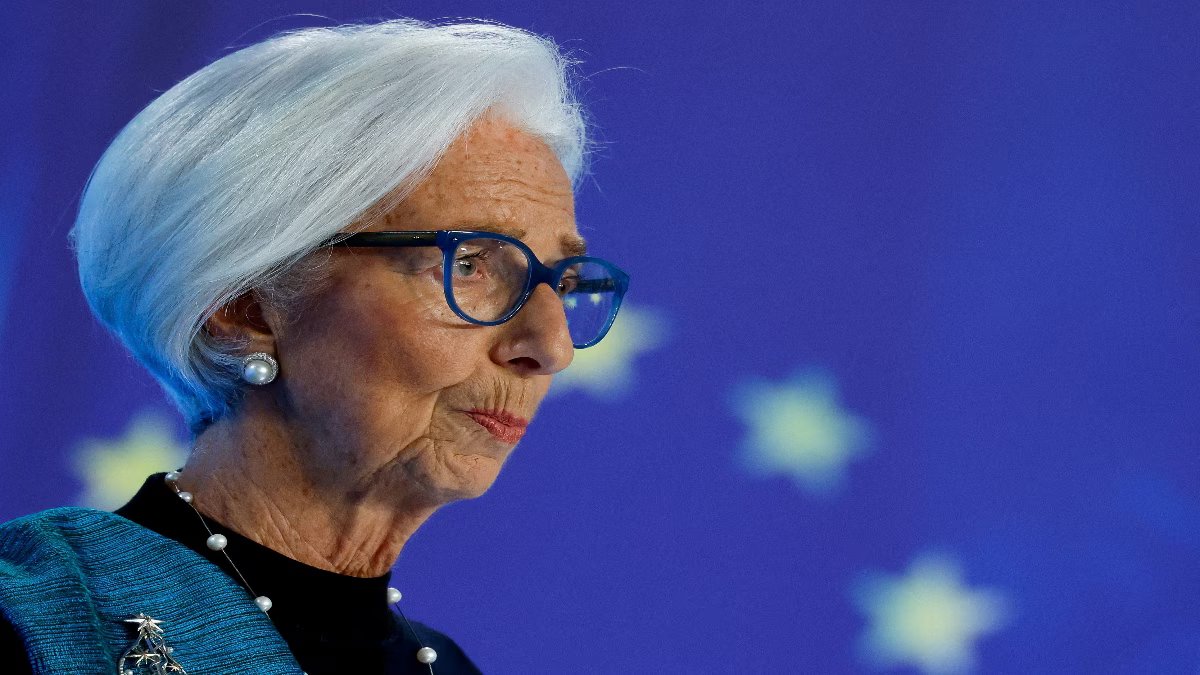
The ECB chief’s position came under scrutiny this week after the Financial Times reported she was considering leaving before next year’s French presidential election, potentially allowing outgoing President Macron to influence the selection of her successor.
Christine Lagarde sought to quell speculation about an early departure from her role as European Central Bank president, telling The Wall Street Journal that she expects to complete her term.
The ECB chief’s position came under scrutiny this week after the Financial Times reported she was considering leaving before next year’s French presidential election, potentially allowing outgoing President Emmanuel Macron to influence the selection of her successor.
In her interview to The Wall Street Journal on Thursday, Lagarde downplayed speculation of an imminent exit but did not completely rule out the possibility of leaving before her contract ends in October 2027.
“When I look back at all these years, I think that we have accomplished a lot, that I have accomplished a lot,” she told the paper. “We need to consolidate and make sure that this is really solid and reliable. So my baseline is that it will take until the end of my term.”
Lagarde has reassured fellow policymakers that she remains focused on her role at the European Central Bank and that any decision to step down would come directly from her, according to Reuters.
The ECB said Lagarde has not made a decision on the end of her term, stopping short of denying the Financial Times report.
Analysts warn that an early exit could embroil the ECB in European politics, potentially limiting input from France’s eurosceptic far right ahead of next year’s presidential election.
Lagarde had said last year she intended to complete her term, a pledge she did not repeat this week. The uncertainty follows Bank of France Governor Francois Villeroy de Galhau’s announcement that he will step down, giving President Macron a chance to select the next French central bank chief — a move criticised by the far-right as anti-democratic.
The situation coincides with US President Donald Trump’s attacks on the Federal Reserve, fueling broader debates over central bank independence.
“After the recent events in the US, this is another reminder that although central banks are nominally independent, who leads them and their worldview is a matter for high politics,” Reuters quoted economists at Oxford Economics as writing on Friday.
As head of the eurozone’s second-largest economy, the French president plays a key role in ECB leadership selections. Polls show either National Rally leader Marine Le Pen or her protege Jordan Bardella could win next year’s election.
While the party has dropped calls for France to leave the euro, it remains an unknown factor in central banking circles.
Lagarde told the WSJ her mission is price and financial stability and “protecting the euro, making sure that it is solid and strong and fit for the future of Europe.” She added that the World Economic Forum was “one of the many options” she is considering after leaving the ECB.
When her name first surfaced as a potential ECB president in 2019, Lagarde said she had no interest in the role and would not leave the International Monetary Fund, where she was managing director.
With inputs from agencies
End of Article