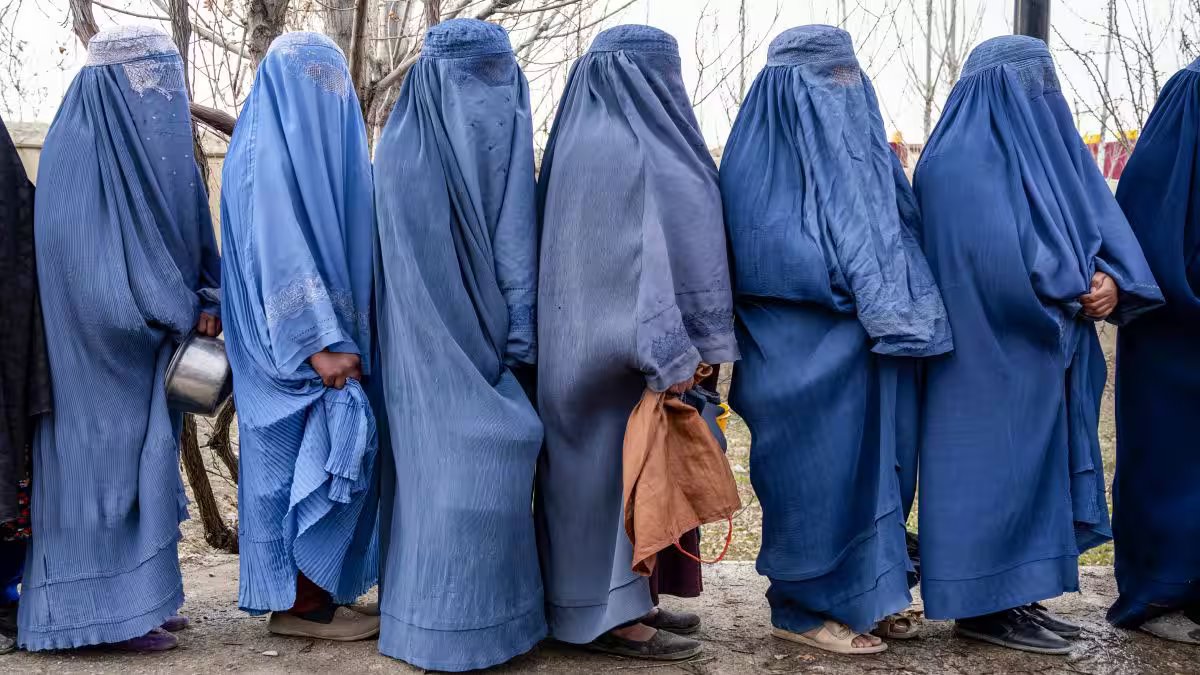
According to a new penal code issued by the regime, men can beat up their wives as long as “bones are not broken”, or the violence causes “open wounds”. The directive also includes children who can be subjected to violence by men
With each passing day, Afghanistan is becoming a grim place for its women, who are already the most suppressed gender living under an authoritarian regime. In a shocking development, the Taliban government has legalised domestic violence against women, but conditions apply.
According to a new penal code issued by the regime, men can beat up their wives as long as “bones are not broken”, or the violence causes “open wounds”. The directive also includes children who can be subjected to violence by men.
The criminal code is signed by Supreme Leader Hibatullah Akhundzada and lays down different levels of penalties based on whether an offender is considered “free” or “a slave, according to The Independent.
Wife required to prove physical abuse
The code does not specifically outlaw psychological or sexual violence against women, creating major gaps in legal safeguards.
Offenders face a maximum sentence of 15 days in prison, and only in cases involving what the code terms “obscene force,” such as visible fractures or other serious injuries.
Even when abuse reaches that level, a conviction hinges on the wife proving it in court by presenting evidence of her injuries to a judge, a process that is nearly impossible under Taliban-imposed restrictions. Also, the wife has to be present with her husband or male guardian, even if the abuser is her spouse.
What else do the new codes say?
The codes reinforce the rule that requires women to stay fully covered in public. Married women can now be jailed if they visit their relatives’ homes without their husbands’ permission, including when they have escaped from their homes.
The law effectively reduces wives to the “property” of their husbands and rolls back previous legal safeguards, including the Elimination of Violence Against Women (EVAW) law enacted in 2009 under the former US-backed administration. That legislation had criminalised practices such as forced marriage, rape and other forms of gender-based violence.
End of Article