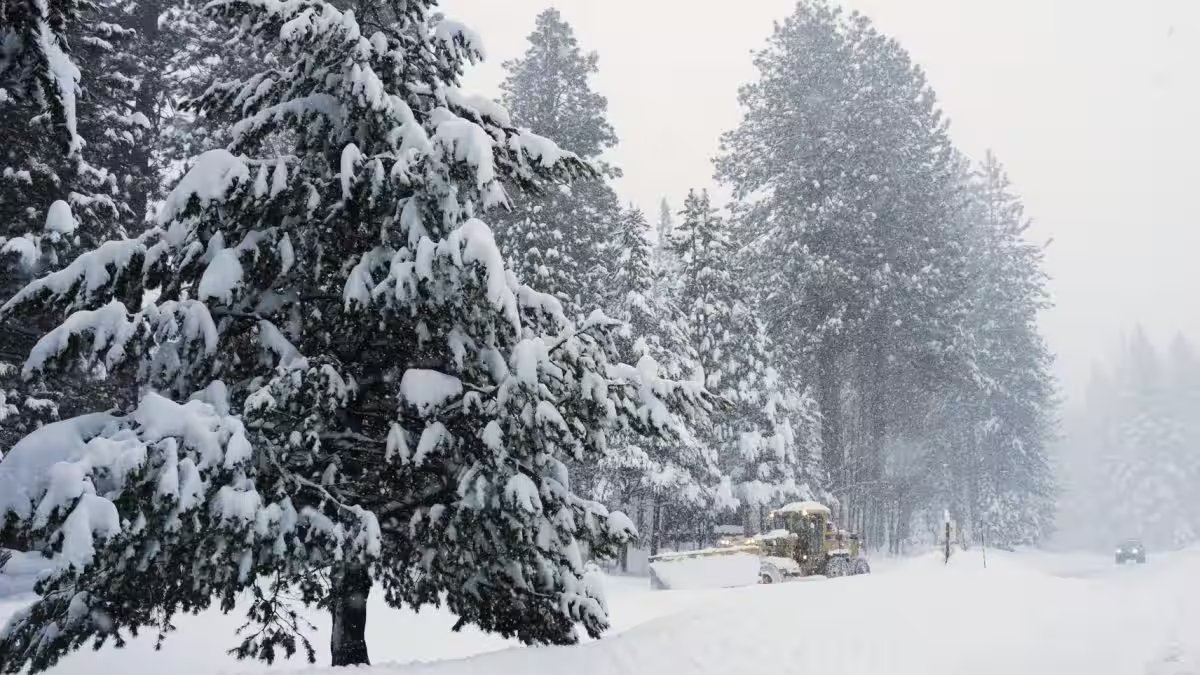
Six backcountry skiers remained stranded high in the Northern California mountains on Tuesday after an avalanche struck near Frog Lake in the Castle Peak area, northwest of Lake Tahoe, leaving 10 others missing and prompting a major rescue effort amid blizzard conditions and the threat of further slides.
Emergency crews on skis and snowcats were deployed after a 911 call was made at about 11:30 a.m. reporting that people had been buried in an avalanche as a powerful winter storm swept through the state.
Ashley Quadros, spokesperson for the Nevada County Sheriff’s Office, said hours later that six skiers had been located and were advised to shelter in place “as best they can” until rescuers reach them.
Group on final day of three-day trip
The skiers were on the final day of a three-day backcountry trip, according to Steve Reynaud, an avalanche forecaster with the Sierra Avalanche Center in Tahoe National Forest. His team has been in contact with people on the ground in the area.
Reynaud said the group had spent two nights in huts and navigated “rugged mountainous terrain” on backcountry skis for up to 4 miles (6.4 kilometers), carrying all necessary food and supplies.
Nevada County Sheriff Capt. Russell Greene said authorities were alerted to the avalanche by the ski tour company that brought the group to Castle Peak, as well as by emergency beacons carried by the skiers.
The skiers are communicating with officials through the beacons, which can send text messages, Greene told KCRA-TV.
“They are doing the best they can. They have taken refuge in an area, they have made up a makeshift shelter with a tarp and are doing everything they can to survive and wait for rescue,” Greene said.
He added that rescue teams are proceeding carefully due to the high risk of triggering additional avalanches.
“We have brought in snowcats. We have snowmobiles on standby. We have individuals on skis. We have several different ways that people are attempting to get there,” he said. “It’s just going to be a slow, tedious process.”
Backcountry conditions remain dangerous
Blackbird Mountain Guides, the company leading the trip, said on its website that it was coordinating with authorities on the rescue. The group consisted of 12 clients and four guides.
California is being hit by a powerful winter storm bringing severe thunderstorms, strong winds and heavy snowfall in mountain regions.
“It’s particularly dangerous in the backcountry right now just because we’re at the height of the storm,” said Brandon Schwartz, lead avalanche forecaster at the Sierra Avalanche Center in Truckee.
The centre issued an avalanche warning for the Central Sierra Nevada, including the Greater Lake Tahoe region, from 5 a.m. Tuesday, with large slides expected through Wednesday.
Forecasters attributed the hazardous conditions to rapidly accumulating snowfall layering on top of fragile snowpack, combined with gale-force winds.
Several ski resorts around Lake Tahoe were fully or partially closed due to extreme weather. Resorts along highways operate avalanche mitigation programmes and were not expected to face the same level of risk as the backcountry, where travel in, near or below avalanche terrain was strongly discouraged, the centre said.
Storm impact spreads across region
Castle Peak, a 9,110-foot (2,777-meter) summit in the Donner Summit area of the Sierra Nevada, is a popular destination for backcountry skiing. Donner Summit, known for hazardous winter conditions, takes its name from the Donner Party, a group of pioneers who became trapped there in the winter of 1846-1847.
Backcountry skiing, also referred to as off-piste skiing, requires training in avalanche assessment and rescue, along with appropriate safety equipment. Unlike cross-country skis, backcountry skis are wider and heavier, designed to handle ascents and descents on ungroomed terrain.
In the nearby town of Soda Springs, at least 30 inches (76 centimeters) of snow fell within 24 hours, according to the Soda Springs Mountain Resort.
Forecasters said the western slope of the Sierra Nevada in northern Shasta County, including parts of Interstate 5, and sections of the Pacific Coast Range could receive up to 8 feet (2.4 meters) of snow before the storm clears late Wednesday.
The storm disrupted road travel from Sonoma County to the Sierra Nevada. Traffic was temporarily halted in both directions on I-80 near the Nevada state line due to spinouts and crashes, the California Department of Transportation reported.
In January, an avalanche in the region buried and killed a snowmobiler, authorities said. Each winter, 25 to 30 people die in avalanches in the US, according to the National Avalanche Center.
End of Article