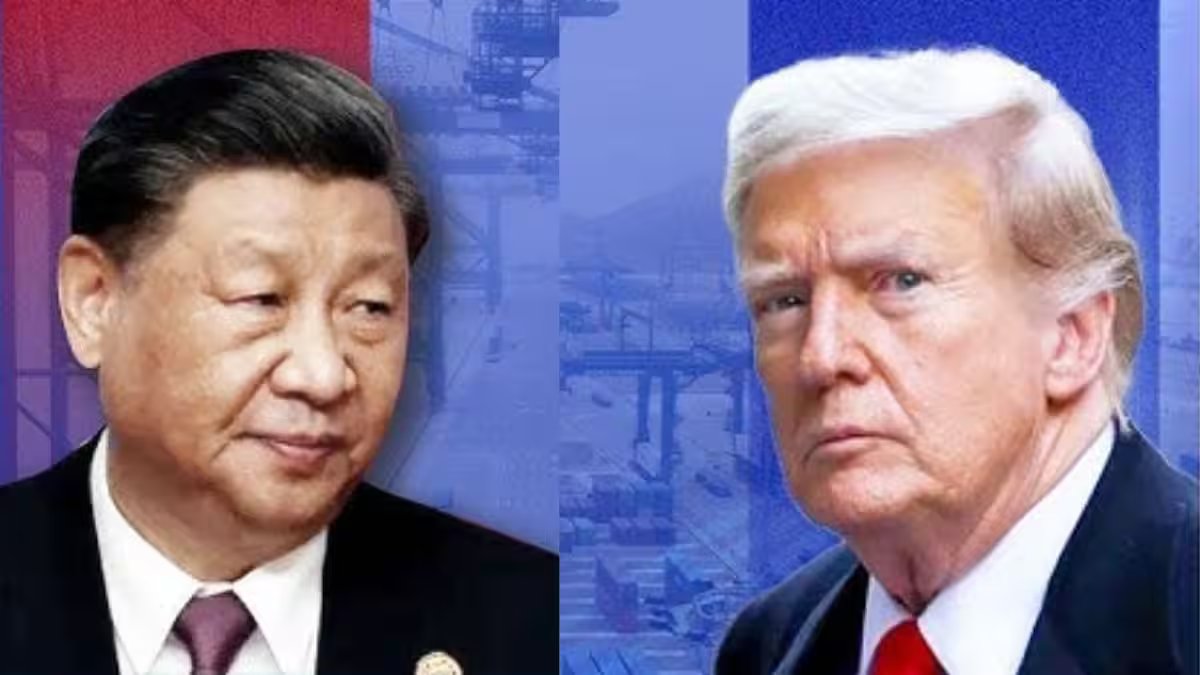
The US says it is ready to resume low-yield nuclear testing to match alleged Chinese and Russian explosions, raising fears of a renewed nuclear arms race after treaty limits expired
The United States has signalled it is prepared to resume low-yield nuclear testing, potentially ending a moratorium in place since 1992, as tensions grow with China and Russia over alleged secret nuclear explosions.
Christopher Yeaw, assistant secretary of state for arms control and nonproliferation, said Washington was ready to act if needed, echoing earlier remarks by Donald Trump.
“As the president has said, the United States will return to testing on a – quote – ’equal basis,’” Yeaw said at the Hudson Institute.
“But equal basis doesn’t mean we’re going back to Ivy Mike-style atmospheric testing in the multi-megaton range, as some arms control folks would have you believe, hyperventilating about this issue,” he added.
“Equal basis, however, presumes a response to a prior standard. Look no further than China or Russia for that standard,” he continued.
Treaty collapse raises stakes
The warning comes after the expiration of the New START, the last remaining treaty limiting US and Russian nuclear warhead deployments. Trump has called for a broader agreement that would also include China, which has so far resisted joining such negotiations.
Yeaw did not specify when testing might resume but made clear Washington would not tolerate strategic disadvantage.
“We’re not going to remain at an intolerable disadvantage,” he said, adding that any testing would occur on a “level playing field.”
The US last conducted a full nuclear test in 1992 but has since relied on subcritical experiments to maintain its arsenal without triggering full nuclear detonations.
China allegations spark escalation
US officials have accused China of
secretly conducting low-yield nuclear tests, including one allegedly detected in 2020. Yeaw pointed to seismic data recorded in Kazakhstan showing a 2.75-magnitude underground explosion.
“There is very little possibility, I would say, that it is anything but an explosion, a singular explosion,” he said.
China has rejected the allegations outright, calling them “outright lies” and accusing Washington of using them as justification to restart nuclear testing.
Meanwhile, Russia has also faced US accusations of conducting similar tests, further raising fears of a renewed nuclear arms race.
International monitors, including the Comprehensive Nuclear-Test-Ban Treaty Organisation, said they “did not detect any event consistent with the characteristics of a nuclear weapon test.” However, the agency noted its systems have limits in detecting very low-yield explosions.
Yeaw criticised the monitoring body, saying it should “reassess priorities” if it cannot identify smaller tests.
“The treaty becomes basically a fig leaf,” he said.
The treaty banning nuclear tests has yet to fully enter force, and renewed testing by major powers could mark a dramatic escalation in global nuclear tensions.
End of Article