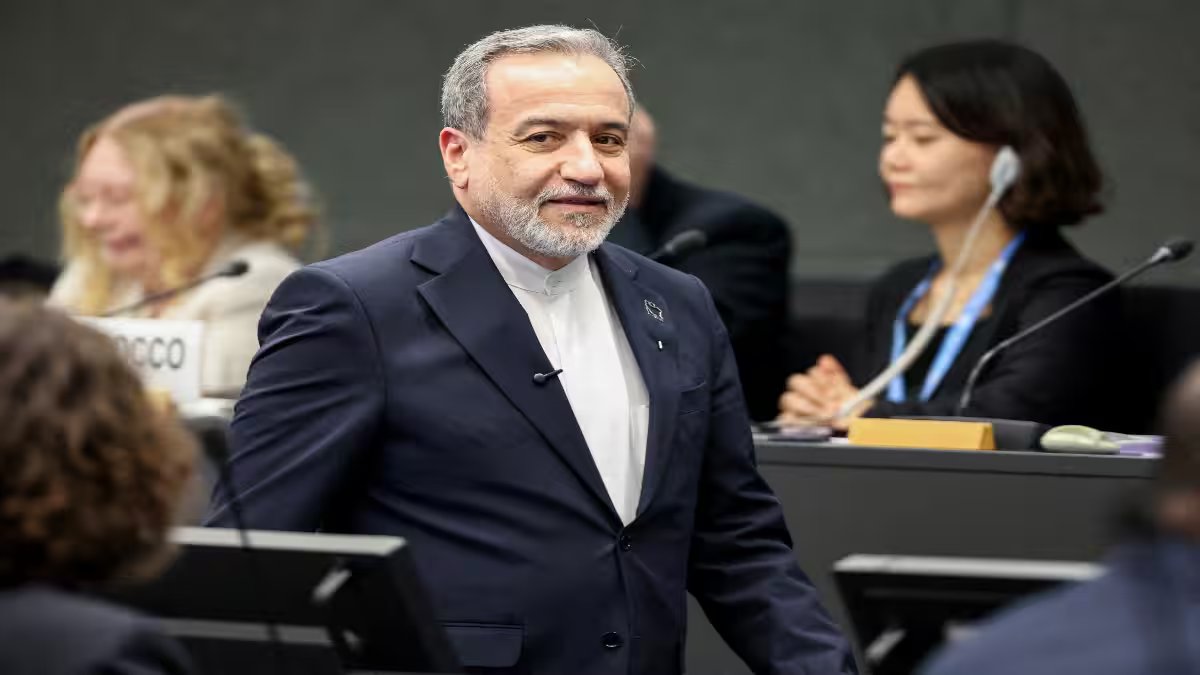
“…Ultimately we’ve been able to reach a general agreement on some guiding principles, from now on we will move based on those principles and enter the text of a potential agreement,” said Iranian Foreign Minister Abbas Araqchi
Iran and the United States reached an understanding on the main “guiding principles” during a second round of indirect talks over their nuclear dispute on Tuesday.
However, Iranian Foreign Minister Abbas Araqchi cautioned that this development does not signal an imminent deal.
“Different ideas have been presented, these ideas have been seriously discussed, ultimately we’ve been able to reach a general agreement on some guiding principles, from now on we will move based on those principles and enter the text of a potential agreement,” Reuters quoted Araqchi as telling Iranian media after the talks concluded in Geneva.
After the exchange of documents the two sides will decide on a date for a third round of negotiations, he said.
The United States has deployed a battle force to the Middle East to pressure Tehran in the decades-long nuclear dispute, with President Donald Trump suggesting that “regime change” in Iran could be the best outcome.
Earlier, Iranian state media reported that Tehran would temporarily close part of the strategic Strait of Hormuz amid ongoing nuclear talks. Supreme Leader Ayatollah Ali Khamenei warned that any US attempts to overthrow his government would fail.
Oil markets reacted, with Brent crude futures dropping more than 1% afterAraqchi said the talks had created a “new window of opportunity.”
Speaking at a disarmament conference in Geneva, Araqchi expressed hope for a “sustainable” solution that would fully recognise Iran’s legitimate rights.
US envoy Steve Witkoff and Jared Kushner took part in the Geneva talks, which were mediated by Oman, Reuters quoted a source as saying.
Earlier, President Trump said he would be involved “indirectly” in the negotiations and expressed confidence that Tehran was interested in reaching an agreement.
“I don’t think they want the consequences of not making a deal,” Trump told reporters aboard Air Force One on Monday. “We could have had a deal instead of sending the B-2s in to knock out their nuclear potential. And we had to send the B-2s.”
Last June, the United States joined Israel in striking Iranian nuclear facilities.
Khamenei warns US amid Geneva nuclear talks
Since last year’s strikes on Iranian nuclear facilities, Tehran has faced widespread protests over a cost-of-living crisis worsened by sanctions, leaving thousands dead.
Just after the Geneva talks began, 86-year-old Supreme Leader Ayatollah Ali Khamenei said Washington could not topple his government, which has ruled since the 1979 Islamic Revolution.
“The US President says their army is the world’s strongest, but the strongest army in the world can sometimes be slapped so hard it cannot get up,” Reuters quoted Khamenei as saying to Iranian media.
Washington has pushed to expand negotiations to include Iran’s missile stockpile, but Tehran insists it will only discuss nuclear curbs in exchange for sanctions relief. Khamenei reiterated that Iran’s missile arsenal is non-negotiable.
A senior Iranian official told Reuters that the talks’ success depends on the US making realistic demands and demonstrating seriousness in lifting crippling sanctions.
Tuesday’s meeting, held at the Omani ambassador’s residence in Geneva, came amid heightened security. Iranian state media reported temporary closures of parts of the Strait of Hormuz as Revolutionary Guards conducted drills.
The US military is reportedly preparing for possible weeks of operations against Iran if President Trump orders an attack, while Tehran has halted uranium enrichment since last year’s US-Israel strikes.
The dispute centers on Iran’s nuclear programme, which it claims is peaceful, versus US and Israeli concerns that Tehran could develop a weapon.
Iran is a signatory of the Nuclear Non-Proliferation Treaty, while Israel maintains nuclear ambiguity.
With inputs from agencies
End of Article