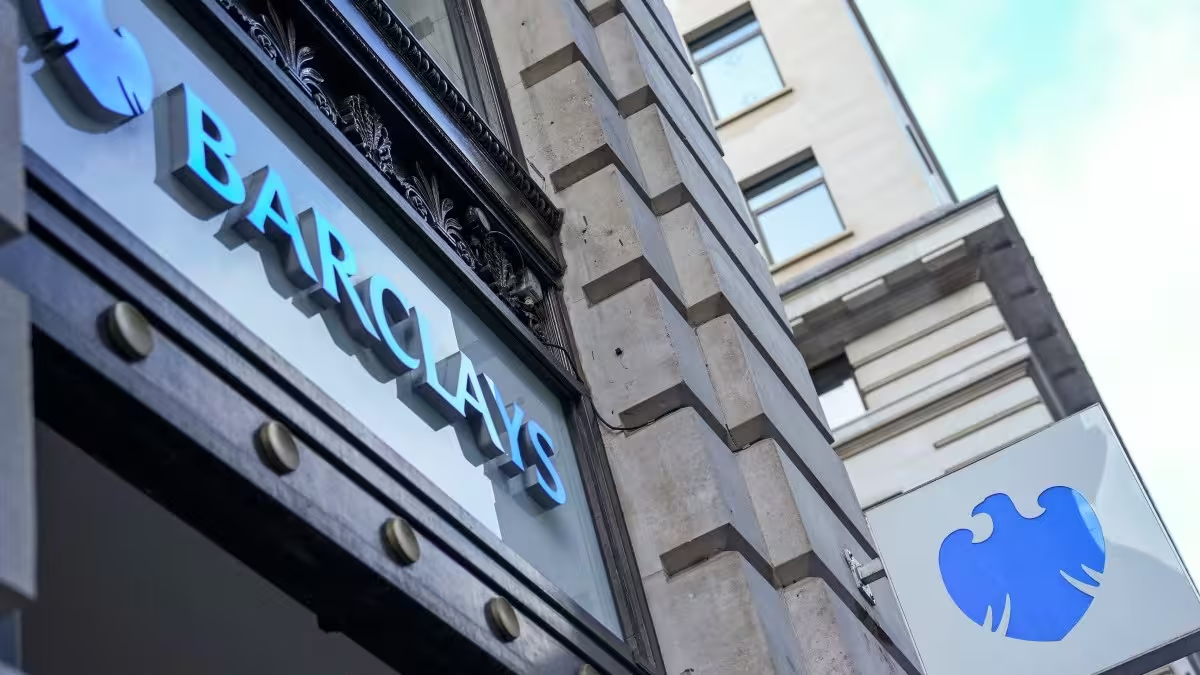
The meeting, to be chaired on Thursday by Barclays’ UK chief executive, Vim Maru, will bring together major City financial institutions prepared to fund a new payments company designed to safeguard the UK economy in the event of disruption
The UK is considering launching its own version of Visa and Mastercard amid growing fears of US President Donald Trump shutting down the payment services. Bank chiefs are set to sit down and discuss alternatives this week to replace the US-owned payment systems.
The meeting, to be chaired on Thursday by Barclays’ UK chief executive, Vim Maru, will bring together major City financial institutions prepared to fund a new payments company designed to safeguard the UK economy in the event of disruption.
Although plans for a City-funded, government-supported payments network have been under discussion for several years, recent geopolitical tensions have added urgency. Trump’s threats toward Nato allies over Greenland have heightened anxieties that heavy reliance on US firms could expose the UK’s payments infrastructure and broader economy to risk.
How Visa and Mastercard dominate payment systems in UK
According to a 2025 report by the UK’s Payment Systems Regulator, around 95 per cent of card transactions in the UK are processed through systems owned by Mastercard and Visa. With cash usage continuing to decline nationwide, the implications of any disruption have become more significant.
The scale of potential fallout is illustrated by events in Russia, where roughly 60 per cent of payments relied on Visa and Mastercard before US sanctions compelled the companies to suspend their services. The move left many consumers unable to access funds or make purchases.
Officials have emphasised the importance of establishing a contingency option but have avoided directly attributing their concerns to US political developments.
Joe Garner, former Nationwide chief executive and a government adviser on Rachel Reeves’ national payments strategy who led a 2023 independent review into the sector, also stressed the broader rationale. “Regardless of any political developments, the UK needs to do this. We needed to before, we need to now … I don’t think that’s changed by recent events.”
Visa and Mastercard join movement
By contrast, the UK approach has been less confrontational. Visa and Mastercard are participating in the initiative and will be part of the funding group, alongside major banks and payment organisations, including Santander UK, NatWest, Nationwide, Lloyds Banking Group, Link, and Coventry Building Society.
The new payments venture, known as DeliveryCo, will be structured and financed by City backers, who will determine its legal framework, leadership and long-term funding model. Meanwhile, the Bank of England is developing the technical infrastructure blueprint, which is expected to be handed over next year.
The alternative payment system is understood to be targeted for launch by 2030.
Both Mastercard and Visa reiterated their commitment to the UK market and expressed support for competitive innovation.
Visa said that it included providing consumers and businesses with “access to innovative, secure digital payments with the highest levels of resilience and reliability. We welcome the industry progress on account-to-account payments in the UK. We believe competition between multiple solutions, supported by a level playing field, will deliver choice, innovation and economic growth in the UK.”
Mastercard said: “Mastercard has been fully invested in the UK for decades, delivering consumers and businesses with a wide range of convenient, simple and secure ways to pay and get paid. We remain committed to drive commerce here at home and across the globe by helping businesses of all sizes grow and meet the needs of their customers.”
End of Article