EU’s Kaja Kallas rebuts US claims of Europe’s ‘civilisational erasure’ at Munich Security Conference, defending progressive values amid Rubio’s migration warnings and calls for stronger transatlantic ties.
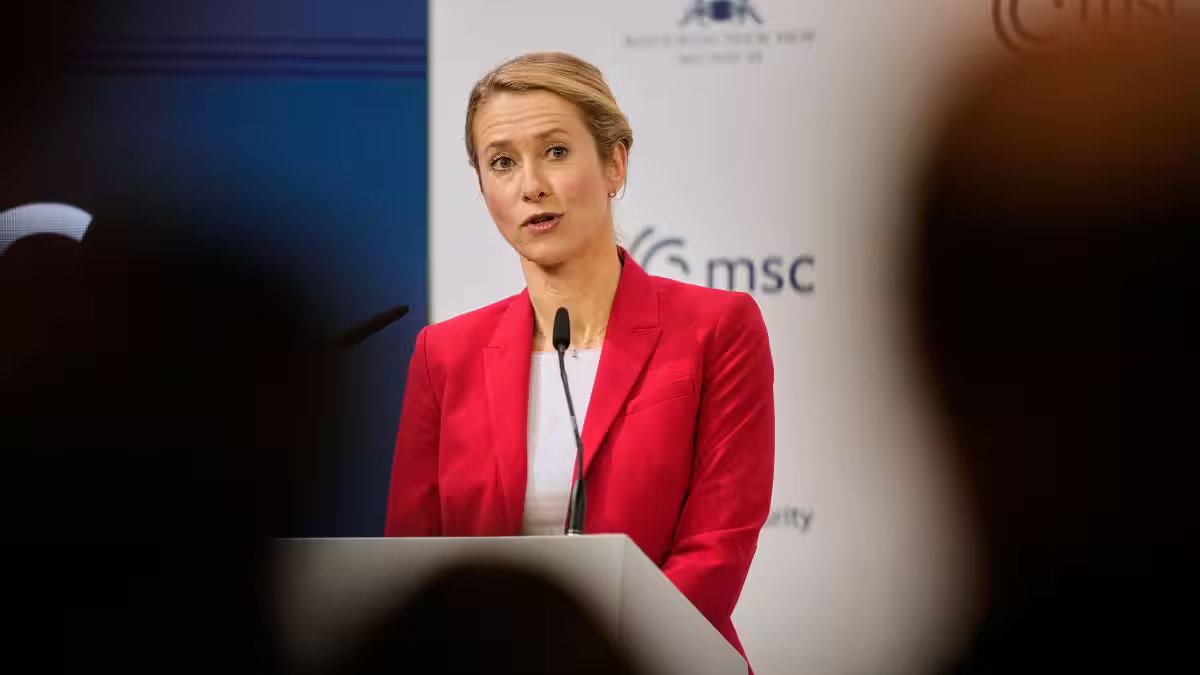
The hallowed halls of the Bayerischer Hof, home to the Munich Security Conference became the latest battleground for the soul of the West this weekend. In a sharp rebuttal to the Trump administration’s apocalyptic framing of the continent’s future, EU foreign policy chief Kaja Kallas flatly rejected claims that Europe is sliding toward “civilisational erasure.”
The diplomatic fireworks follow the release of the US National Security Strategy (NSS) in December, a document that painted a bleak picture of a continent “enfeebled” by mass migration, declining birth rates and “woke” governance.
Speaking on the final day of the conference, Kallas chose to tackle the American critique head-on, labelling it as little more than “European-bashing.” “Contrary to what some may say, woke, decadent Europe is not facing civilisational erasure,” Kallas told an audience of global leaders and security experts. “In fact, people still want to join our club and not just fellow Europeans.”
A clash of visions: The ‘erasure’ vs. The ‘renaissance’
The friction stems from a fundamental divergence in how Washington and Brussels view the modern world order. The Trump administration’s 2025 NSS suggested that Europe’s economic stagnation is merely a symptom of a deeper cultural rot, arguing that the continent’s liberal policies risk making it “unrecognisable” within two decades.
US Secretary of State Marco Rubio, while striking a more conciliatory tone than Vice President JD Vance’s blistering critique at last year’s conference, did not back down from the administration’s core tenets. Rubio described the US as a “child of Europe” but warned that the survival of Western civilisation depends on securing national borders and rejecting what he termed a “climate cult.”
Kallas, however, framed Europe’s commitment to human rights and diverse societies as a source of strength rather than a precursor to decline. She noted that during a recent visit to Canada, she encountered widespread interest in the EU model, suggesting that the “European project” remains a global beacon of prosperity rather than a failing relic.
The ‘Greenland shadow’ and the quest for autonomy
The rhetoric in Munich played out against a backdrop of deep-seated mistrust. Relations between the two shores of the Atlantic reached a nadir last month following President Trump’s renewed interest in annexing Greenland, a move that forced Denmark and its EU allies to form a united front against what they viewed as an affront to sovereignty. German Chancellor Friedrich Merz highlighted this rift in his opening remarks, stating bluntly that the “culture war of the MAGA movement is not ours.”
Merz, alongside French President Emmanuel Macron, used the summit to push for a “strong, self-sustaining pillar” within Nato even floating the idea of a joint European nuclear deterrent to reduce “excessive dependency” on an increasingly mercurial Washington.
While Rubio sought to reassure allies that the U.S. does not wish to end the trans-Atlantic era, European leaders like British Prime Minister Keir Starmer emphasised that the continent’s diversity is precisely what makes it resilient. Starmer argued that vibrant, free societies are “not against the tenor of our times,” but are, in fact, the currency of the future.
Security stakes: Ukraine and the ‘hard power’ pivot
Despite the ideological sparring, a pragmatic consensus emerged on one front: Europe must arm itself. As Russia’s invasion of Ukraine nears its fifth year, the urgency for a “shared industrial base” has never been higher. Ukrainian President Volodymyr Zelenskyy provided a grim reminder of the costs of delay, warning that “weapons evolve faster than political decisions.” With Russia stepping up strikes on power infrastructure during the coldest winter since the war’s start, Zelenskyy warned that the Kremlin’s “idea of war” extends far beyond Ukraine’s borders.
While Rubio remained sceptical of Russia’s willingness to negotiate, he signalled that Washington expects Europe to take the lead on its own conventional defence. For the EU, this shift represents a “reclaiming of agency,” as Kallas put it. The message from Munich was clear: Europe may not agree with Washington’s diagnosis of its “civilizational” health, but it is ready to prove its vitality by becoming a geopolitical power in its own right.
End of Article