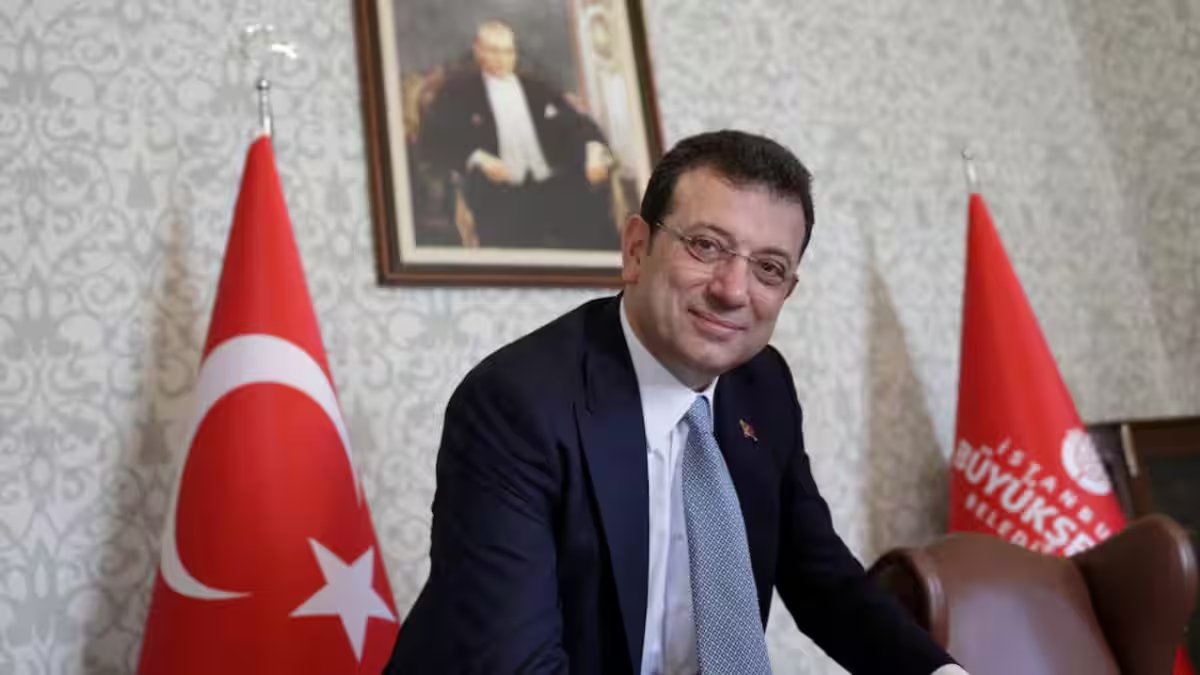
From his cell in the Silivri prison, Istanbul Mayor Ekrem İmamoğlu has issued a direct challenge to the long-term rule of President Erdoğan by demanding immediate elections.
The political landscape of Turkey is currently witnessing an unprecedented confrontation between established power and a rising challenger who remains defiant despite his incarceration. Ekrem İmamoğlu, the Mayor of Istanbul and a key figure in the opposition, has issued a bold challenge to President Recep Tayyip Erdoğan from his prison cell.
Nearly a year into his detention, the 55 year old leader is calling for immediate elections, expressing confidence that the electorate is ready for a change in leadership. This struggle is not merely a personal rivalry but a defining moment for the future of Turkish democracy, as the nation prepares for a potential electoral showdown that could alter its course for decades.
The mayor and the prison walls
Currently held at the Silivri prison complex, Ekrem İmamoğlu maintains a rigorous schedule that belies his confinement. He spends his days collaborating with legal teams to fight a massive wave of investigations and reading messages from a vast network of supporters. Despite the physical high walls and a small courtyard for exercise, he continues to oversee his municipal duties and lead the Republican People’s Party (CHP) presidential aspirations.
His detention follows a series of corruption charges and allegations of running a criminal organisation, which his supporters and international rights groups view as a transparent attempt to sideline him. The stakes are immense, with prosecutors seeking a sentence that could effectively end his political career and keep him imprisoned for life.
A judicial system under the spotlight
The legal onslaught against Ekrem İmamoğlu reached a new peak with the recent appointment of Akın Gürlek, the prosecutor who led the case against him, as the new Justice Minister. This move has sparked outrage within the CHP and led to heated scenes in parliament, with critics arguing that the judiciary is being restructured to eliminate political threats.
Furthermore, the cancellation of the mayor’s university degree by a court has added another hurdle, as a higher education qualification is a mandatory requirement for any presidential candidate. These developments have drawn sharp criticism from observers in the European Union and Nato, who warn that such actions undermine the democratic credentials of a pivotal regional power.
The push for a democratic renewal
The CHP and its allies are not backing down, keeping Ekrem İmamoğlu in the public eye through weekly rallies and a consistent call for a snap vote. While the next official election is not due until 2028, the opposition argues that the current economic and social climate necessitates an earlier mandate.
For President Recep Tayyip Erdoğan, calling an early election would require significant legislative support from outside his current alliance, making the political calculations complex. As both sides prepare for a trial in March that could determine the mayor’s eligibility, the world watches to see if Turkey will move toward a more social democratic model or continue on its current path of centralised authority.
End of Article