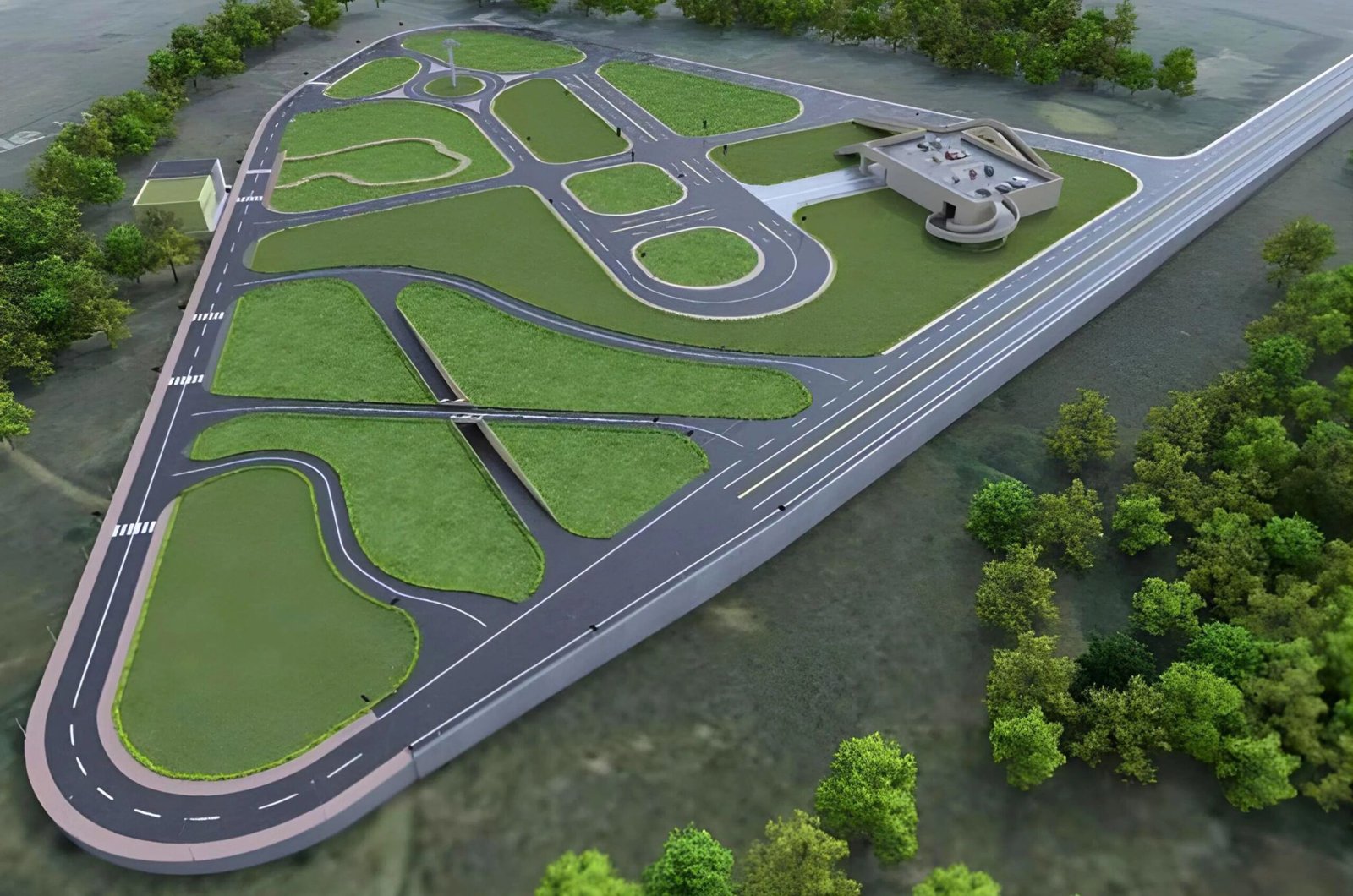
The Automotive Research Association of India (ARAI) has developed a Rs 40 crore Advanced Driver Assistance Systems (ADAS) test facility in Pune, aimed at calibrating and validating active safety technologies for Indian road and traffic conditions. The facility is intended to address a key gap as ADAS features increasingly move from premium vehicles into mass-market cars.
ARAI says the new infrastructure is designed to test how ADAS systems perform in India’s unique driving environment, where dense traffic, varied road markings and mixed vehicle types often differ significantly from conditions in Europe and other global markets.
- Supports localisation of active safety systems for wider adoption
- Indian traffic scenarios are unique compared to global standards
- Facility currently operational for trials, with development ongoing
Focus on Indian driving conditions
According to ARAI, several ADAS features developed for international markets, including Automatic Emergency Braking, have shown inconsistent performance on Indian roads. This has underlined the need for India-specific validation before wider adoption.
Speaking at The ADAS Show in Pune, ARAI Director Dr Reji Mathai said “A feature that people are looking ahead as something that is going to bring customer satisfaction is not being readily seen, but just as a selling point as of now. But if it is not good, this may not be a good selling point in the coming days”.
On whether ADAS would reach all vehicle segments, Mathai drew a parallel with airbags, which evolved from luxury features to standard equipment across price points.
India records around 1.5 lakh road fatalities annually, —”like a plane crash every day,” Mathai said, highlighting the urgency of effective active safety systems.
Test city simulates local traffic scenarios
The new facility includes a dedicated test city that recreates traffic situations not typically covered under international ADAS standards. These include four-lane roads merging into two lanes, S-curves, non-perpendicular intersections, roads without lane markings and parking areas intended for autonomous vehicle testing.
ARAI is also working on India-specific crash test dummies that represent vehicles such as auto-rickshaws and three-wheelers, which are not part of existing ISO standards but form a large part of Indian traffic.
Data challenges and future relevance
ARAI has already completed 30,000–40,000 kilometres of data acquisition, but processing the large volumes of data generated remains a challenge. Issues such as handling sensitive information captured during testing, including faces and number plates, also need to be addressed.
Addressing the growing spread of active safety systems, Mathai said, “ADAS features are invariably going to be there in vehicles whether you like it or not. How useful and customer-friendly they are—that is where it will see how fast it proliferates. And I am sure this facility is going to play a vital role in making it customer-friendly, practical and relevant for this market.”
Mathai also pointed to vehicle-to-vehicle communication as a potential next step, where cars could trigger safety interventions based on real-time warnings shared by other vehicles.
Looking ahead, ARAI expects the facility to play an important role as ADAS features become part of future safety assessments. Bharat NCAP 2.0, expected around 2027, is likely to factor ADAS technologies into vehicle safety ratings, which could further accelerate adoption across segments.
Mobileye localising ADAS systems for Indian conditions
ADAS technology suppliers are already working towards India-specific calibration. Mobileye has said it is localising its driver assistance systems to better suit Indian traffic conditions and driving behaviour, with a long-term roadmap that includes more advanced hands-off functions around 2027.
Mahindra & Mahindra has already selected Mobileye’s ADAS systems for at least six future models planned from 2027, highlighting the growing need for local validation and testing infrastructure as such features move into higher-volume segments.