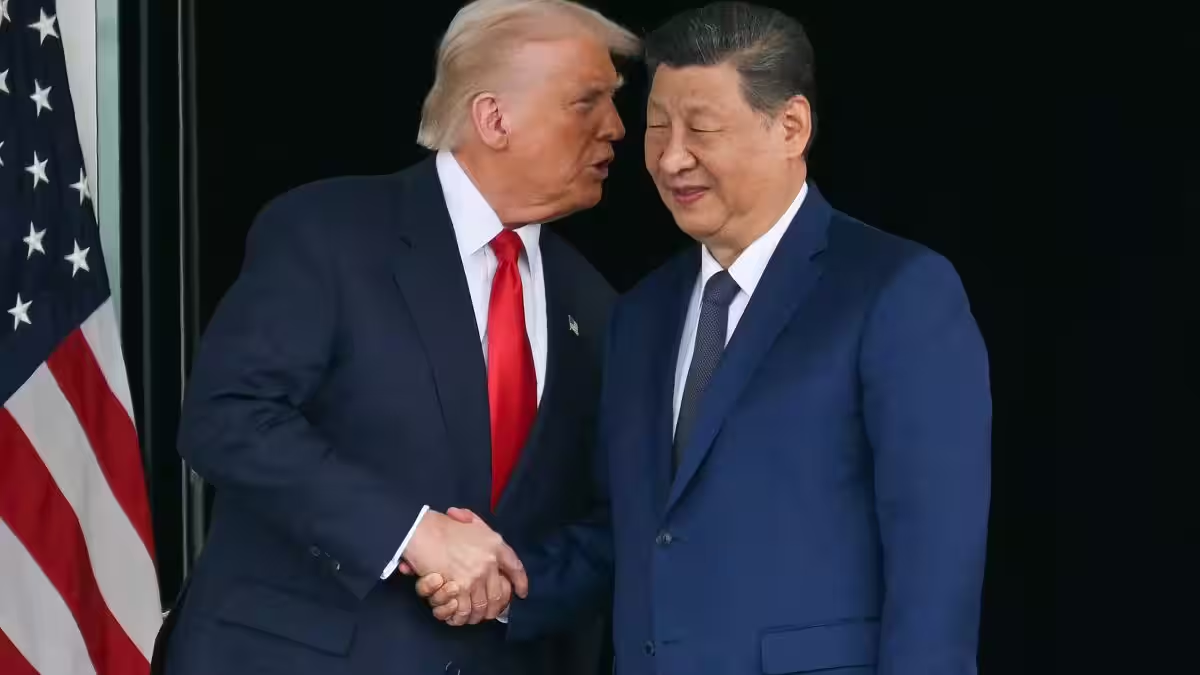
Donald Trump and Xi Jinping are expected to extend their trade truce at an upcoming Beijing summit, potentially prolonging tariff relief for up to a year and easing tensions between the world’s two largest economies
US President Donald Trump and Chinese President Xi Jinping are set to extend the trade truce they agreed on in Busan, South Korea, last October when they meet in Beijing in early April. Officials familiar with the discussions, told the South China Morning Post (SCMP) that the pause on escalating tariffs and export controls could be extended for up to a year.
The initial truce came after months of tightening trade tensions, with both sides imposing steep “retaliatory” levies. Under that agreement,
China resumed purchases of American soybeans—a politically sensitive crop in the US—helping to ease frictions.
What’s at stake
Trade tensions between Washington and Beijing have defined much of the past year, with both countries imposing steep tariffs on each other’s goods.
The earlier agreement included China resuming large-scale purchases of US agricultural products, including soybeans, a politically sensitive export for American farmers.
If the
truce is extended, existing tariff rollbacks would likely remain in place, preventing another round of economic escalation. Businesses on both sides have been closely watching developments, hoping for predictability after months of uncertainty.
Political calculations in place
For Trump, securing a longer truce could offer a diplomatic win and help calm domestic concerns over inflation and supply chains. It would also ease pressure from American industries affected by higher import costs.
For Xi, maintaining steady trade ties with the United States remains crucial as China navigates slower economic growth and broader geopolitical competition. A prolonged pause would allow Beijing to focus on internal economic priorities without the added strain of renewed tariffs.
Temporary relief or lasting change?
While an extension would reduce immediate tensions, deeper structural disagreements between the two powers—including technology restrictions, market access and national security concerns—remain unresolved.
Still, a year-long truce could create space for more substantive negotiations. Whether it marks a genuine reset in US-China trade relations or simply delays another showdown will depend on what both leaders decide in Beijing.
End of Article