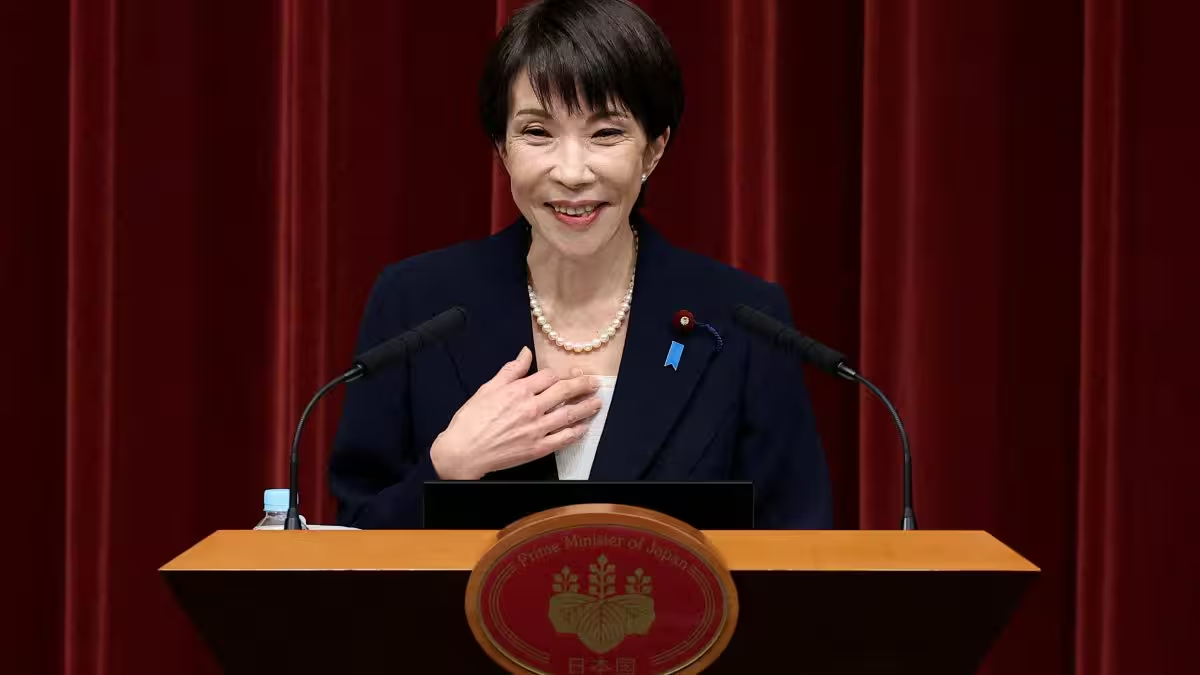
Japan’s newly re-elected Prime Minister Sanae Takaichi has signalled a tougher security posture, vowing to firmly defend the country’s sovereignty as her government moves to strengthen defence and intelligence capabilities after a landslide election victory.
Prime Minister Sanae Takaichi on Monday said Japan would take a firm stand in defending its sovereignty, including its territorial waters and airspace, as she outlined plans to strengthen the country’s defence and intelligence capabilities following her landslide election victory.
Speaking at a post-election news conference, Takaichi said Japan must show the resolve to defend itself.
“No one will come to the aid of a nation that lacks the resolve to defend itself with its own hands. We will steadfastly protect our nation’s peace and independence, our territory, territorial waters, airspace, and the lives and safety of our citizens,” she said.
Intelligence overhaul and security reforms
Takaichi announced steps to bolster Japan’s intelligence framework, including plans to establish a national intelligence bureau and strengthen intelligence analysis capabilities to prevent crises and protect national interests.
She also said her government would introduce legislation to create a committee to assess national security risks arising from foreign investments and revise key security policy documents to reflect the changing security environment.
Historic mandate after snap election
Takaichi said the election result showed strong public backing for major reforms. Her Liberal Democratic Party (LDP) won around 316 seats in the 465-member lower house in Sunday’s snap election, securing a two-thirds majority for the first time in the party’s history.
The outcome significantly strengthens her mandate less than a year after she took office in October.
“This is the start of a heavy responsibility to make Japan stronger and more prosperous,” she said, adding that voters had shown “understanding and sympathy” for her call for a major policy shift.
China tensions loom large
Takaichi’s remarks are expected to further strain relations with China, particularly after comments she made in November suggesting Japan could intervene militarily if Beijing attempted to take Taiwan by force.
China, which claims Taiwan as part of its territory, has warned that any “reckless” actions by Japan would be met with a “resolute response”.
Takaichi said Japan would continue dialogue with China but would respond in a “calm and appropriate” manner.
Reform push and constitutional questions
The election result places Takaichi, Japan’s first woman prime minister, in a strong position to push through reforms over the next four years, including on defence, intelligence and immigration. It also raises the prospect of renewed attempts to revise Japan’s constitution.
US ties and economic challenges
US President Donald Trump congratulated Takaichi on her victory and said he looked forward to meeting her in Washington next month. Takaichi said the talks would reaffirm the “unshakeable unity” between Japan and the United States.
Despite her strong start and popularity, especially among younger voters, analysts say she faces major economic challenges, including rising prices, high public debt, and concerns over the impact of increased defence spending on taxes, markets and household finances.
End of Article