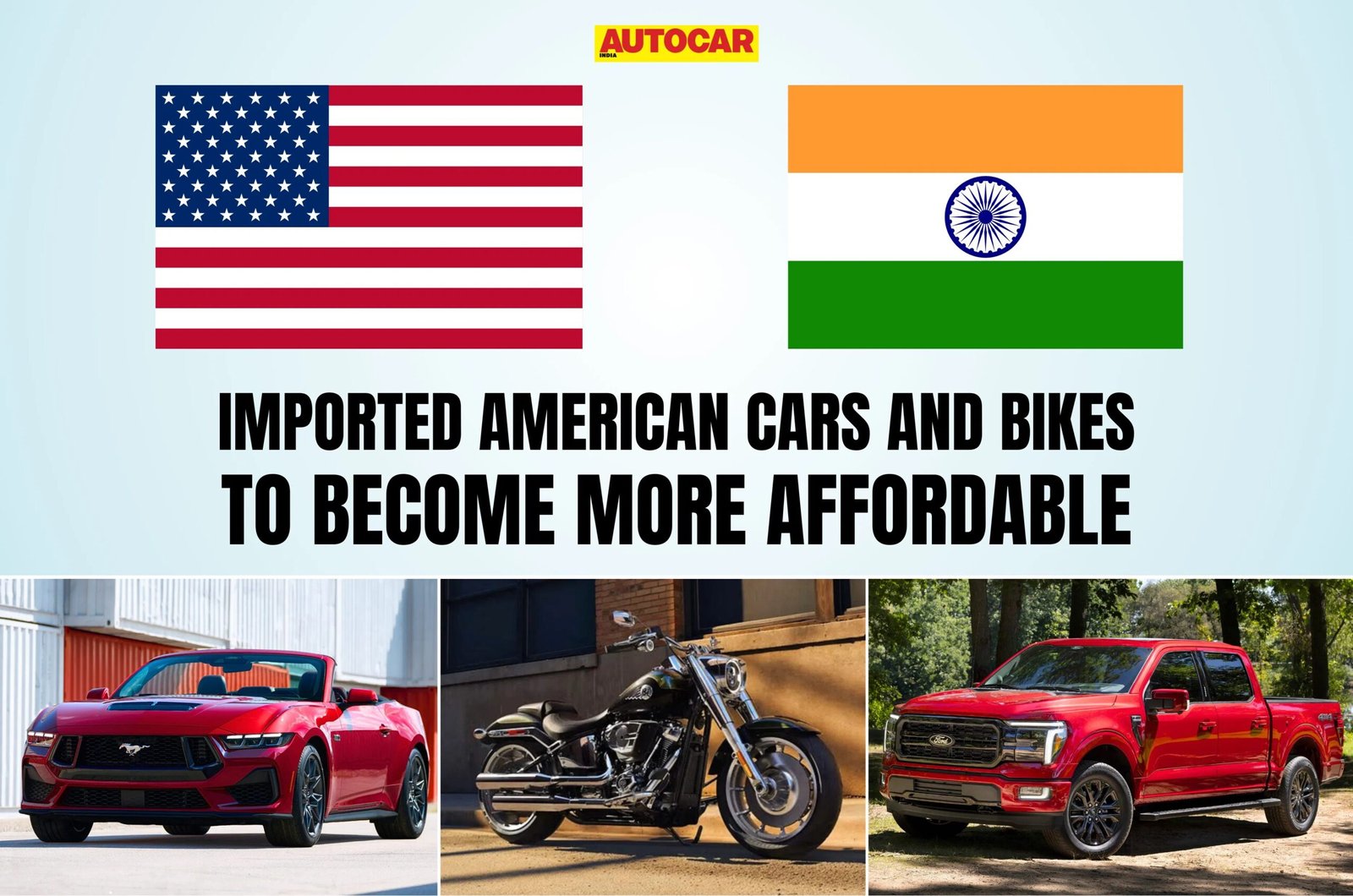
India and the United States are close to finalising an interim trade agreement that will significantly reduce import duties on high-end American automobiles, while excluding electric vehicles from the scope of concessions, according to a Reuters report.
Under the proposed framework, import duties on premium US-made internal-combustion cars will be cut to 30 percent from the current levels that go as high as 110 percent. The reductions will apply only to internal combustion engine vehicles with engine capacities above 3,000cc and will be phased in over a 10-year period.
- Concessions apply only to ICE vehicles above 3,000cc
- Electric vehicles kept outside the scope of concessions
- Zero-duty access confirmed for US-made motorcycles
EVs kept out of tariff relief
Electric vehicles have been deliberately left out of the agreement. This effectively rules out a lower-duty import route for Tesla, which has repeatedly flagged India’s high import taxes as a key hurdle to market entry.
This contrasts with India’s trade agreement with the European Union, where tariff cuts as low as 10 percent have been offered across a wider range of vehicles, including eventual concessions on some electric vehicles. The difference suggests India is taking a more cautious approach to opening up its EV market.
Protecting the domestic auto industry
India, which Reuters identifies as the world’s third-largest car market after the United States and China, has long protected its domestic car industry through high import duties, which currently range from 70 percent to 110 percent. These tariffs have made fully imported vehicles expensive and pushed global manufacturers towards local assembly instead of direct imports.
According to the Reuters report, India imports only a small number of cars from the United States. Premium motorcycles, however, form a more visible part of the trade, which explains why zero-duty access for bikes such as Harley-Davidson is seen as a meaningful concession in the deal.
The proposed tariff changes are part of a broader trade negotiation between India and the US and are expected to be formalised in March. The actual impact on vehicle prices and import volumes will depend on how the reductions are phased in and whether any caps or conditions are applied.
For now, the concessions are limited to ICE cars and motorcycles, with electric vehicles remaining outside the scope of the agreement.