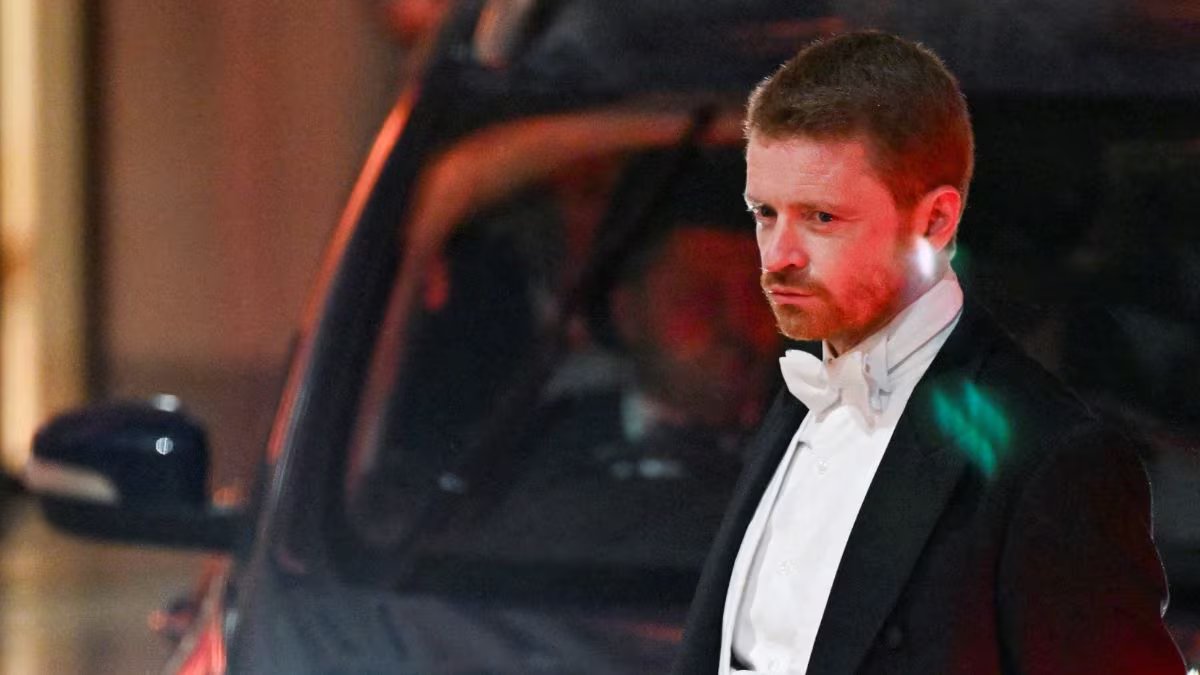
The resignation of Morgan McSweeney, British Prime Minister Keir Starmer’s chief of staff and one of the most influential political strategists in modern Labour history, has triggered a political storm in the United Kingdom.
McSweeney stepped down on Sunday after accepting responsibility for advising Starmer to appoint Peter Mandelson as the UK’s ambassador to the United States — a decision now widely regarded as politically catastrophic due to Mandelson’s links to the late financier and convicted sex offender Jeffrey Epstein.
The fallout from the so-called Epstein files has not only cost Starmer his closest aide but has also plunged the Labour government into what many observers describe as the gravest crisis of its 18 months in office.
With police investigations under way and internal dissent growing within Labour ranks, McSweeney’s departure marks a pivotal moment for a government that won power in 2024 with one of the largest parliamentary majorities in British history.
Why did Morgan McSweeney resign?
McSweeney
announced his resignation after days of mounting pressure over his role in the Mandelson appointment, acknowledging that his advice to the prime minister had been a serious error.
In a statement released on Sunday, he said, “The decision to appoint Peter Mandelson was wrong. He has damaged our party, our country and trust in politics itself. When asked, I advised the Prime Minister to make that appointment and I take full responsibility for that advice.”
The controversy increased following another release of files in the United States last week, which shed new light
on the extent of Mandelson’s relationship with Epstein. The documents indicated that Mandelson remained in contact with Epstein even after the financier’s conviction for child sex offences.
Those disclosures prompted a police investigation into potential misconduct in public office, focused on allegations that Mandelson may have passed market-sensitive information to Epstein during his time as a government minister amid the global financial crisis of 2009 and 2010.
McSweeney, who had been seen by many within Labour as the driving force behind Mandelson’s appointment, was also viewed as central to Downing Street’s attempts to manage the release of the Epstein-related material.
In his resignation letter, McSweeney called for structural reform within government. He wrote, “While I did not oversee the due diligence and vetting process, I believe that process must now be fundamentally overhauled. This cannot simply be a gesture but a safeguard for the future.”
Who is Morgan McSweeney?
Morgan James McSweeney was born on April 19, 1977, in Macroom, County Cork, Ireland. He comes from a politically and professionally accomplished family.
His father, Tim McSweeney, was a senior partner at an accounting firm, while his mother, Carmel McSweeney, was a bridge player. His paternal grandfather, Michael McSweeney, served in the Irish Republican Army during the Irish War of Independence and received a medal for his service.
Politics also runs through the extended family. McSweeney’s aunt served as a councillor for Fine Gael, and his first cousin, Clare Mungovan, worked as a special adviser to former Irish prime minister Leo Varadkar.
As a child, McSweeney played hurling and acted as a mascot for the Macroom GAA Gaelic football team.
At the age of 17, McSweeney moved to London in 1994. His early years in Britain were far removed from the corridors of power.
He initially worked on construction sites before attempting university, an effort that ended within a year. He later spent several months living on Sarid kibbutz in Israel during the late 1990s.
At 21, McSweeney returned to higher education, enrolling at Middlesex University to study marketing and politics.
McSweeney’s entry into Labour politics
McSweeney joined the Labour Party in 1997, reportedly motivated by the party’s support for the Good Friday Agreement, which played a crucial role in advancing the Northern Ireland peace process.
His early involvement coincided with Labour’s period of dominance under Tony Blair, though McSweeney himself initially worked behind the scenes.
In June 2001, he took up a role as a Labour conference administrator, according to his LinkedIn profile. He later joined the party’s attack and rebuttal unit at its Millbank headquarters, where he worked on campaign intelligence and messaging.
During this period, he was tasked with contributing material to Peter Mandelson’s “excalibur” database, a system used to shape campaign strategy.
McSweeney was also deployed to marginal constituencies during the 2005 general election, where his reputation as a highly effective organiser began to solidify. Colleagues noted his attention to detail, discipline, and willingness to make tough strategic decisions.
McSweeney’s rise through local govt
Following the 2005 election, McSweeney played a role in efforts to reclaim control of Lambeth council from a coalition of Liberal Democrats and Conservatives.
The campaign, led by current Communities Secretary Steve Reed, was widely viewed as a success and enhanced McSweeney’s standing within Labour circles.
After an unsuccessful attempt to become a councillor in Sutton in 2006, McSweeney was appointed head of Steve Reed’s leader’s office in Southwark, a position he held until October 2007. He later joined The Campaign Company consultancy as director of communities before moving to the Local Government Association as a political adviser.
McSweeney was eventually appointed head of the LGA’s Labour group office, a role he held until 2017.
During this period, he ran Liz Kendall’s leadership campaign in 2015, which ended with her finishing fourth. While the campaign was unsuccessful, it further established McSweeney as a strategist aligned with Labour’s centrist wing.
Labour Together and internal controversy
In 2017, McSweeney became director of Labour Together, a think tank he co-founded with the aim of reshaping Labour after years of internal division. He shared a board position with Steve Reed and Lisa Nandy, now the culture secretary.
At the time, McSweeney is said to have declared his intention to move the party “from the hard left” and to “build a sustainable winning electoral coalition”. Labour Together became influential in shaping policy debates and strategy during Jeremy Corbyn’s leadership.
However, McSweeney’s tenure at the think tank was not without controversy. In 2021, the Electoral Commission fined Labour Together £14,250 for multiple reporting failures, including late submission of donation reports, inaccuracies in donation disclosures, and failure to appoint a responsible person within the required timeframe.
The issue resurfaced in September last year when leaked emails, apparently sent by a Labour Together lawyer to McSweeney, prompted the Conservative Party to call for the regulator to revisit the case.
Despite suggestions from Conservative Party chairman Kevin Holinrake that the emails could indicate the commission had been misled, the regulator stated that a review found no evidence of additional offences.
Architect of Labour’s electoral revival
McSweeney’s influence within Labour expanded significantly after the party’s devastating defeat in the December 2019 general election, its worst result since 1935.
With Labour losing traditional strongholds across northern England and the Midlands, many believed the party faced a prolonged period in opposition.
Less than five years later, Labour returned to power. The party not only reclaimed much of the so-called red wall but also won seats that had never before elected a Labour MP. McSweeney was widely credited as the strategist behind this turnaround.
He was appointed to run Keir Starmer’s successful 2020 leadership campaign and initially served as his chief of staff. After Labour’s disappointing performance in the Chesham and Amersham by-election in 2021, McSweeney was moved into a strategic role within the leader’s office, though he remained a key adviser.
Later that year, he became Labour’s director of campaigns. In that capacity, he championed a centralised approach to candidate selection, a move critics described as an effort to marginalise left-wing factions within the party.
Labour’s victory in the 2024 general election saw McSweeney appointed head of political strategy at Downing Street. Despite securing a 174-seat majority — just five fewer than Tony Blair’s landslide in 1997 — the party won with only 33.7 per cent of the vote, a result some commentators characterised as a fragile mandate.
In June 2024, New Statesman ranked McSweeney first among the most influential figures shaping left-wing politics in the UK.
From powerbroker to political casualty
Following Labour’s election win, McSweeney’s rise continued. After a power struggle with veteran civil servant Sue Gray, he was appointed chief of staff in October 2024.
His tenure placed him among the most powerful unelected figures in British politics, often compared with Alastair Campbell and Dominic Cummings.
Despite his preference for operating away from the spotlight, McSweeney’s influence was undeniable. Yet it was his long-standing relationship with Peter Mandelson that ultimately proved his undoing.
How is Keir Starmer faring?
McSweeney’s exit has placed Starmer squarely in the political firing line. Polling suggests that Starmer has become deeply unpopular with voters following a series of policy reversals that have undermined perceptions of consistency and leadership.
The Epstein-linked scandal has added to those concerns, prompting some members of his own party to question whether McSweeney’s resignation alone will be sufficient to contain the damage.
Starmer had spent much of the preceding week defending his chief of staff, a stance that critics argue may now rebound on the prime minister himself.
While Starmer ultimately accepted McSweeney’s resignation, he praised his long-serving aide in a statement, saying it had been “an honour” to work with him and crediting him with transforming the party after one of its worst electoral defeats.
Opposition leaders were far less charitable. Conservative Party leader Kemi Badenoch described McSweeney’s resignation as overdue and said that “Keir Starmer has to take responsibility for his own terrible decisions”.
Nigel Farage, leader of the populist Reform UK party, which currently leads national opinion polls, said he believed Starmer’s time in office was nearing its end.
Within Labour, reactions have been divided. While many MPs privately blamed McSweeney for the Mandelson appointment and its fallout, others argued
that responsibility ultimately rests with the prime minister who signed off on the decision.
Starmer removed Mandelson from his ambassadorial role in September, months before McSweeney’s resignation, but the decision failed to draw a line under the controversy.
What next?
The political consequences of the Epstein files may yet deepen. Last week, the UK government agreed to release nearly all previously private communications between ministers and officials
from the period when Mandelson was appointed ambassador.
Those disclosures could begin as early as this week.
Officials fear that the release may expose internal discussions about how Britain planned to approach its relationship with US President Donald Trump. If sensitive or candid exchanges become public, they could complicate diplomatic relations with Washington at a delicate moment.
The prospect of further revelations has created fresh anxiety within Downing Street, threatening to prolong a scandal that Starmer had hoped to move past. McSweeney’s resignation, while significant, may therefore represent only one chapter in a much larger political reckoning.
With inputs from agencies
End of Article


