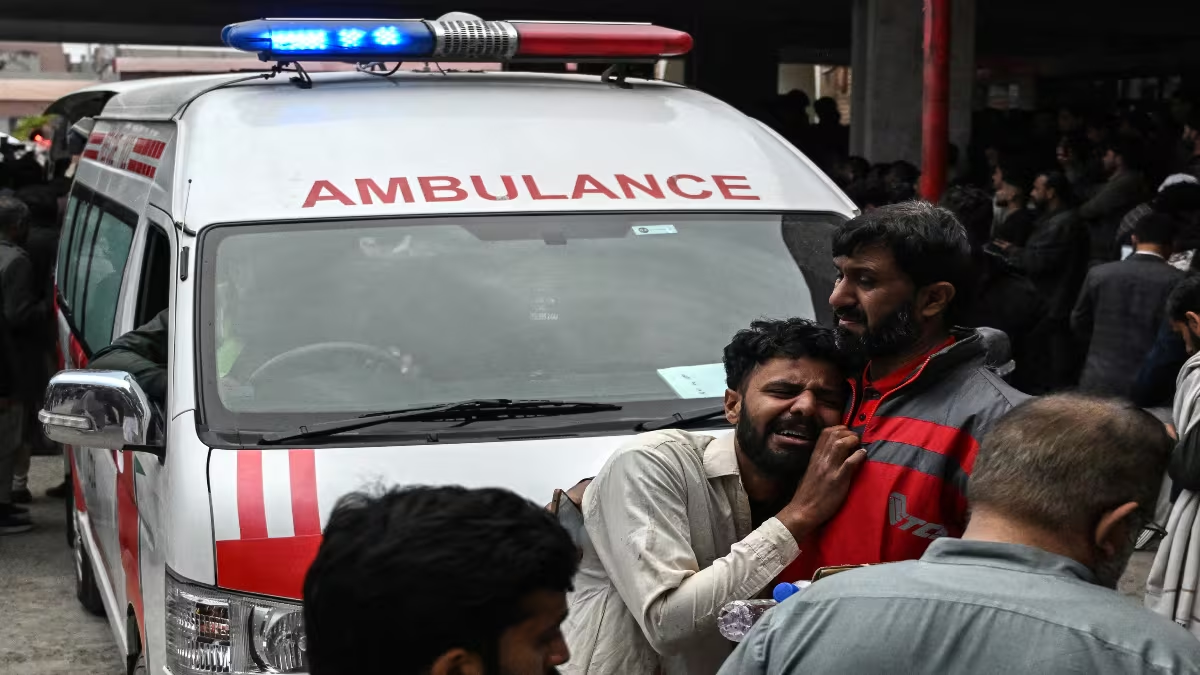
The Islamic State (IS) on Saturday claimed responsibility for a suicide blast at a Shiite mosque in Pakistan’s Islamabad, killing at least 31 people and injuring 169 others.
The
Islamic State (IS) on Saturday claimed responsibility for a suicide blast at a
Shiite mosque in Pakistan’s Islamabad, killing 31 people and injuring 169 others. The tragic incident took place on Friday and is now being seen as the deadliest attack in Pakistan’s capital since the 2008 Marriott hotel bombing.
City officials noted that 31 people died in the explosion at the Imam Bargah Qasr-e-Khadijatul Kubra mosque in the Tarlai area on the city’s outskirts, with scores more being treated for injuries. They warned that the death toll might rise, given that some of the wounded victims are in critical condition.
The
blast rocked the capital at Friday prayers, when mosques around the country are packed with worshippers. “The attacker was stopped at the gate and detonated himself,” a security source told AFP. In the early hours of Saturday, IS said one of its militants had targeted the congregation, detonating an explosive vest and “inflicting a large number of deaths and injuries”, according to the SITE Intelligence Group, which monitors jihadist communications.
PM vows tough response
Soon after the incident, Pakistan’s Prime Minister
Shehbaz Sharif released a statement, vowing that those behind the blast would be found and brought to justice. The attack was the deadliest in the Pakistani capital since September 2008, when 60 people were killed in a suicide truck bomb blast that destroyed part of the five-star Marriott hotel.
Meanwhile, Deputy Prime Minister
Ishaq Dar branded the attack “a heinous crime against humanity and a blatant violation of Islamic principles”. “Pakistan stands united against terrorism in all its forms,” he said in a post on X, formerly known as Twitter. UN Secretary-General
Antonio Guterres also condemned the blast, saying “attacks against civilians and places of worship are unacceptable”, according to his spokesman.
It is pertinent to note that the latest attack comes as Pakistan’s security forces battle intensifying insurgencies in southern and northern provinces that border
Afghanistan. While Pakistan is a Sunni-majority nation, Shiites make up between 10 and 15 per cent of the population and have been targeted in attacks throughout the region in the past.
Islamabad has said separatist armed groups in southern
Balochistan, and the
Pakistani Taliban and other Islamist militants in northern
Khyber Pakhtunkhwa province near Islamabad, have used Afghan territory as a safe haven from which to launch attacks. However, Afghanistan’s Taliban has repeatedly denied such accusations.
With inputs from AFP.
End of Article