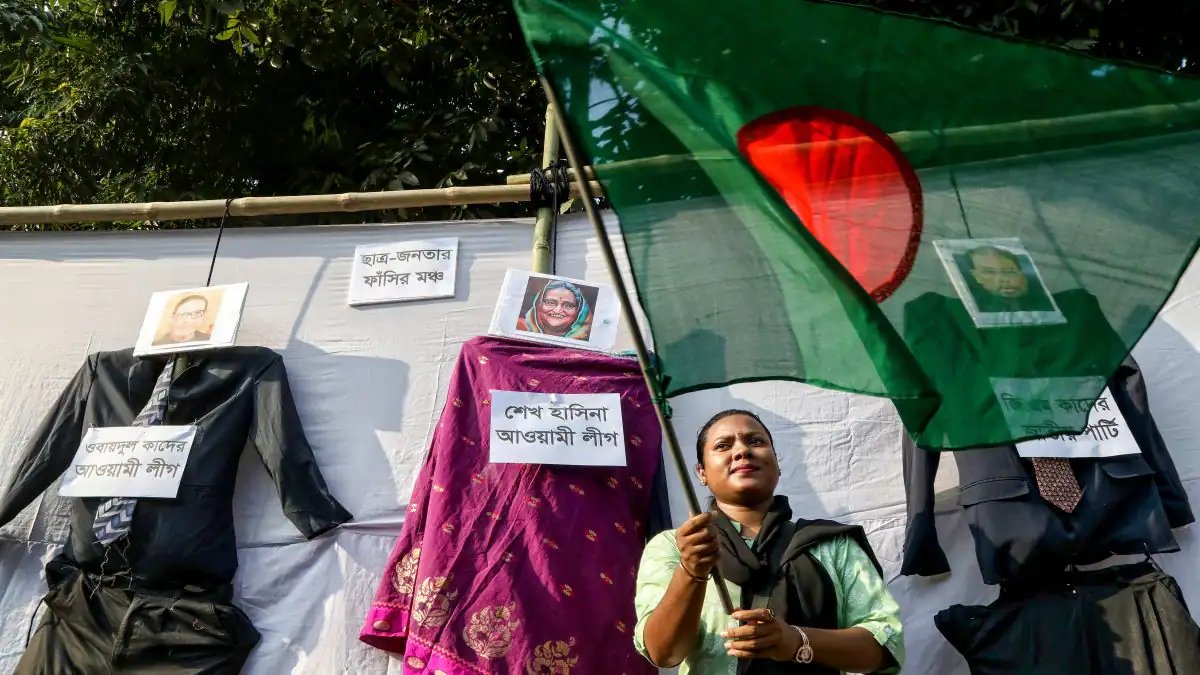
Economic issues that triggered mass protests and led to the fall of the Sheikh Hasina government are now shaping Bangladesh’s election debate.
Economic anxieties that fuelled the massive 2024 student-led protests and ultimately brought down the Sheikh Hasina government are now looming large over Bangladesh’s election discourse.
For many voters, the ballot may be less about abstract political freedoms and more about day-to-day survival, as the country prepares for its general election on 12 February 2026 — the first national vote since the 2024 uprising amid a economic jerk.
Jobs and quotas
Unemployment, especially among educated youth, remains a raw nerve. The government job quota system — long criticised for being opaque and unfair — triggered widespread anger. Aspirations for secure public sector employment collided with perceptions of favouritism, turning jobs into a political flashpoint rather than a substantive policy debate.
Food prices
Runaway food inflation has hit households hard. Rice, edible oil, vegetables and pulses have all seen sharp price rises, steadily eroding real incomes. For low- and middle-income families, food prices have become the most immediate and visible measure of governance failure.
Energy costs
Higher electricity and fuel prices have rippled through the economy. Rising power tariffs have pushed up household bills, while expensive fuel has increased transport and production costs, further feeding inflation. Energy insecurity has also hurt small businesses and informal workers.
Garment sector pressures
The ready-made garment industry — Bangladesh’s economic backbone — is under strain amid a global demand slowdown, wage disputes and rising input costs. Workers face job insecurity, while factory owners warn of shrinking margins, making labour rights and industrial policy a politically sensitive terrain.
Dollar shortage
A persistent foreign exchange crunch has weakened imports, pushed up prices and unsettled businesses. Pressure on the taka against the dollar has become a symbol of broader macroeconomic stress, directly affecting everything from fuel supplies to food prices.
Political contest and democratic concerns
Together, these issues point to a stark reality: economic distress is shaping political choices. Voters may prioritise stability, jobs and prices over broader democratic ideals — at least for now. The larger question is whether parties contesting the election are seriously debating these bread-and-butter concerns, or merely invoking them rhetorically while avoiding hard policy answers.
With the Awami League sidelined, the contest is primarily between the Bangladesh Nationalist Party (BNP), now seen as the frontrunner, and an alliance led by Bangladesh Jamaat-e-Islami and other groups. A newer force, the National Citizen Party — born out of youth-led protest movements — is also contesting seats as part of an 11-party alliance.
Human Rights Watch’s 2026 report has flagged continuing rights concerns under the interim government, even as authorities stress the commitment to free and fair elections. This comes amid reports of rising political violence, atrocities and mob attacks against minorities, particularly Hindus — issues that remain on the margins of the electoral debate despite their wider implications for Bangladesh’s democratic recovery.
End of Article