
Airports are critical national infrastructure anchoring global mobility. Sprawling over hundreds of square kilometres, the world’s largest hubs function like self-contained cities. They sustain economies, enable trade, and move millions with clockwork precision every single day. As per World Atlas, these 10 airports are among the most vital arteries of the modern world in scale and significance.
Beijing Daxing International Airport (PKX), which opened in 2019, is the world’s largest single-building airport terminal, featuring a 700,000-square-meter “starfish” design by Zaha Hadid Architects. Costing $11 billion, it features four runways, is designed for rapid passenger flow to handle 100 million+ passengers, and serves as a major hub to relieve congestion at Capital Airport. Wikipedia
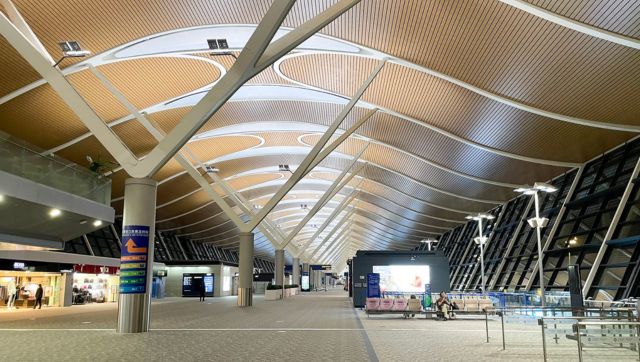)
Shanghai Pudong International Airport (PVG) is a massive 40 km² (15.4 sq mi) global aviation hub, ranking as the world’s 10th largest airport by land area and a top-tier cargo handler. Located 30 km from downtown Shanghai, it serves as a critical, high-capacity international gateway for China, connecting to over 200 destinations and featuring multiple terminals, a satellite terminal, and five runways to support over 76 million passengers annually. Wikipedia