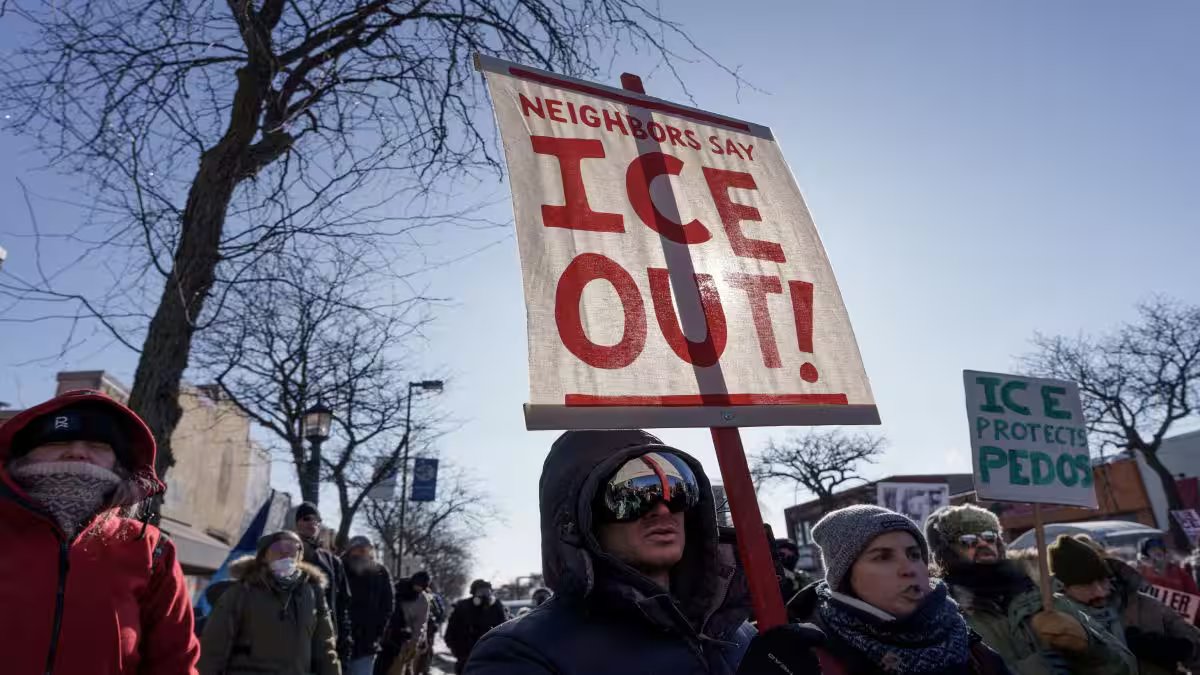
Immigrant parents in Minneapolis are staying indoors and signing emergency guardianship forms amid intensified raids ordered by Donald Trump, with many fearing separation from their children during Immigration and Customs Enforcement operations
Immigrant parents in
Minneapolis are remaining inside their homes and preparing legal safeguards for their children following the deployment of thousands of US immigration officers to the city two months ago under orders from President
Donald Trump. Nina, a 25-year-old asylum seeker from Ecuador, and her husband fear being separated from their 4-year-old daughter, Ayadana, if
detained.
“If we go out to work and they catch us, and my little girl is at school, what am I supposed to do?” Nina told AFP, withholding her full name. “I can’t do anything because they won’t let me leave to get my daughter, and my daughter will be left all alone.”
Barriers to signing legal documents
To stop Ayadana from being placed in social services care, Nina considered signing a Delegation of Parental Authority, known as a DOPA, naming a friend with a green card as legal guardian. She said she could not leave her hiding place to sign the form at a notary’s office.
“I couldn’t go out, go and sign this DOPA at the notary’s office,” she recalled.
Nina tracks reports of Immigration and Customs Enforcement activity in her neighbourhood and leaves home only once a week at night.
Daniel Hernandez, a 41-year-old local entrepreneur who owns several grocery stores in Minneapolis, began assisting families in similar situations. He has worked with a local notary for weeks to pre-stamp DOPA forms and then visits homes so parents can sign them.
“Once all the raids began happening, people realized this is real,” Hernandez said. “I began getting a lot of calls telling me that they needed this piece of paper.”
Since November, he said he had “signed up over 1,000 children” through transfers of parental authority, with another 500 waiting. He added he had not answered many messages because he was overwhelmed. Several organisations in Minneapolis are carrying out similar campaigns.
Arrest case heightens concern
Minneapolis was shaken in January by the arrest of five-year-old Ecuadorian boy Liam Conejo Ramos, along with the shooting deaths of two US citizens and local residents who opposed federal agents’ actions. A photograph of Liam wearing a rabbit-eared hat strengthened Nina’s resolve to protect her daughter, who is nearly the same age.
“It really hurt me to see that child in that situation,” Nina said.
The Trump administration said Liam’s father, who was the target of the arrest, requested the boy be detained with him in Texas. Family lawyers said agents used the child to try to draw his mother out of her home and would not let him remain there. A judge ordered Liam and his father’s release on Saturday.
Richard Torres, a 39-year-old asylum seeker from Venezuela, said his two-year-old daughter, who is autistic, and his wife were sent to Texas to be incarcerated after a routine appointment connected to their case. Authorities said they missed a hearing, which Torres described as a “lie.”
A judge later acknowledged an error and ordered their release, but Torres said the experience left him devastated. He sees delegating parental authority as “the only way to ensure a bit of safety for our families and our children.”
He said he feels reassured having a DOPA to entrust Alani’s care to his wife’s cousin if necessary.
“She’s not American,” he said. “But she’s the only person we really trust.”
End of Article