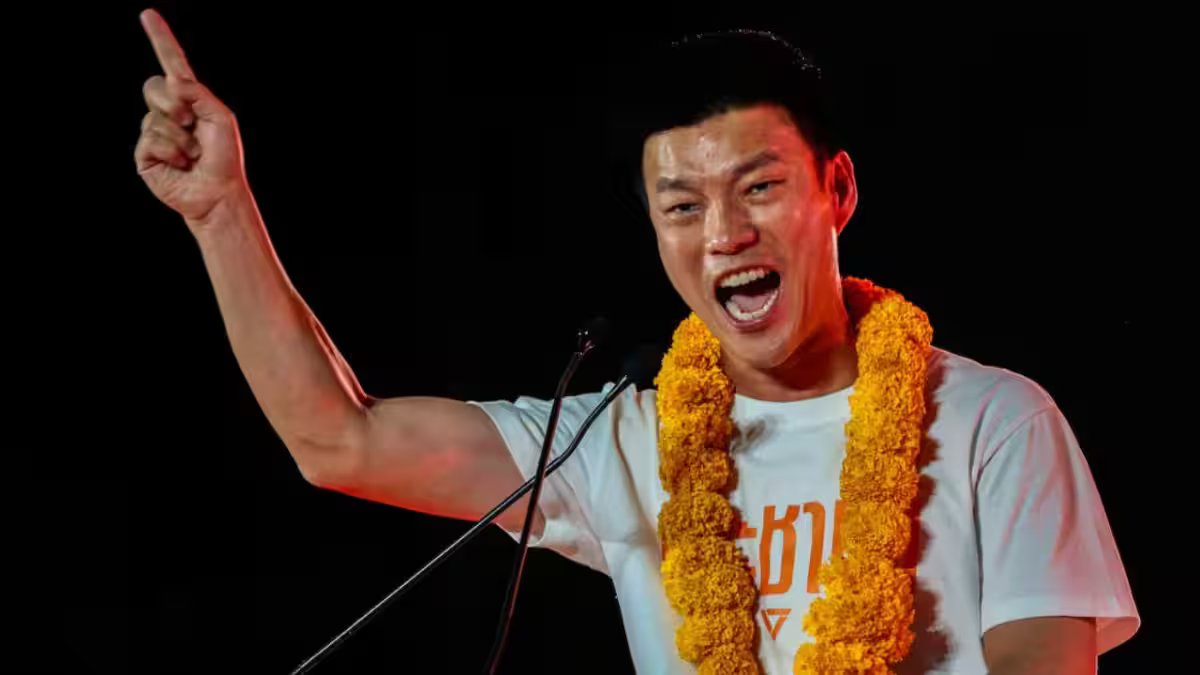
Thailand’s 8 February elections pit reformist leader Natthaphong Ruengpanyawut against Prime Minister Anutin Charnvirakul, with recent polls showing the progressive People’s Party candidate maintaining a strong lead ahead of the crucial vote.
Thailand approaches its 8 February elections with growing tension as recent opinion polls show the progressive People’s Party maintaining a commanding lead over Prime Minister Anutin Charnvirakul’s conservative Bhumjaithai Party. Natthaphong Ruengpanyawut continues to head surveys, presenting a formidable challenge to Anutin’s efforts to retain power after calling a snap election.
The contest has crystallised into a tight three way battle between reformist forces, the former ruling Pheu Thai Party, and conservative establishment interests seeking to preserve traditional political arrangements.
Reformist candidate leads surveys
The latest survey by Suan Dusit University, conducted between 16 and 28 January among 26,621 respondents, placed Natthaphong Ruengpanyawut at the top with 35.1 per cent support as preferred prime minister. Pheu Thai Party’s Yoshanan Wongsawat secured second position with 21.5 per cent backing, while Anutin Charnvirakul trailed in third place at 16.1 per cent.
The People’s Party has positioned itself as the primary progressive force following the dissolution of its predecessor, Move Forward Party, which dominated the 2023 elections but faced dissolution through court action after conservative lawmakers blocked its government formation.
Snap election called during political crisis
Anutin dissolved parliament and called the early February election on 12 December, less than 100 days after assuming the premiership. The move came amid chaotic parliamentary proceedings that threatened to trigger a no confidence vote against his fragile minority coalition government.
The timing also overlapped with Thailand’s bitter three week border confrontation with Cambodia, which heightened domestic political pressures and security concerns. Anutin’s Bhumjaithai Party now faces the task of consolidating conservative support while presenting a credible post election governing strategy through intricate coalition negotiations.
Conservative leader faces consolidation challenge
A separate poll by the National Institute of Development Administration reinforced Natthaphong’s lead, showing 29 per cent support, up from 24.7 per cent earlier in the month. Anutin recorded modest improvement at 22.2 per cent. As leader of the conservative Bhumjaithai Party, Anutin confronts significant pressure to unify traditionalist voters and outline a viable path to form a governing majority. The elections carry substantial implications for Thailand’s political trajectory, with the People’s Party championing structural reforms against entrenched establishment networks.
High stakes ahead of 8 February vote
The February elections represent a critical juncture for Thailand’s democracy, pitting progressive demands for constitutional change against conservative efforts to maintain existing power structures. Natthaphong’s consistent poll lead underscores growing public appetite for reform following years of political turbulence and court interventions.
Anutin’s snap election gamble now hinges on his ability to navigate coalition complexities in what promises to be Thailand’s most unpredictable vote in recent years. Final campaigning will intensify as all three major contenders race to sway undecided voters before polling day.
End of Article


