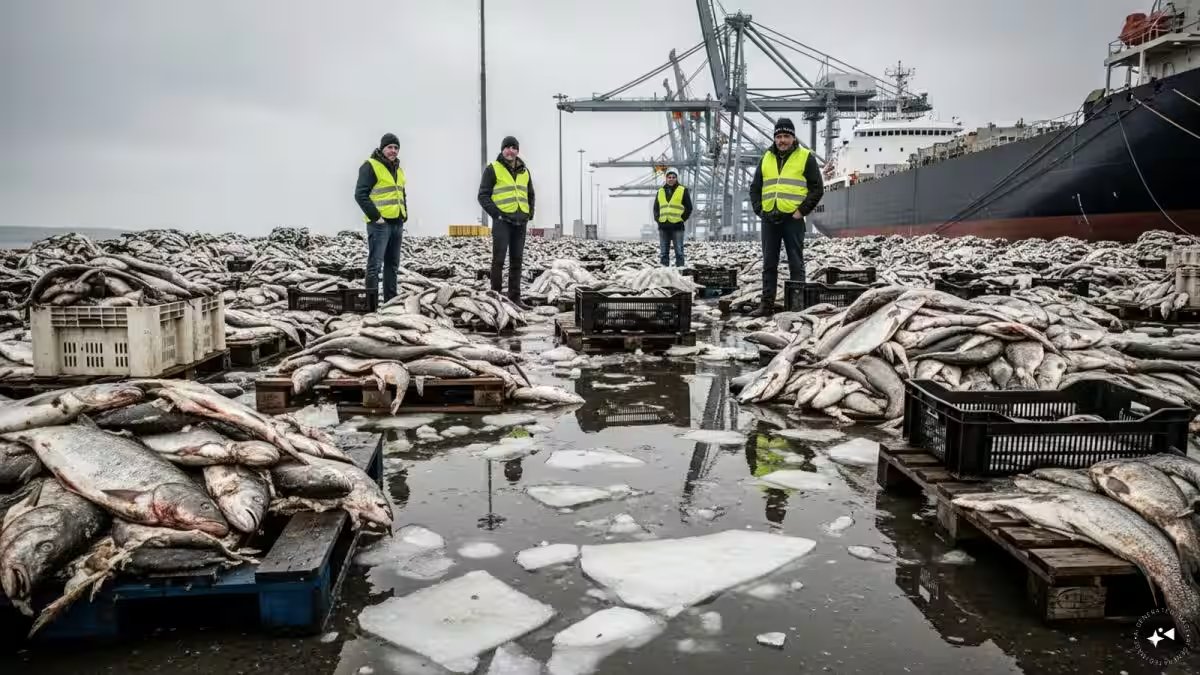
European ports face a seafood backlog after the EU’s new digital catch system, launched on Jan 10 to curb illegal fishing, triggered operational snarls at major hubs like Rotterdam.
The European Union’s push toward a fully digitised trade environment hit a catastrophic wall this week as a systemic failure in the “Catch” digital certification system left hundreds of tonnes of seafood rotting at major port terminals. From the bustling docks of Rotterdam to the processing hubs of Vigo, the flow of fish has come to a grinding halt, exposing the extreme vulnerability of the continent’s supply chain to technological malfunctions.
A digital wall for fresh perishables
The “Catch” system was designed by the European Commission to combat illegal, unreported, and unregulated (IUU) fishing by requiring digital certificates for every shipment entering the bloc. However, what was meant to be a streamlined security measure has turned into a logistical nightmare. The Financial Times reported that the breakdown originated from a database synchronisation error which officials have characterised as an “inexplicable error” given the redundancies supposed to be in place.
Because the system is now the sole legal gateway for imports, port authorities are legally forbidden from clearing cargo without digital validation. For the seafood industry, where “freshness” is measured in hours, the delay is fatal for profit margins. In many cases, high-value shipments of salmon and cod are being diverted or discarded as the electronic “handshake” required between exporting nations and EU customs remains unresponsive.
Economic fallout and the ‘logistical black hole’
The scale of the disruption is staggering. Industry analysts estimate that the logjam is affecting roughly 15% of the daily whitefish intake into Northern Europe. The Financial Times reported that trade bodies are calling for an immediate return to paper-based contingency plans, yet many customs offices have already phased out the infrastructure needed to process physical documents at scale.
One importer told the FT they had dozens of shipping containers of frozen and tinned fish stranded in Rotterdam because the system only cleared around half of shipments,” the report noted. Frequent “inexplicable error messages, server errors” and omissions in the design such as absent ZIP codes and missing species codes have made it difficult to log legally required data, an employee told FT.
Under the original system, the data upload limit was just 2 megabytes, far too small for many lengthy catch certificates; this was later increased to 5MB to ease constraints. But even with tweaks, industry representatives argue that Catch is time-consuming and inflexible, especially for trade partners that have yet to digitise their records.
Seven EU member states including Italy, Spain and Estonia have warned that the system is currently unworkable with Italy’s representative telling a meeting of fishing ministers that Catch “risks paralysing our imports and the logistics of our companies,” the report said.
Industry frustration and political tension
The backlog at ports comes at a delicate time for Europe’s fisheries sector where officials have been pushing for better traceability to combat illegal fishing and protect marine stocks. The Catch system is a key element of revised EU fisheries control rules, part of a broader push to modernise and digitalise the bloc’s monitoring and enforcement regime.
Environmental and industry groups support the system’s aims but have called for a six-month transition period during which traditional paper certificates remain valid and enforcement is more flexible. Seafood Europe, an industry group, warned that delays will “certainly cause deterioration of the quality of fresh fish, according to report.
The FT also reported that EU fishing crews could face fines for minor administrative errors due to the system’s impractical demands for example, counting fish in mixed catches while at sea under difficult conditions.
European Commission officials defend Catch, claiming that thousands of declarations have been validated and that temporary flexibilities have been introduced. But they have stopped short of altering the underlying law instead promising “workable technical solutions” to address system failures.
End of Article