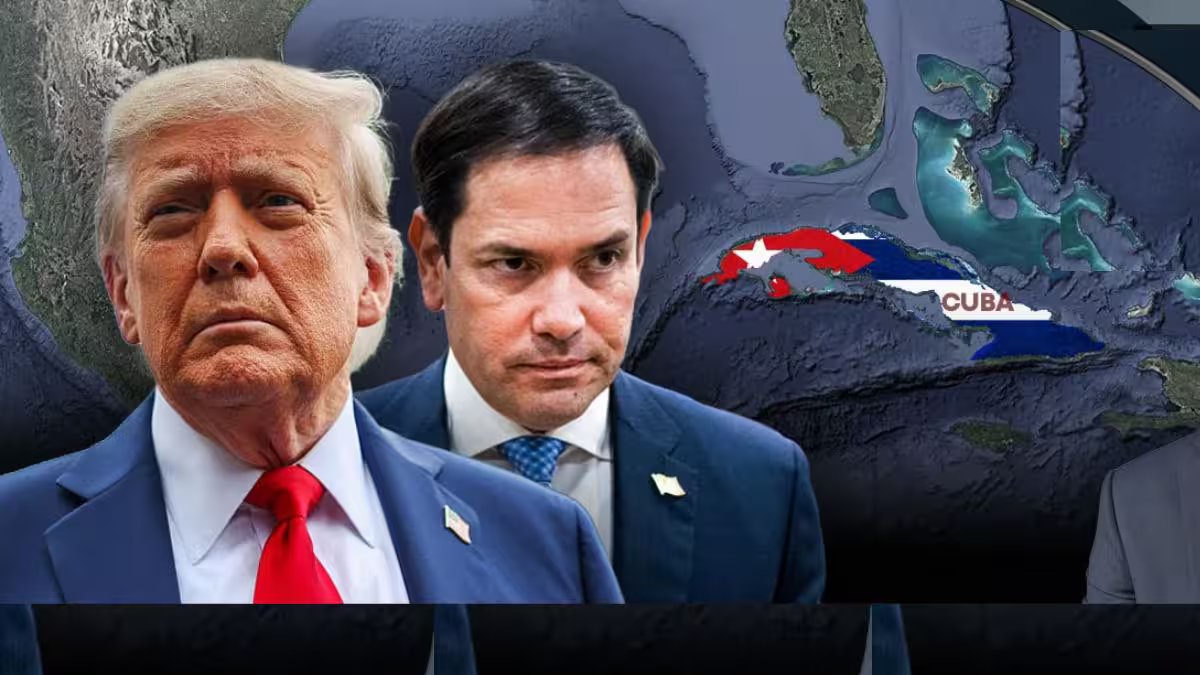
Following the capture of Nicolás Maduro, the Trump administration shifts focus to Havana, utilising economic strangulation and internal diplomatic pressure to seek a total regime change in Cuba by late 2026.
Fresh off the heels of a high-stakes geopolitical victory in Venezuela, the Trump administration appears to have set its sights on a long-standing ideological rival. According to multiple US media reports, Washington has pivoted its “America First” regional strategy toward Havana with the ambitious goal of ending nearly seven decades of Communist rule in Cuba by the end of 2026.
This aggressive stance reflects a significant escalation in US diplomatic pressure toward Cuba, raising questions about future US-Cuba relations, regional stability and the potential costs of pushing for political change in an entrenched one-party state.
The Venezuelan domino and economic strangulation
The catalyst for this renewed focus is “Operation Absolute Resolve,” the recent US operation that resulted in the capture of Venezuelan leader Nicolás Maduro. Emboldened by what they perceive as a successful blueprint for regional intervention, President Trump and his advisors believe the Cuban government is currently at its most vulnerable since the fall of the Soviet Union.
Cuba’s survival has historically been tethered to Venezuelan largesse. However, with Venezuela’s energy funds now largely under US control and the new acting leadership in Caracas pressured to sever ties with Havana, the island’s “lifeline” has been cut. The administration is now employing a policy of deliberate economic strangulation, leveraging the total cutoff of Venezuelan oil to push the Cuban economy toward a breaking point. By severing Havana from its primary fuel and credit source, Washington hopes to create the material conditions for a domestic uprising or a total institutional failure.
The “inside-out” collapse and the Rubio framework
Rather than relying solely on external pressure, the US is reportedly pursuing an “inside-out” strategy. This involves a clandestine effort to identify and recruit “Havana insiders”, high-ranking members of the Communist Party of Cuba (PCC) and the military who may be disillusioned by the country’s downward spiral. The carrot being offered is a deal for personal safety and potential leadership roles in a future administration in exchange for facilitating a transition away from the current regime.
Secretary of State Marco Rubio has reportedly outlined a rigorous three-step framework to manage the aftermath of a potential collapse:
Stabilisation: The immediate deployment of humanitarian aid and the securing of critical infrastructure to prevent a mass migration crisis.
Recovery: A total overhaul of the energy sector and the introduction of market-friendly reforms to stimulate private growth.
Transition: The formal establishment of a post-Communist government.
The administration is betting that the younger generation of the PCC, less ideologically rigid than veteran leaders like Raúl Castro and President Miguel Díaz-Canel, will eventually break ranks to save the nation from total ruin.
Vulnerabilities, divisions and global implications
The Trump administration is betting that internal fractures, particularly a generational divide within the PCC and the military could widen under economic and political pressure. Veteran figures such as Raúl Castro and President Miguel Díaz-Canel are seen as potential targets for isolation from younger cohorts who might be more inclined to negotiate a transition. But analysts caution that Cuba’s regime, rooted in decades of one-party rule, lacks strong, independent opposition structures, making any transition unpredictable and fraught with risk.
Domestically, the move is also seen as part of Trump’s bid to solidify support among Hispanic voters in Florida, particularly Cuban and Venezuelan expatriate communities that have long advocated for stronger actions against Havana. Critics, however, warn that the administration’s approach, driven by what some see as “impatience” and unilateral pressure could backfire, unleashing instability rather than a stable democratic transition.
Internationally, this pivot places Cuba at the centre of a broader geopolitical contest. Trump’s wider “America First” regional policy has already applied pressure on Venezuela, and has included assertive stances in areas such as Greenland and the Arctic. Now, Cuba faces heightened US focus at a time when external support from allies like Venezuela has dissipated, and external actors like Russia and China may see opportunities to counterbalance Washington’s influence.
Havana remains defiant. Cuban officials have rejected US pressure as foreign interference and reaffirmed their commitment to sovereignty, even as public protests reflect deep frustrations with economic hardship and fears of what downward spirals in governance could mean for everyday life.
Uncertainty and risk
As the year progresses, analysts will be watching whether the Trump administration moves beyond rhetoric and informal outreach to tangible policy actions whether diplomatic, economic or covert that could hasten Cuba’s political transition. The path ahead is uncertain: unlike Venezuela, Cuba lacks a robust opposition infrastructure and has endured decades of external pressure without succumbing to regime change.
The bold pursuit of Cuba’s political transformation reflects Trump’s intensified posture toward perceived adversaries in the hemisphere but also highlights the profound uncertainties inherent in translating aggressive foreign policy goals into a peaceful and sustainable political outcome.
End of Article