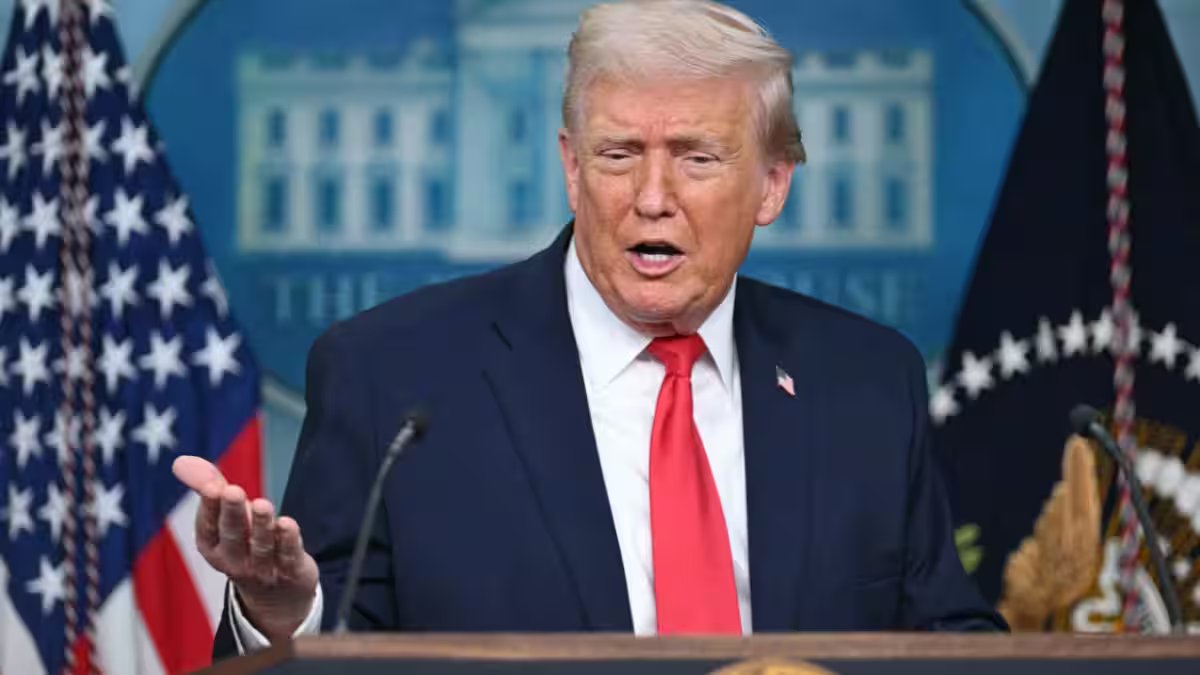
US President Donald Trump has officially launched his proposed Board of Peace at Davos, outlining an ambitious global conflict-resolution body with paid permanent membership, strong presidential powers and an expanded remit beyond Gaza.
US President Donald Trump has formally launched his proposed “Board of Peace” at the World Economic Forum in Davos, unveiling an initiative he says is designed to broker and sustain peace in global conflict zones, starting with Gaza but extending far beyond it.
The announcement, made on the margins of the high-profile gathering of political and business leaders marks the most concrete step yet in Trump’s attempt to recast US-led diplomacy through a new, highly centralised international body.
The Board of Peace, first floated by Trump last September as part of his plan to end the war in Gaza is being positioned as a standing mechanism to address conflicts worldwide. According to its charter, the board launches with 19 founding members, with Trump himself as chairman and is tasked with carrying out “peace-building functions in accordance with international law”.
From Gaza proposal to global ambition
Trump’s Davos declaration reflects a notable expansion of the project’s original scope. When first proposed, the Board of Peace was framed largely as a response to the Gaza conflict. Since then, the White House has made clear that the board’s remit would extend to other geopolitical flashpoints, giving it a broad and potentially sweeping mandate.
Under the charter, member states would normally serve three-year terms. However, the structure includes a controversial provision: countries can secure permanent membership by paying $1 billion each to fund the board’s activities. Supporters argue this would provide predictable financing and ensure sustained engagement, while critics see it as turning peace diplomacy into a pay-to-play enterprise.
The White House has also announced the creation of a Gaza Executive Board to support a transitional Palestinian administration in the enclave. Some members overlap with the broader Board of Peace, though the administration has not clarified how the two entities will coordinate, or where authority between them will ultimately lie. The lack of operational detail has prompted questions about whether the initiative risks becoming duplicative or internally fragmented from the outset.
Powerful executive role raises questions
At the heart of the initiative is Trump himself. The board’s charter grants its chairman extensive executive authority, including the power to veto decisions and remove members, albeit subject to certain constraints. The concentration of power is consistent with Trump’s leadership style, but it also raises concerns among diplomats and analysts about checks, balances, and long-term credibility.
The White House has named US Secretary of State Marco Rubio, Trump’s special envoy Steve Witkoff, former British prime minister Tony Blair, and Trump’s son-in-law Jared Kushner to the founding Executive Board, signalling a mix of official US representation, international political experience, and close presidential confidants. The inclusion of Kushner, who played a central role in Middle East diplomacy during Trump’s previous term, underscores how closely the project is tied to the president’s personal approach to peace negotiations.
What remains unclear is what legal authority the Board of Peace will possess, and whether it will have any enforcement mechanisms beyond diplomatic persuasion. The charter does not spell out how the board would interact with existing international institutions such as the United Nations, nor how overlapping mandates would be managed. That ambiguity could complicate coordination in crisis situations, particularly where multilateral legitimacy is critical.
Symbolism, scepticism and strategic intent
Trump’s choice of Davos to formally launch the board was deliberate. By unveiling the initiative before a global elite audience, he signalled both ambition and confidence, portraying the United States as the indispensable broker of peace. In public remarks, Trump suggested that “everybody wants to be part of it”, projecting momentum even as key practical questions remain unanswered.
Supporters view the Board of Peace as an attempt to break what Trump has repeatedly described as the paralysis of traditional multilateral frameworks. They argue that a smaller, action-oriented body led by the US could move faster and deliver results where larger institutions have stalled.
Sceptics, however, warn that the initiative risks undermining established international norms, particularly if it sidelines existing organisations or concentrates decision-making in the hands of one leader. The provision allowing permanent membership in exchange for large financial contributions has further fuelled criticism that the board could privilege wealth over representation.
As the Board of Peace moves from announcement to implementation, its credibility will hinge on clarity: how it resolves conflicts, how it cooperates with existing institutions, and whether it can demonstrate results beyond rhetoric. For now, Trump’s Davos launch has succeeded in placing the initiative firmly on the global agenda — even as debate over its legitimacy, effectiveness, and intent intensifies.
End of Article