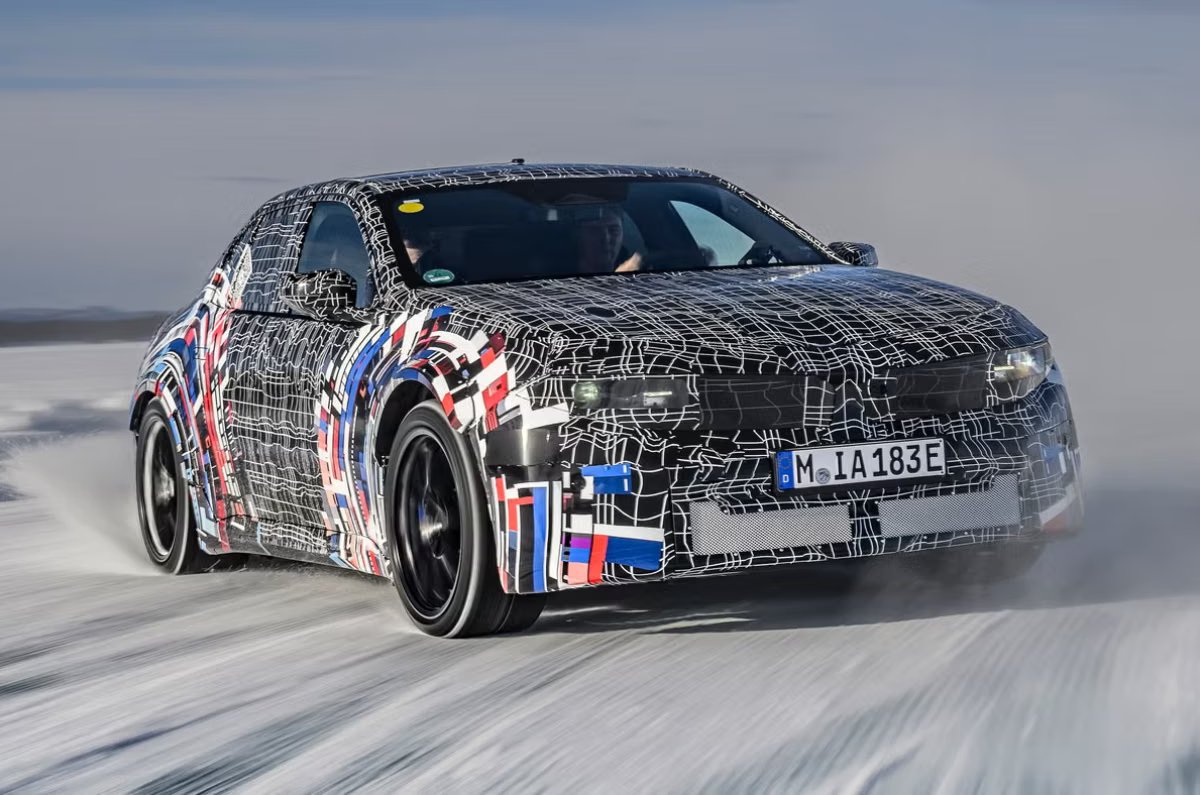
BMW has confirmed that its first fully electric M car – an electric M3 based on the Neue Klasse EV platform – will feature simulated gearshifts and synthetic sound. The company says this is aimed at giving the EV a more familiar and engaging driving feel.
The electric M3 is due as early as the end of 2027 and will be based on the upcoming electric i3. BMW has not shared power output figures yet, but has made it clear that the car is being developed to maintain M’s reputation for driver-focused performance.
- Battery capacity to be at least 100kWh
- BMW hints a petrol M3 will continue alongside
- Quad-motor layout with one motor per wheel
Simulated gearbox aimed at familiar M feel
Dominik Suckart, BMW’s high-voltage battery chief, said to Autocar UK that the electric M3 has “a legacy to continue”. He also said BMW wants the platform to deliver a “familiar M driving experience”, even though it will be fully electric.
That is the reason BMW is developing simulated gearshifts and sounds for the car. This is similar to approach taken by Hyundai in its Ioniq 5 N and Ioniq 6 N, which also use synthetic gearshifts and sound to make its performance EVs feel more involving.
Quad motors and rear-drive modes confirmed
BMW has confirmed the electric M3 will use four motors, instead of the more common twin-motor setup, used in the Hyundai’s. The four motors will be connected to a single control unit, with an inverter and reduction gearbox for each wheel, along with torque vectoring.
The M car will have a specific software stack called M Dynamic Performance Control that will give “never-seen-before handling and traction control”, according to Suckart. This will give it the ability to switch from four-wheel drive to rear-wheel drive for track driving or drifting, as well as a rear-wheel-drive mode intended to help improve range.
BMW said the electric M3 will get a battery with a capacity of at least 100kWh, designed to offer both high sustained performance and strong peak output with the ability to recuperate energy even under hard deceleration. The battery housing will form part of the car’s structure, and will be attached to both the front and rear axles on the M3 version for added stiffness, unlike the standard i3 where it is only attached at the rear.
BMW also confirmed that the M3 EV will use the ‘Heart of Joy’ high-performance control unit first shown on the BMW Vision Driving Experience concept. This unites all of the driving experience controls to enable faster and more intuitive reactions.
Natural fibres to help control weight
BMW has acknowledged that modern M cars are heavy, and said it will use natural fibres in place of carbon fibre in some areas – as seen on the M4 GT4 race car – to keep weight down where possible. Natural fibres have a 40 percent lower CO2 emissions equivalent than carbon fibre.
BMW has also strongly suggested that a petrol M3 will continue alongside the electric version, using an updated version of the B58 straight-six engine.