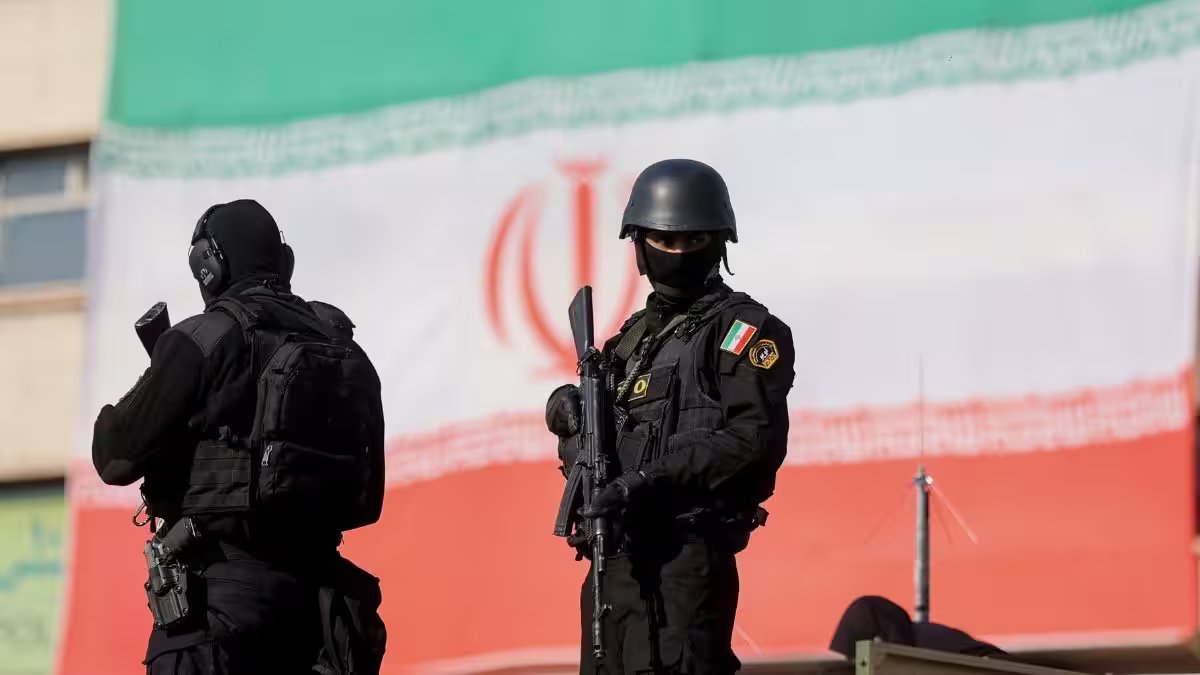
Iran is confronting one of the most serious internal crises since the 1979 Islamic Revolution, as widespread protests driven by economic hardship have evolved into a direct challenge to the country’s clerical leadership.
Demonstrations have erupted across all 31 provinces, security forces have responded with force, and the government has imposed a sweeping internet blackout to restrict the flow of information.
Human rights organisations say hundreds have been killed and thousands arrested, while Iranian officials blame foreign-backed “terrorists” and warn of harsh punishment.
At the same time, United States President Donald Trump has warned of military action and announced new trade penalties targeting Iran’s global business partners.
How protests have spread nationwide
The current wave of unrest began on December 28, when rising prices and worsening living conditions sparked demonstrations in multiple Iranian cities.
What initially started as protests over economic hardship
soon transformed into broader expressions of anger toward Iran’s ruling clerical system, which has remained in power for more than four decades.
Public frustration has been fuelled by long-standing resentment toward the powerful Revolutionary Guards, whose extensive business interests span oil and gas, construction, and telecommunications and are valued in the billions of dollars.
Many Iranians increasingly view these institutions as symbols of inequality and corruption, especially as daily life becomes more expensive and job prospects shrink.
According to the US-based Human Rights Activists News Agency (HRANA), more than 600 separate protests have taken place across all 31 of Iran’s provinces.
By late Monday, the group said it had verified the deaths of 646 people, including 505 protesters, 113 members of the military and security forces, and seven bystanders. HRANA also said it was investigating a further 579 reported deaths.
Since the unrest began, 10,721 people have been arrested, the group said. Iranian authorities have not released an official nationwide death toll.
Despite the mounting toll, protests have continued. Supreme Leader Ayatollah Ali Khamenei publicly declared that “rioters must be put in their place,” but demonstrations have not shown signs of stopping.
How Tehran has responded with deadly force
As security forces moved to suppress the demonstrations, eyewitness accounts and video footage have revealed a harsh crackdown on the streets.
Two witnesses in Tehran told CNN that security personnel armed with military rifles
killed “many people” during protests on Friday night.
An Iranian social worker who attended a demonstration the same day said authorities fired at protesters and used a Taser on a girl’s neck until she lost consciousness.
Human rights groups say lethal force has not been limited to extreme circumstances. Michael Page, deputy director of Human Rights Watch’s Middle East and North Africa division, said government repression has sometimes pushed people toward more “extreme” actions, but even then, deadly force has not been used only as a last resort.
Nine minors have also been killed since the protests began, according to HRANA. However, the full scale of casualties remains uncertain due to the government’s internet shutdown and limited access for journalists.
The human cost of the crackdown has been made visible through leaked videos from the Kahrizak Forensic Medical Center, located south of Tehran.
Despite the internet blackout, footage circulated over the weekend showing families gathering around rows of black body bags in makeshift morgues and in the facility’s courtyard, desperately searching for their loved ones.
In one video obtained by CNN, a crowd stands in front of a screen displaying photos of the deceased as relatives try to identify faces. According to information seen on the screen and images received by HRANA, around 250 bodies were estimated to be at the facility.
Another clip shows black body bags lined along a walkway outside the building, with more bodies scattered across unpaved ground near parked cars. Inside a nearby warehouse, rows of bodies in black bags were laid out on the floor and on metal tables.
The activist group Mamlekate said the number of bodies brought to the forensic institute was so high that they were being placed in the courtyard.
Iranian state media acknowledged the grim scenes but insisted that most of the dead were “ordinary people” who were not protesters. Authorities blamed their deaths on “rioters.”
State-affiliated outlets such as Tasnim News Agency and Student News Agency released their own footage from the area. In one video, a reporter said he had spoken to families who claimed their relatives were not involved in protests.
Human rights organisations have rejected the government’s narrative. “The Iranian authorities are responsible for the deaths and injuries of bystanders at the protests,” Page said.
While Interior Minister Eskandar Momeni told state television that security forces “to an extent,” exercise “maximum restraint,” accounts from witnesses and activists suggest a much more aggressive response on the ground.
Families of victims have also gathered at Tehran’s Behesht Zahra Cemetery, where HRANA reported that relatives “gathered at burial sites and chanted protest slogans.”
How Tehran is using the ‘kill switch’ to curb information flow
Iran has moved aggressively to limit the flow of information about the protests by imposing a nationwide internet shutdown. The blackout, which began last Thursday, has severely restricted access to online platforms, messaging services, and international communication.
NetBlocks, a group that monitors internet connectivity, reported that national access fell to just 1 per cent of ordinary levels by the fourth day of the shutdown. Cloudflare Radar said overnight internet traffic in Iran dropped to “effectively zero.”
Iran uses what experts describe as an “internet kill switch,” allowing the government to exert full control over the country’s digital infrastructure. Similar blackouts were imposed during protests in 2019 and 2022, as well as during a 12-day war with Israel in 2025.
Despite the restrictions, some Iranians have
reportedly been able to access the internet through Elon Musk’s Starlink satellite service, according to three people inside the country.
Journalists also face significant obstacles. Reporting inside Iran often requires official permission to travel, and reporters risk harassment or arrest by authorities. The internet blackout has further complicated efforts to verify events or assess the true scale of the unrest.
Iranian state media has provided limited coverage of the demonstrations, while online videos that do emerge often offer only brief, shaky glimpses of crowds or the sound of gunfire.
How the Iran govt is blaming “terrorists”
Iran’s leadership has framed the protests not as a popular uprising but as a coordinated security threat involving foreign-backed actors.
The Ministry of Intelligence said it had detained “terrorist” teams responsible for killing paramilitary volunteers loyal to the clerical establishment, burning mosques, and attacking military sites.
The statement, carried by state media, described the unrest as a campaign of violence rather than public dissent.
Foreign Minister Abbas Araqchi declared that the situation was “under total control” and said 53 mosques and 180 ambulances had been set on fire since the protests erupted.
Addressing a large crowd in Tehran’s Enqelab Square, parliament speaker Mohammad Baqer Qalibaf said Iranians were fighting on multiple fronts.
He described the situation as involving “economic war, psychological warfare, military war against the US and Israel, and today a war against terrorism.”
Iranian President Masoud Pezeshkian warned citizens against joining what he called “rioters and terrorists” and foreign-backed “mercenaries.” He differentiated between peaceful demonstrators and those who aimed to “disrupt the entire society.”
Iran’s attorney general went further, vowing “merciless” legal action against those labelled as rioters, including the possible use of the death penalty.
However, Michael Page said Iranian authorities have historically failed to distinguish between protesters and so-called rioters.
“They’ve treated any type of large-scale protest as a threat to their rule and have used force in accordance with that view,” he said.
Despite the scale of the unrest, there have been no visible signs of divisions within Iran’s Shi’ite clerical leadership, military, or security forces. The opposition remains fragmented, with no unified leadership structure or coordinated strategy.
How the US has reacted to the Iran protests
Tehran said on Monday that it was keeping communication channels with Washington open as Trump considered how to respond to Iran’s deadly suppression of protests — one of the most serious challenges to clerical rule since 1979.
Late on Monday, Trump announced that any country doing business with Iran would face a new 25 percent tariff on its exports to the United States. “This Order is final and conclusive,” Trump said in a social media post.
He did not provide details about the legal authority for the tariffs or clarify whether they would apply to all of Iran’s trading partners.
Iran,
already under heavy US sanctions, exports much of its oil to China. Other major trading partners include Turkey, Iraq, the United Arab Emirates, and India.
China criticised Trump’s approach. The Chinese embassy in Washington said it opposed “any illicit unilateral sanctions and long-arm jurisdiction” and would take “all necessary measures” to safeguard its interests.
Trump has also warned Iran’s leaders that the United States would attack if security forces opened fire on protesters. On Sunday, he said the US might meet Iranian officials and that he was in contact with Iran’s opposition.
White House press secretary Karoline Leavitt said military options were not the administration’s first choice. “Diplomacy is always the first option for the president,” she told reporters.
She added that Washington was receiving different messages privately from Tehran than what Iranian officials were saying publicly.
“What you’re hearing publicly from the Iranian regime is quite different from the messages the administration is receiving privately, and I think the president has an interest in exploring those messages,” she said.
Iranian Foreign Minister Araqchi confirmed ongoing communication with US officials, although he said Washington’s proposals were incompatible with its threats.
“Communications between (U.S. special envoy Steve) Witkoff and me continued before and after the protests and are still ongoing,” he told Al Jazeera.
Meanwhile, the US Department of State warned American citizens in Iran to consider leaving the country by land through Armenia or Turkey. “US nationals are at significant risk of questioning, arrest, and detention in Iran,” the department said on its TravelGov account on X.
Trump was expected to meet senior advisers on Tuesday to discuss potential responses to Iran, a US official told Reuters.
The Wall Street Journal reported that options under consideration included military strikes, the use of secret cyber weapons, expanding sanctions, and providing online assistance to anti-government sources. However, striking Iranian military installations carries significant risks, as some facilities are located in heavily populated areas.
In an interview with CBS News, Reza Pahlavi — the son of Iran’s last shah,
who lives in exile in the US — urged Trump to intervene quickly. “I think the president has a decision to make fairly soon,” Pahlavi said.
Iran has responded with its own warnings. Qalibaf cautioned Washington against what he described as “a miscalculation.” “Let us be clear: in the case of an attack on Iran, the occupied territories (Israel) as well as all US bases and ships will be our legitimate target,” he said.
Tehran’s regional influence has already been weakened by recent conflicts. Following the October 7, 2023, attack on Israel, Iran’s allies — including Lebanon’s Hezbollah — suffered significant setbacks.
Israel also killed top Iranian military commanders during the June war, in which Israeli and US forces bombed Iranian nuclear sites over a 12-day period.
Trump said on Sunday that Iran had called to negotiate about its disputed nuclear programme. “A meeting is being set up, but we may have to act because of what is happening before the meeting,” he told reporters on Air Force One.
The unrest in Iran and the possibility of further US action have begun to affect global markets.
World oil prices reached seven-week highs on Monday amid concerns that Iran’s exports could decline due to political instability and potential sanctions or military responses.
Iran is a major oil producer, and disruptions to its supply could have significant consequences for global energy markets.
With inputs from agencies
End of Article