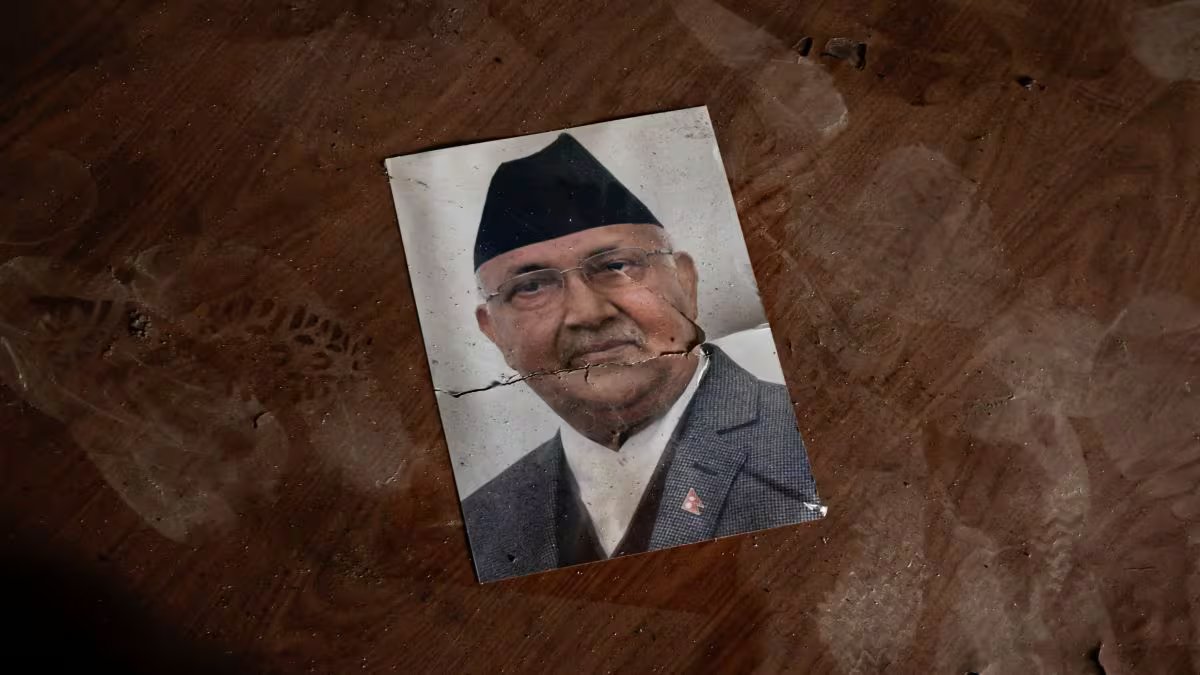
Nepal’s former prime minister KP Sharma Oli has claimed that last year’s Gen Z-led protests that toppled his government were not spontaneous but the result of long-term planning. His remarks come as the country continues to deal with the political and social fallout from the deadly unrest.
Nepal’s former prime minister KP Sharma Oli has said that last year’s Gen Z-led protests, which toppled his government, were not spontaneous but the result of long-term planning. His remarks come as the country continues to grapple with the political fallout from the deadly unrest.
The comments follow a statement Oli gave last week to a government commission investigating the crackdown on the protests.
Regional pattern of unrest
In an interview with RT India, Oli suggested that the September uprising mirrored broader regional trends, citing similar unrest in Sri Lanka and Bangladesh in recent years. He argued that the events in Nepal were not coincidental.
“People were talking from the very beginning,” Oli said, claiming that references to protests in neighbouring countries had circulated widely in Nepal even before the demonstrations began. He described the movement as “a planned moment” rather than a purely organic expression of youth anger, suggesting that such ideas were being amplified globally through news and other material.
Government failure acknowledged
When asked whether intelligence agencies had provided prior warnings, Oli said formal alerts were unnecessary. “Sri Lanka was loudly telling us, Bangladesh was telling us,” he said, adding that the threat had been visible for years. He also admitted that the government had failed to respond effectively, saying the situation quickly went “out of our capacity.”
Oli under investigation
Oli’s remarks come amid ongoing scrutiny over the state’s handling of the protests. Earlier this month, he provided a statement to a government commission probing the crackdown, AFP reported. While he had previously questioned the commission’s constitutional basis, officials recorded his statement at his residence after issuing a summon. Authorities have also imposed travel restrictions on Oli and several other former senior officials as the inquiry continues.
The Gen Z protests
The protests erupted in September after a brief government ban on social media but rapidly escalated into nationwide demonstrations led by young activists under the “Gen Z” banner. Frustration over economic stagnation, corruption, and entrenched political elites fuelled the movement.
Violence quickly intensified, with parliament and government offices set ablaze on the second day, resulting in the collapse of Oli’s government. At least 76 people were killed during the unrest, according to AFP.
Oli resigned shortly after protesters set fire to his house and other government buildings. An interim administration led by former chief justice Sushila Karki took charge, and Nepal is scheduled to hold elections on March 5, 2026.
End of Article