For over four months now, Indian exporters have been dealing with a steep 50% tariff imposed by the US under President Donald Trump. With no immediate relief in sight, companies are being forced to cut prices, share tariff costs with buyers, and shift production to other countries.
While companies are trying to reduce dependence on the US, Vij cautioned that moving to new markets is not easy. Reconfiguring supply chains, machinery and buyer relationships can take six to eight months.
Pallab Banerjee, MD and Group President of Pearl Global, said US buyers are unwilling to absorb the full impact of tariffs unless there is clarity on how long they will last.
Most Indian suppliers are now sharing the tariff burden, which has directly hit profitability. “Most of the manufacturers in India are taking a hit of around 25% tariff, which translates to nearly a 15% cut in selling prices,” Banerjee said, adding that this is not sustainable for long.
For
Pearl Global, the impact is relatively lower as over 70% of its manufacturing happens outside India, mainly in Bangladesh, Vietnam, Indonesia and Guatemala. However, Banerjee admitted that India-based production for the US market is slowing and companies are actively rebalancing order books towards other geographies.
The domestic impact, especially on smaller enterprises, is severe. Banerjee warned that smaller players are likely to give up sooner, leading to potential job losses and factory closures.
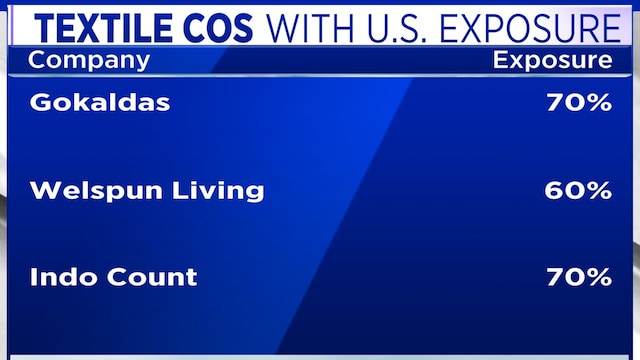
Vij echoed this sentiment, stating that key textile hubs like Tirupur, Karur, and the NCR-Panipat market are all suffering. “MSMEs are really hit very bad,” he said, adding that even large listed players are feeling the pressure. The cotton garment sector, which accounted for about $10 billion in annual exports to the US, has been particularly battered.
Export data reflects this stress. Compared to September 2024, India’s textile exports to the US fell 5–6% in September 2025. In contrast, Bangladesh’s exports rose by around 10%, while Vietnam saw growth of about 2.5%, indicating a clear shift in sourcing by American buyers.
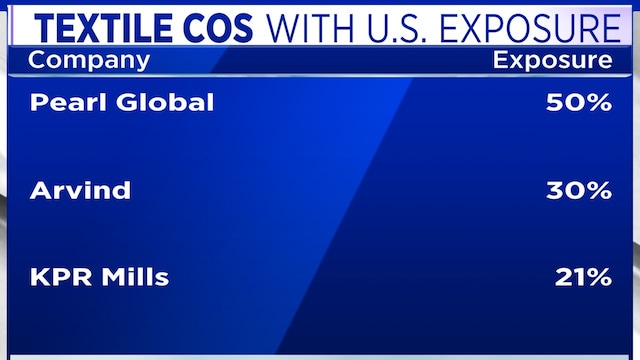
Vij added that government support through credit facilities and schemes like PLI is helping, but more is needed. He stressed the importance of making raw materials such as cotton and man-made fibres available at international prices to help exporters stay competitive.



This is my first time pay a quick visit at here and i am really happy to read everthing at one place