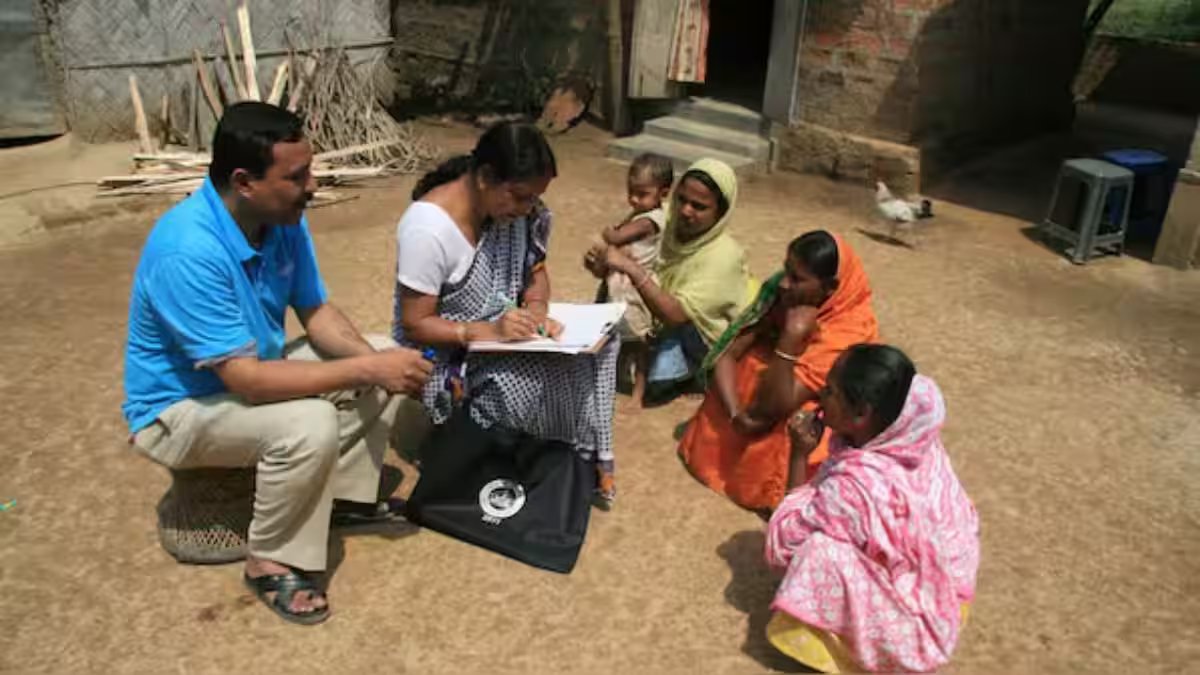
In a groundbreaking development, the Census will be conducted digitally for the first time in the country’s history. The decennial exercise was delayed by the COVID-19 pandemic in 2021
India’s Union Home Ministry has notified the dates for the first phase of the Census, which will include housing and housing-listing operations conducted over a period of 30 days. Each state and Union Territory would be required to complete the first phase between April 1 and September 30 this year.
Exercising the authority granted by Sections 3 and 17A of the Census Act, 1948, in conjunction with Rules 6A and 6D of the Census Rules, 1990, the Central Government has issued a new directive. This notification replaces the previous order from January 7, 2020, “except as respects things done or omitted to be done before such supersession”.
Under these updated guidelines, the government has introduced a self-enumeration feature for the 2027 Census housing listing phase. This specific option “shall be conducted in 15 days’ time just before the start of house-to-house houselisting operations of 30 days”.
Census to be held digitally
In a groundbreaking development, the Census will be conducted digitally for the first time in the country’s history. The decennial exercise was delayed by the COVID-19 pandemic in 2021.
The exercise will span two phases – house listing and housing Census, followed by population enumeration. The timeline of the entire process has been set between April 1, 2026 and February 28, 2027, with 00:00 hours of March 1, 2027, as the reference date.
Last month, the government stated that Census data dissemination will be improved and made more user-friendly to ensure that all policymaking queries are available at the click of a button. Through Census-as-a-service (CaaS), ministries will receive data in a clean, machine-readable, and actionable format.
Prime Minister Narendra Modi held a Union Cabinet meeting last year, approving the proposal for conducting the Census of India 2027 for Rs 11,718.2 crore.
Approximately 3 million field workers will participate in the Census, which stands as the world’s most extensive administrative and statistical undertaking. As the inaugural digital Census, the project will utilise a mobile application for gathering information and a centralised portal for oversight, resulting in higher data accuracy.
End of Article