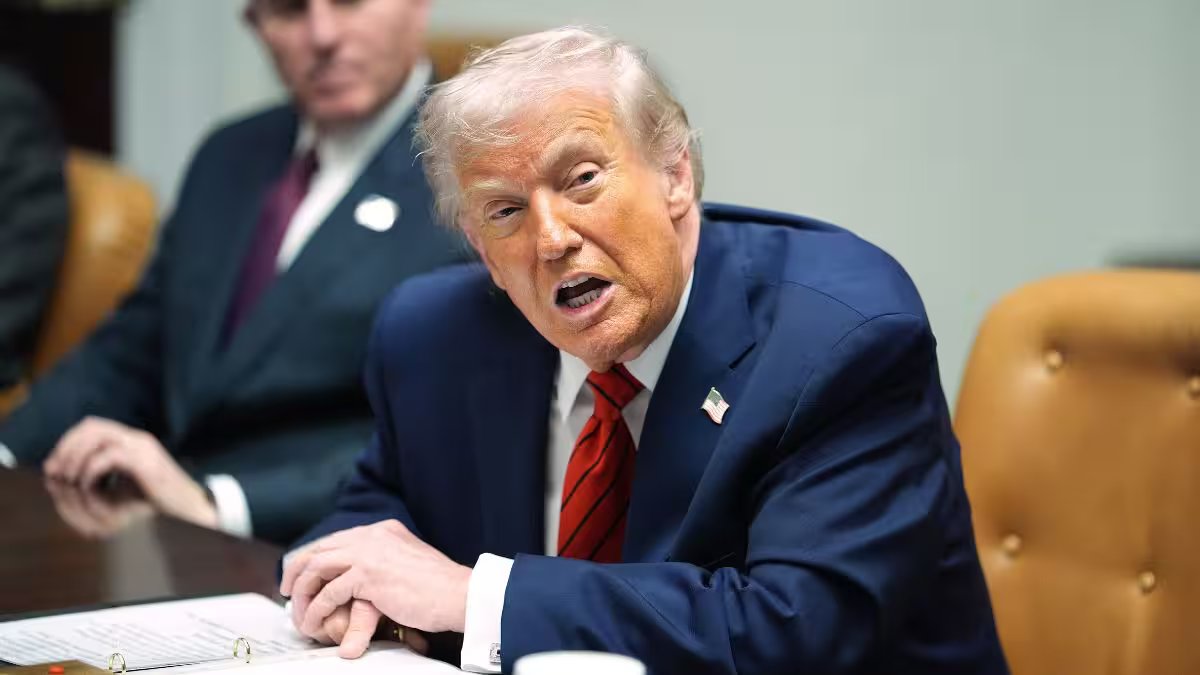
Trump’s administration moves to address affordability concerns amid rising housing and healthcare costs as Democrats target economic issues to gain traction with voters ahead of the 2026 midterm elections.
As the 2026 midterm elections loom, President Donald Trump’s administration is scrambling to address rising public concern over affordability, a political vulnerability that Democrats are poised to exploit. With inflation still biting household budgets, soaring housing costs and intense voter scrutiny on economic issues, the administration is seeking ways to counter a narrative that Republican policies favour markets over everyday Americans.
While Trump has largely focused his political muscle on culture war issues like abortion and immigration, recent developments suggest the White House is increasingly aware that economic pressures could erode Republican support, particularly among independents and younger voters. Democrats in Congress, sensing an opening, have sharpened their messaging on housing and cost-of-living pressures as part of a broader midterm strategy aimed at flipping legislative seats.
Affordability turns into a frontline political issue
Democrats have long argued that affordability, encompassing healthcare, housing and basic living costs is a key ballot-box concern for voters. Senate Democratic leaders such as Majority Leader Chuck Schumer and Senator Elizabeth Warren have repeatedly highlighted rising home prices and stagnant incomes as critical frustrations for middle-class Americans. In recent weeks, they have pushed legislation aimed at increasing housing supply and reducing borrowing costs, tying the issue directly to Republican legislative priorities.
Trump’s team, for its part, acknowledges the political risk. A senior White House official told Yahoo News that the administration was aware of voters’ economic anxieties and was examining policy options that could “provide immediate relief” and “change the narrative” as the election year intensifies. The official said that the White House is looking at a suite of proposals ranging from regulatory relief on housing development to targeted tax incentives, although no formal plan has been announced.
Despite the focus on affordability rising to the surface, Trump’s broader political identity built on themes of nationalism and culture issues has historically left economic policy in the background. In the early weeks of 2026, however, his advisers appear to be acknowledging that voters care about pocketbook issues, and that ignoring them could hand Democrats a potent line of attack.
Healthcare, housing and the cost squeeze
One area where affordability intersects with partisan debate is healthcare. While the White House has touted cost-cutting measures tied to drug pricing and insurance transparency, critics argue that Trump’s earlier stances, especially on abortion restrictions that could limit access to federally funded services complicate the broader affordability argument by entwining social policy with economic pressures.
Housing, however, has become a particularly stark front in the battle over economic sentiment. Home prices in many US markets have continued to outstrip wage growth, making homeownership increasingly unaffordable for first-time buyers. Schumer, Warren and other Democratic leaders have seized on this, faulting Republicans for failing to tackle supply shortages and for what they describe as a lack of meaningful investment in affordable housing.
For Trump, who has at times dismissed calls for expanded government intervention, the housing issue presents both an analytical challenge and a political opportunity. His administration could potentially pivot toward deregulation of building codes and incentives for construction firms, an approach that aligns with conservative policy but also directly addresses cost pressures. The question, analysts say, is whether this will be enough to blunt the Democrats’ framing of Republicans as inattentive to everyday economic concerns.
Midterms and the political arithmetic
The stakes are high. Midterm elections traditionally serve as a referendum on the sitting president’s record, and economic dissatisfaction is often a key motivator for voters who might otherwise sit out an off-year election. Democrats believe they can harness this dynamic to target vulnerable Republican incumbents, particularly in swing districts where affordability issues resonate strongly.
“Voters are talking about whether they can afford to buy a home, pay for healthcare and save for the future,” a Democratic strategist told Axios. “If that continues to be the drumbeat, Republicans are going to have to answer for it.”
Meanwhile, the White House appears to be trying to get ahead of that narrative. By signalling attention to affordability concerns, Trump’s team hopes to placate voters who feel squeezed while undercutting Democratic efforts to dominate the midterm discussion. Whether these efforts translate into tangible policy wins or simply become another chapter in the political messaging fight remains to be seen.
As both parties gear up for a hard-fought election year, the economics of everyday life from rent and mortgages to medical bills may prove to be the most potent force shaping voter behaviour, forcing candidates on both sides to confront the stark arithmetic of affordability in America.
End of Article