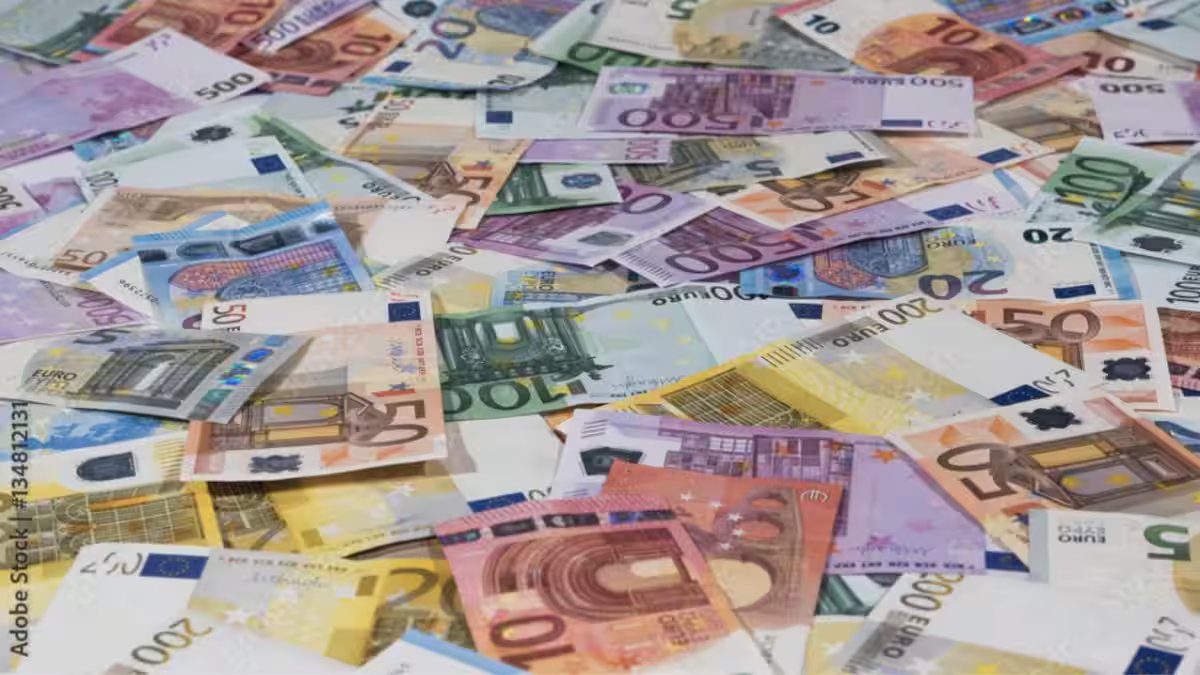
The euro launched on 1 January 1999 as an electronic currency for 11 founding nations including Germany, France and Italy, with physical notes entering circulation in 2002. Ten more countries joined since, from Greece in 2001 to Bulgaria in 2026, while Denmark and post-Brexit UK hold opt-outs.
The euro currency marks its 27th anniversary in 2026, having first appeared as an electronic and accounting unit on 1 January 1999. This single monetary standard replaced national currencies in many European nations, aiming to foster economic stability and integration within the European Union. Physical euro banknotes and coins followed two years later on 1 January 2002, completing the shift for everyday transactions.
Launch and original adopting members
The euro began with 11 founding countries that embraced it right away as a non-physical currency. These nations included Austria, Belgium, Finland, France, Germany, Ireland, Italy, Luxembourg, the Netherlands, Portugal and Spain. Each transitioned smoothly, locking in their economies to a shared monetary policy managed by the European Central Bank. This initial group laid the groundwork for what would become the eurozone, a bloc now central to European trade and finance.
Subsequent countries joining the eurozone
Over the years, 10 additional countries have joined the eurozone, all switching on 1 January of their respective adoption years. Greece became the 12th member in 2001, followed by Slovenia in 2007. Cyprus and Malta both entered in 2008, with Slovakia joining in 2009. Estonia adopted the euro in 2011, Latvia in 2014 and Lithuania in 2015. Croatia marked the most recent addition in 2023, bringing the total to 20 members. Bulgaria is set to become the 21st on 1 January 2026, after meeting strict economic criteria known as convergence standards. No nation has ever left the eurozone, despite past speculation such as the so-called Grexit for Greece, which never materialised.
Obligations and exceptions for EU members
Every European Union member state must eventually adopt the euro once it satisfies the necessary economic conditions, including low inflation, stable public finances and aligned interest rates. Denmark stands as the sole exception, holding a formal opt-out negotiated during the Maastricht Treaty that created the euro. The United Kingdom also secured an opt-out before its withdrawal from the EU in February 2020, ending any obligation to join. These arrangements reflect political negotiations that allowed certain countries to retain national currencies indefinitely.
EU nations yet to embrace the euro
Several EU countries remain outside the eurozone, having delayed adoption due to incomplete convergence steps or political choices. Sweden, the Czech Republic, Hungary, Poland and Romania continue to use their own currencies. These nations have met some requirements but face hurdles, often rooted in domestic politics or economic priorities that favour monetary independence for now. As the eurozone expands, pressure grows for these holdouts to align, though timelines depend on fulfilling the rigorous entry rules.
End of Article