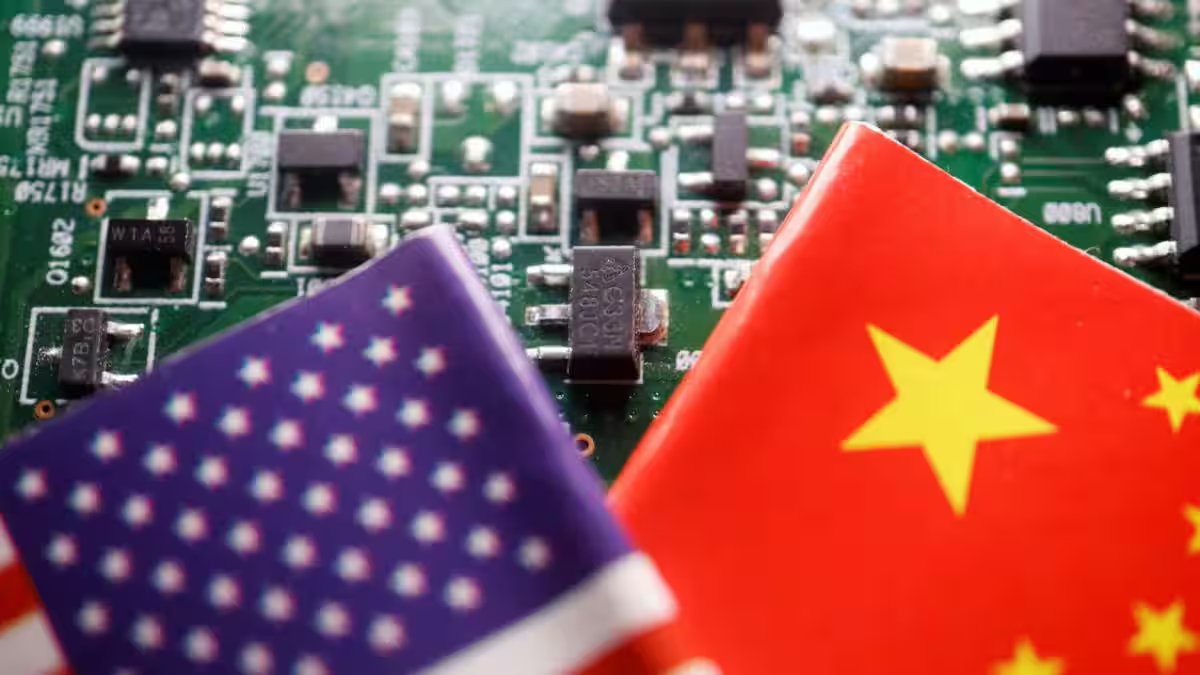
Under the new plan, the current additional tariff rate on targeted legacy chips remains at 0% for the next 18 months
The US is hitting pause on new tariffs for Chinese semiconductors, at least for now, showing just how much the trade relationship with China is shifting. Any new measures won’t come into play until at least mid-2027.
The decision comes as Washington continues delicate negotiations with Beijing following an informal trade truce struck between President Donald Trump and Chinese President Xi Jinping earlier this year, reported AFP.
The Office of the US Trade Representative (USTR) released the findings this week from a nearly year‑long investigation into China’s chip sector, a probe that was launched in the final weeks of the Joe Biden administration. The investigation concluded that China’s semiconductor policies amount to unfair trade practices that disadvantage US companies, but officials opted against immediate tariff escalation.
Under the new plan, the current additional tariff rate on targeted legacy chips remains at 0% for the next 18 months. Any future tariff hike is scheduled to take effect on June 23, 2027, with specific rates to be announced at least 30 days before implementation.
What’s behind the delay?
Officials say the decision is rooted in both economic and diplomatic calculations. Washington wants to maintain leverage, such as the ability to later impose tariffs, without derailing ongoing talks and fragile cooperation with Beijing. These talks have included agreements on rare earth exports and other trade matters, aimed at easing broader tensions that roiled markets earlier in 2025.
At the same time, existing broad tariffs, such as the 50% levies already in place on many Chinese semiconductors, will remain undisturbed. “China’s targeting of the semiconductor industry for dominance is unreasonable and burdens or restricts US commerce and thus is actionable,” the USTR said in its official release.
The semiconductor sector, which underpins everything from consumer electronics to advanced AI systems, has been at the heart of rising US–China competition. Industry leaders and policymakers alike are watching closely as Washington tries to balance economic security concerns with supply chain stability.
China’s government has been quick to push back. A spokesperson for the Chinese Foreign Ministry this week criticized the US position as an “indiscriminate use of tariffs” and said Beijing may take steps to protect its legitimate rights and interests if the US continues on its current path.
What’s next?
For now, the pause on new tariffs gives companies on both sides a reprieve and provides policymakers extra time to negotiate. Observers say it reflects a broader attempt by both Washington and Beijing to manage competition without tipping back into full‑blown trade conflict, even as strategic rivalry continues to shape technology policy.
End of Article