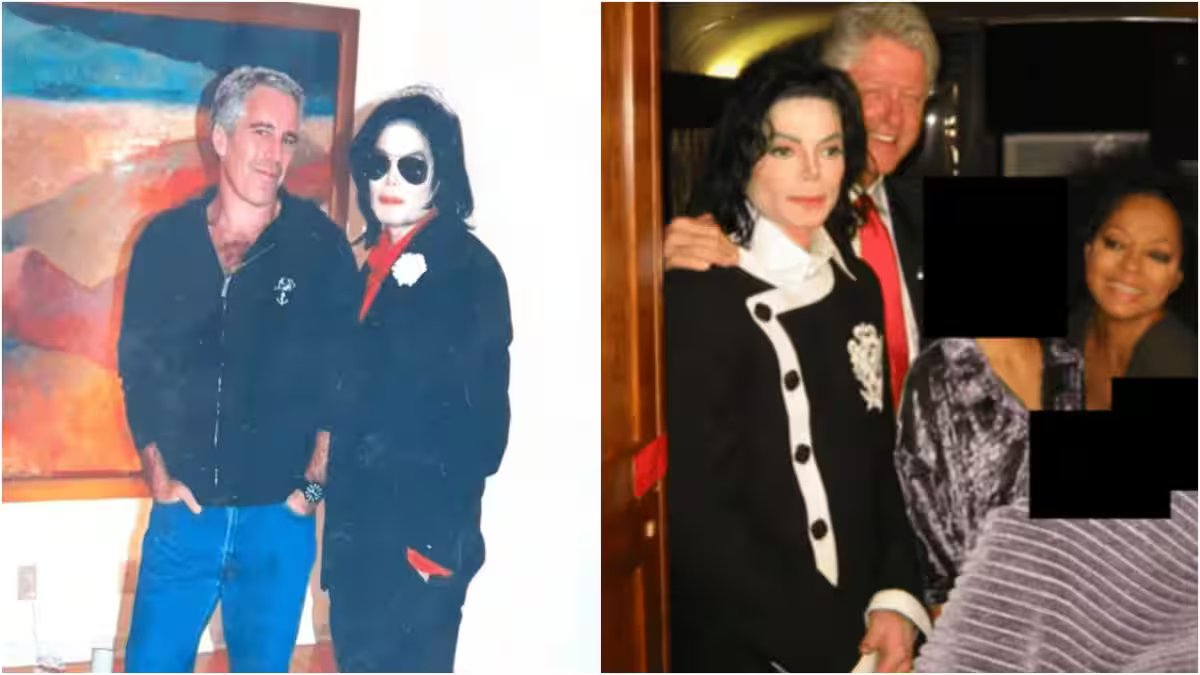
Newly released Epstein files include a photo of Michael Jackson with Jeffrey Epstein, but the late singer’s former bodyguard says the image is misleading and shows no substantive connection, dismissing online speculation as unfounded.
Newly released
US Department of Justice (DOJ) documents related to Jeffrey Epstein have once again put the late Michael Jackson in the spotlight, this time over an undated photograph showing the pop icon standing beside Epstein. The photo, unearthed in the government’s latest partial release of Epstein files, quickly went viral on social media and fuelled speculation about a connection between Jackson and the disgraced financier.
But Jackson’s former bodyguard, Matt Fiddes, who worked with the singer for nearly a decade, has pushed back strongly against any insinuation of wrongdoing. According to Fiddes, the image was taken around 2002–2003 during a brief visit to a property in Palm Beach that Jackson was considering viewing on a house-hunting trip, long before Epstein’s crimes were publicly known or prosecuted. Fiddes said in a social media comment that Jackson did not know who Epstein was, and called the idea of a connection “all nonsense.”
The photograph is one of many in the batch of contextualised, redacted images released under the Epstein Files Transparency Act, a recently enacted law requiring the DOJ to publish certain records. The files also include photos of Epstein with other high-profile figures, such as
former President Bill Clinton and Diana Ross, but provide no evidence of criminal behaviour linked to those pictured.
Fans of Jackson, known as Moonwalkers, have rallied online, defending the late entertainer and noting that publicly accessible photos of Jackson and Epstein have circulated for years without substantiating any personal or professional relationship. Supporters stressed that the image alone does not constitute evidence of closeness or complicity, and highlighted that Jackson’s legal history includes a full acquittal in a separate, extensive 2005 child abuse trial.
Critics of the DOJ rollout argue that releasing undated photos without context can unnecessarily fuel speculation, while advocates for transparency argue that even incomplete disclosures help shed light on Epstein’s deep networks. Regardless, no credible evidence has surfaced tying Jackson to Epstein’s criminal activities beyond the photograph itself.
End of Article


