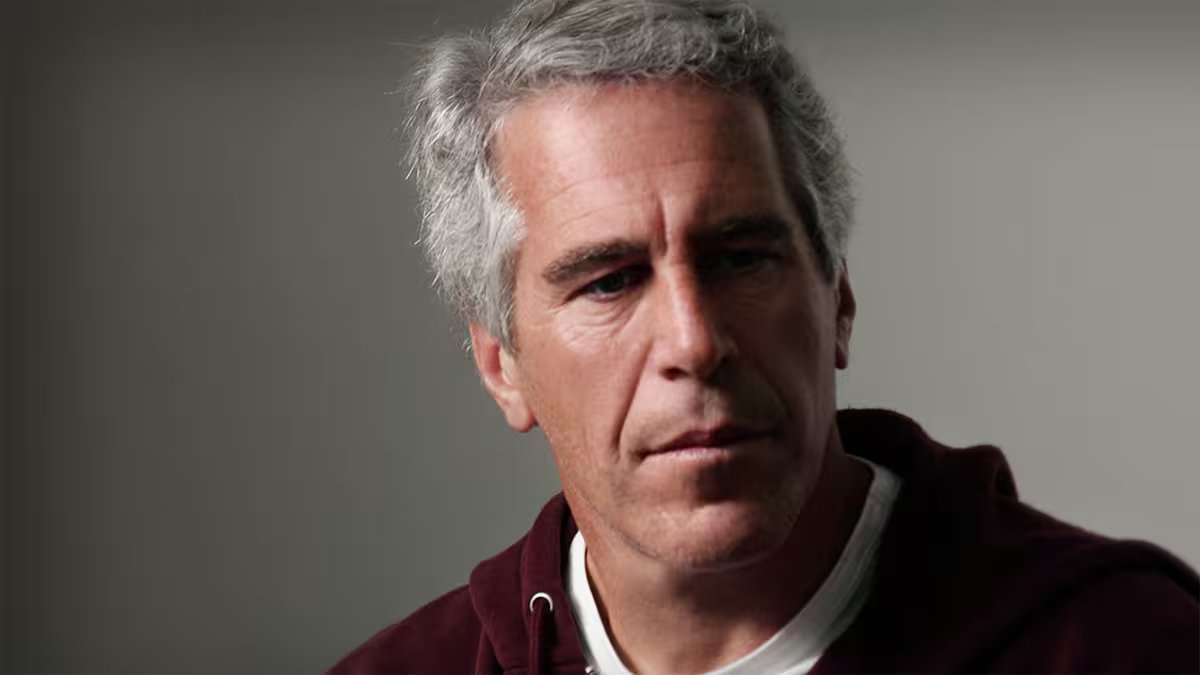
The U.S. Justice Department faces backlash after Epstein-related files vanished online and over 500 pages were heavily redacted, raising transparency concerns.
At least 16 files related to the Jeffrey Epstein investigation have mysteriously disappeared from the U.S. Department of Justice’s (DoJ) public document repository just hours after they were posted online, including a photograph reportedly showing former President Donald Trump alongside Epstein and Ghislaine Maxwell. The DOJ has provided no explanation or public notice for the removals, prompting immediate accusations of obfuscation from lawmakers and critics.
The
files were published on December 19 under the Epstein Files Transparency Act, a new federal law that required disclosure of all unclassified documents related to Jeffrey Epstein and his network by Dec 19, 2025. However, the initial release has been met with widespread frustration due to heavy redactions and missing material.
Investigative reports and independent analyses show that more than 500 pages of the released files are completely blacked out, with entire documents rendered unreadable. Some of these include potentially sensitive grand jury materials and key evidentiary records tied to Epstein’s broader network of associates.
Critics on both sides of the political aisle have seized on the missing files and sparse disclosures as evidence that the DoJ is not fully complying with the spirit, or the letter, of the transparency law. Survivors of Epstein’s abuse and their advocates have been particularly vocal, saying that the limited information and omission of key prosecutorial documents make it difficult to understand how Epstein repeatedly evaded more serious federal penalties during his lifetime.
Photos and documents that were released include snapshots of Epstein’s residences, seized evidence, and images of various public figures linked to him socially, including former British royalty and celebrities.
Nevertheless, many observers note that no definitive new evidence has emerged tying additional high-profile individuals to criminal wrongdoing in Epstein’s network.
What this means
The partial release and subsequent removal of files have reignited long-standing debates over accountability in the Epstein case. Advocates argue that full disclosure is necessary both to properly document how Epstein’s network operated and to address institutional failures by law enforcement agencies that may have allowed abuse to continue for years.
Why this matters
The Epstein Files are significant because they were expected to shed light on how Epstein avoided more severe federal prosecution for years. They would also help understand whether co-conspirators or facilitators played larger roles and whether political pressure influenced past legal decisions.
Survivors, legal experts, and some lawmakers say that without complete, unredacted access, the public and victims will never fully understand the scope of Epstein’s abuse or the extent of accountability among individuals and institutions involved.
As pressure mounts from Congress and civil rights groups, the DOJ has said additional batches of documents will be released in the coming weeks, but with the controversy over missing files and heavy redactions already fueling public distrust, the question remains whether much of the truth will ever be fully revealed.
End of Article