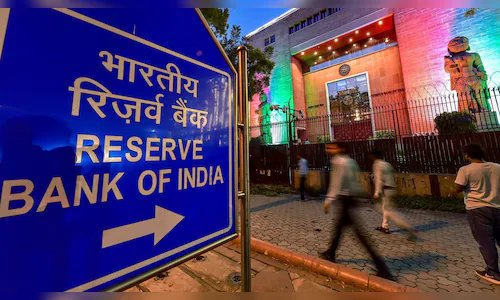
Minutes of the December policy meeting, released on December 19, show that inflation dynamics were central to the unanimous decision, even as the committee remained alert to global volatility and currency movements.
Speaking to CNBC-TV18, RBI MPC external member Saugata Bhattacharya said the space to act had opened up decisively after inflation fell well below forecasts.
“In October itself, the space had opened up because of low inflation, and then the even-lower-than-forecast undershoot of inflation further opened up space,” Bhattacharya said, underlining that his focus this time was much more on inflation than on growth.
Why overheating is not a concern
Despite strong headline growth in the first half of FY26, MPC members saw little evidence of demand-side overheating. Capacity utilisation in the economy remains around 74–75%, a level Bhattacharya said is well below the threshold at which inflationary pressures typically begin to build.
“To my mind, inflation overheating only begins when capacity utilisation approaches 80% or so,” he said, adding that household inflation expectations continue to remain well anchored.
This assessment helped assuage concerns that an easing move could stoke excess demand. With Q2 inflation at 1.7% and Q3 inflation forecast at just 0.6%, the committee felt that acting now would reduce the risk of monetary policy falling behind the curve, even though inflation is expected to rise somewhat in the final quarter of the fiscal year.
Inflation undershoot drives policy timing
The MPC’s deliberations reflect a growing comfort that current growth rates are consistent with macroeconomic stability. While India clocked around 8% growth in the first half of FY26, members noted that such growth has not translated into price pressures, reinforcing the case for a pre-emptive, measured rate cut.
Bhattacharya characterised the decision as balancing risks rather than responding to immediate stress. “We do not want to be seen to be behind the curve at this point in time,” he said, pointing to the unusual combination of robust growth and exceptionally low inflation.
Rupee driven more by growth than rates
The policy meeting also coincided with heightened volatility in the rupee, raising questions about whether external pressures constrained the MPC’s room for manoeuvre. Bhattacharya, however, suggested that currency movements did not play a central role in the decision-making process.
In his assessment, the empirics of the Indian rupee are influenced more by growth fundamentals than by interest rate differentials alone. While acknowledging that the external environment feeds into policy deliberations, he said these factors remain peripheral compared with the primacy of inflation targeting.
Also Read | RBI MPC flags growth priority, Governor Malhotra votes for rate cut as inflation stays low
At current repo rate levels, Bhattacharya said monetary policy remains well aligned with macroeconomic stability, including on the external front. This, in turn, gave the MPC confidence to use the space created by low inflation without destabilising the currency or financial markets.
Overall, the minutes and member commentary indicate a committee that is willing to act decisively when inflation undershoots sharply, while remaining cautious on overstimulating demand. The emphasis on slack capacity, anchored expectations, and growth-led currency dynamics underscores the MPC’s view that the latest rate cut is a prudent adjustment, not the start of an aggressive easing cycle.
Watch accompanying video for entire discussion.