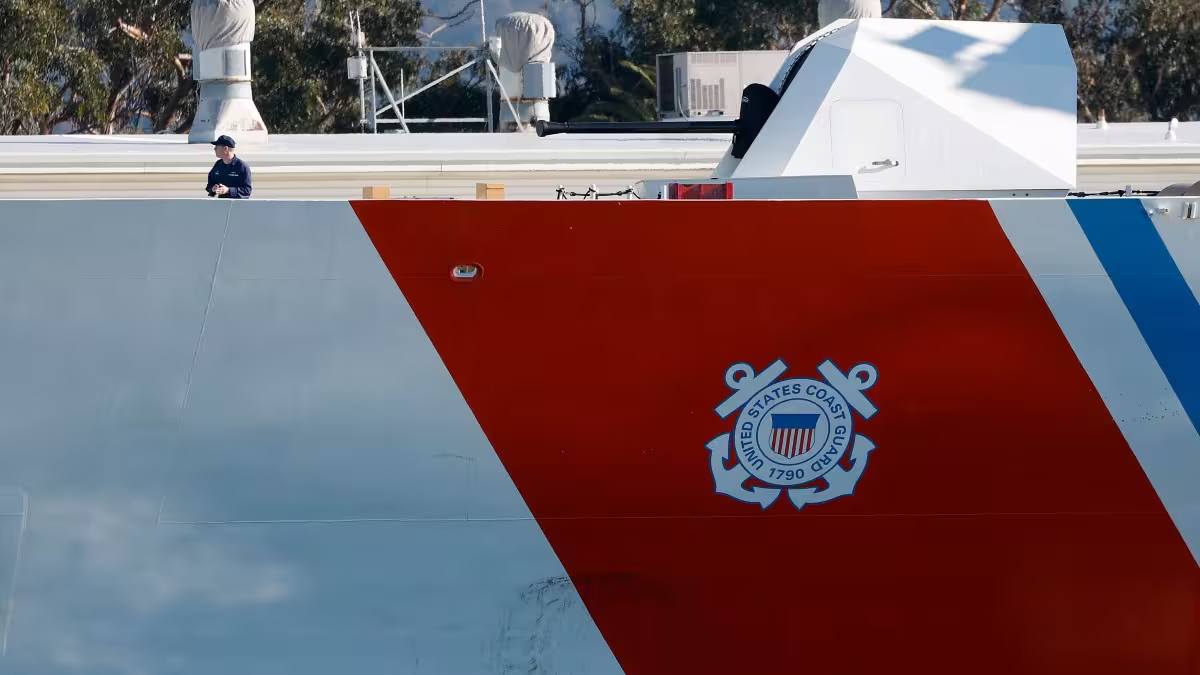
In a message to Coast Guard personnel, acting commandant Admiral Kevin Lunday said the revisions had been “completely removed” from the policy manual
The US Coast Guard has reversed course on its new workplace harassment policy, deleting language that had downgraded swastikas and nooses from overt hate symbols to “potentially divisive.”
In a message to Coast Guard personnel, acting commandant Admiral Kevin Lunday said the revisions had been “completely removed” from the policy manual.
A copy of the updated document reviewed by The Washington Post shows the relevant chapter blacked out in the table of contents, with readers directed instead to a separate manual outlining the service’s civil rights policies. Lunday also said a directive he issued last month explicitly banning swastikas and nooses “remains in full effect.”
Lawmakers lift holds after reversal
The move appeared to satisfy Sens. Tammy Duckworth and Jacky Rosen, who said they lifted their holds on Lunday’s nomination to serve as the Coast Guard’s full-time commandant following his announcement. Both had cited objections to the policy earlier this week when explaining why they blocked the nomination.
Lunday’s decision capped weeks of turmoil for the service after The Washington Post reported on plans to include the contentious language in the new manual, the Coast Guard’s pledge to reverse it amid widespread backlash, and its unexpected retention when the policy took effect earlier this week.
In late November, responding to the initial reporting, Lunday issued an order condemning and categorically prohibiting swastikas and nooses, saying the directive would supersede any other policy language. However, for reasons that remain unclear, that order was never incorporated into the manual.
Background, criticism and DHS response
The hazing and harassment policy became an early focus of Lunday’s tenure after the Trump administration, upon taking office in January, fired his predecessor, Admiral Linda Fagan, the first woman to lead a US military branch, citing, among other things, her “excessive focus” on diversity and inclusion initiatives.
Within days, Lunday suspended a prior policy that explicitly listed the swastika among symbols whose display “would constitute a potential hate incident,” a category that also included nooses and the Confederate flag. Lunday was later nominated by Trump to lead the service.
Homeland Security Secretary Kristi L. Noem said in a social media post that the language was being removed “so no press outlet, entity, or elected official may misrepresent the Coast Guard to politicise their policies and lie about their position on divisive and hate symbols.”
Neither DHS nor the Coast Guard has said whether Lunday had authority to change the manual on his own or whether DHS approval was required. The delay, particularly amid rising antisemitism, angered lawmakers from both parties, including Republicans who said Lunday had promised the wording would be cut before the policy took effect.
Several lawmakers objected to an official US government document describing swastikas, inseparable from the murder of millions of Jews in World War II, and nooses, a symbol of racial terror, as “potentially divisive.”
Sen. James Lankford was among those voicing disapproval over what his office called the Coast Guard’s “conflicting policies,” with a GOP aide saying Lankford raised the issue directly with the Trump administration and urged officials to revise the manual.
End of Article