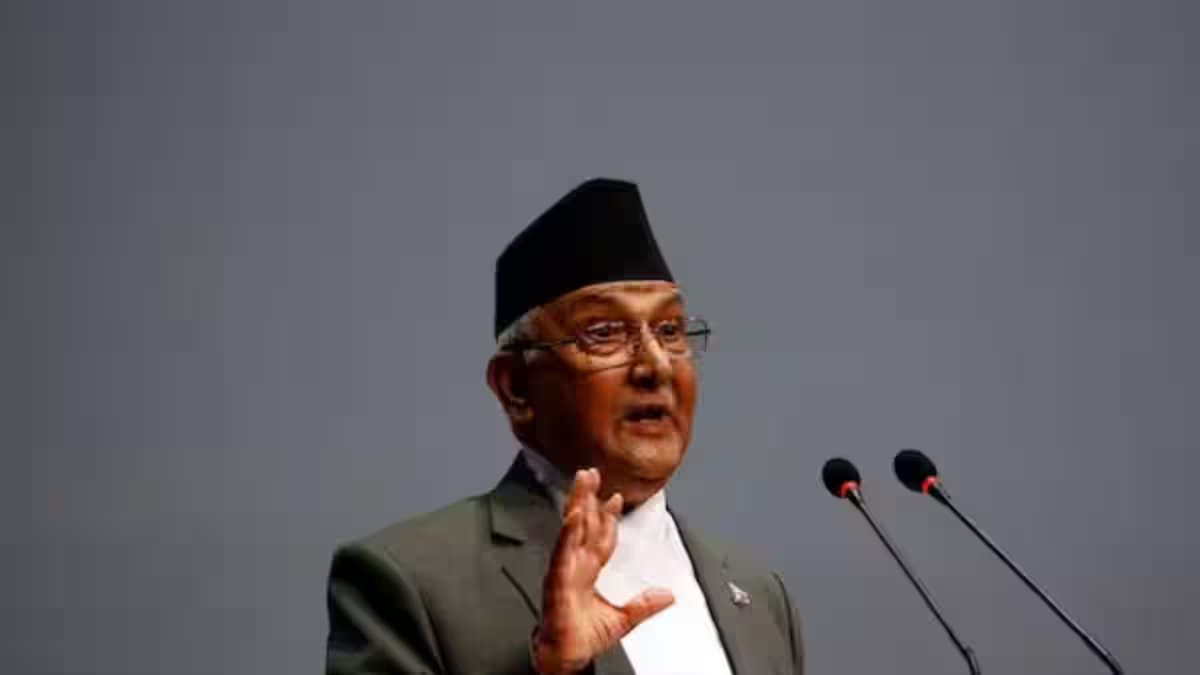
The leadership contest unfolded at the party’s 11th general convention in Kathmandu, where Oli secured a decisive victory with 1,663 votes out of 2,227 cast, compared with 564 votes for his sole challenger, Ishwar Pokharel
Months after massive youth-led protests toppled his government and plunged Nepal into political uncertainty, K.P. Sharma Oli has cemented his influence within the country’s main conservative force by winning a third consecutive term as chairman of the Communist Party of Nepal-Unified Marxist Leninist (CPN-UML).
The leadership contest unfolded at the party’s 11th general convention in Kathmandu, where Oli secured a decisive victory with 1,663 votes out of 2,227 cast, compared with 564 votes for his sole challenger, Ishwar Pokharel.
It simply means Oli still enjoys overwhelming support among party delegates.
Triumph after tumult
Oli has dominated CPN-UML politics for nearly a decade. He first rose to the chairmanship in 2015 and has since led the party through multiple leadership battles, overcoming rivals like Madhav Kumar Nepal and Bhim Rawal before.
But this year’s victory came under unusual pressure. In September 2025, tens of thousands of Nepalese, particularly young people, took to the streets in mass protests sparked by a controversial ban on social media platforms and deep frustrations with corruption and governance.
Known widely as the Gen Z protests, the protests forced Oli from the prime minister’s office and brought down his government.
During the party convention, some leaders had urged Oli to step aside, arguing that his continued leadership could damage the CPN-UML’s chances ahead of general elections set for March 2026. They said the youth movement’s call for generational change was a serious political signal.
Yet rank-and-file delegates clearly disagreed, handing Oli a strong mandate and sweeping nearly all key party positions to loyal allies. In the general secretary race, Shankar Pokharel—backed by Oli—won his post comfortably, while alternative factions captured only a handful of offices.
With this third term, Oli now leads the CPN-UML into a period of political uncertainty as Nepal’s interim government prepares for the scheduled 2026 elections. The former prime minister has rejected calls for immediate polls, instead focusing on restoring parliament — a move that may set up further clashes with the current interim leadership.
End of Article