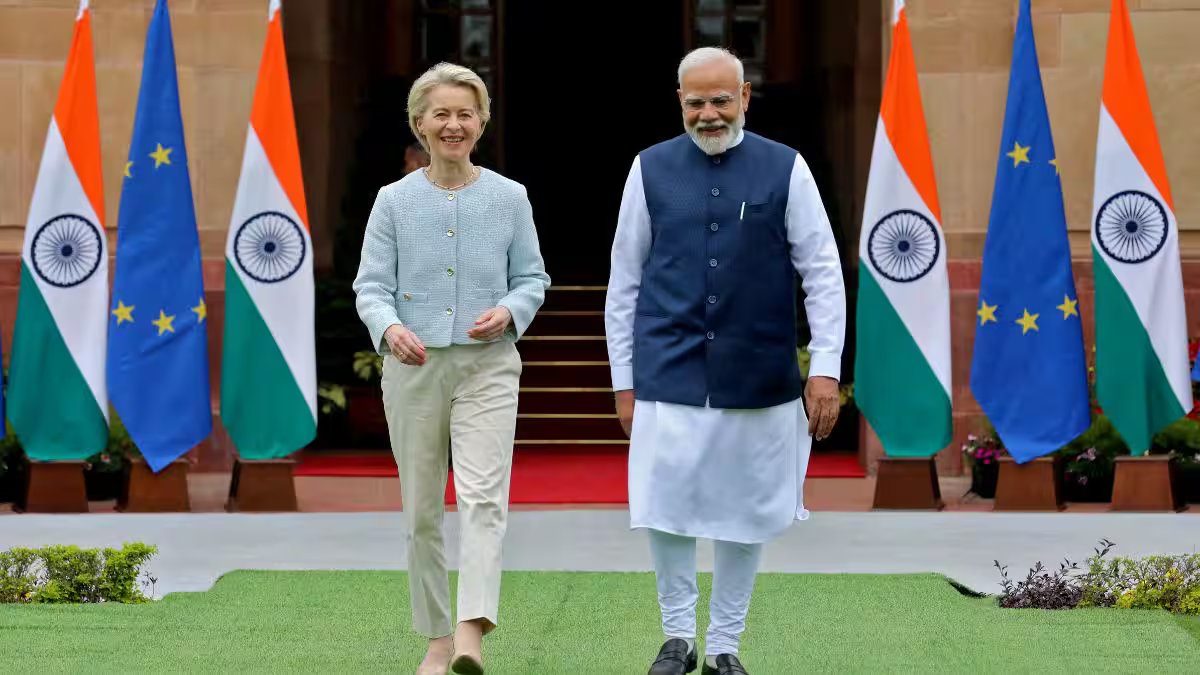
The India-EU trade talks will enter the new year and a deal is expected to be signed by the Republic Day, according to European Union (EU) trade chief Maros Sefcovic.
The India-EU trade talks will enter the year and a deal is expected to be signed by the Republican Day, the European Union’s (EU) top trade official has said.
“The plan is that, most probably in the second week of January, that [Indian Commerce Minister] Piyush Goyal would come here” for another round of negotiations, EU Trade Commissioner Maros Sefcovic told Politico on Monday.
Sefcovic further said, “There is a common determination that we should do our utmost to get to the [free-trade agreement] and use every possible day until the Indian national day.”
Initially, both India and EU had said that they expected to reach the trade deal by the end of the year, but numerous issues that have since cropped means that a deal is now expected by the January 26 when EU Commission President Ursula von der Leyen and EU Council President António Costa will arrive in New Delhi to join the Republic Day celebration as chief guests.
Sefcovic said that trade talks would have been ideally over by now but that has not been the case.
Last week, Sefcovic was in New Delhi to hold talks with Indian officials. In a coincidence, an American delegation was also in New Delhi last week for trade talks.
In the India-EU trade talks, among outstanding issues, India has raised objections to EU’s planned carbon border tax and steel safeguard measures and EU has sought reduction of India’s tariffs on cars.
Moreover, the EU has also sought reduction in duties on medical devices, wine, spirits, meat, and poultry, and sought an improved intellectual property rights (IPR) regime. On its part, India has sought relief from non‑tariff barriers like technical and regulatory compliance systems in addition to better access for Indian services and professionals with clearer rules of origin and customs procedures.
End of Article