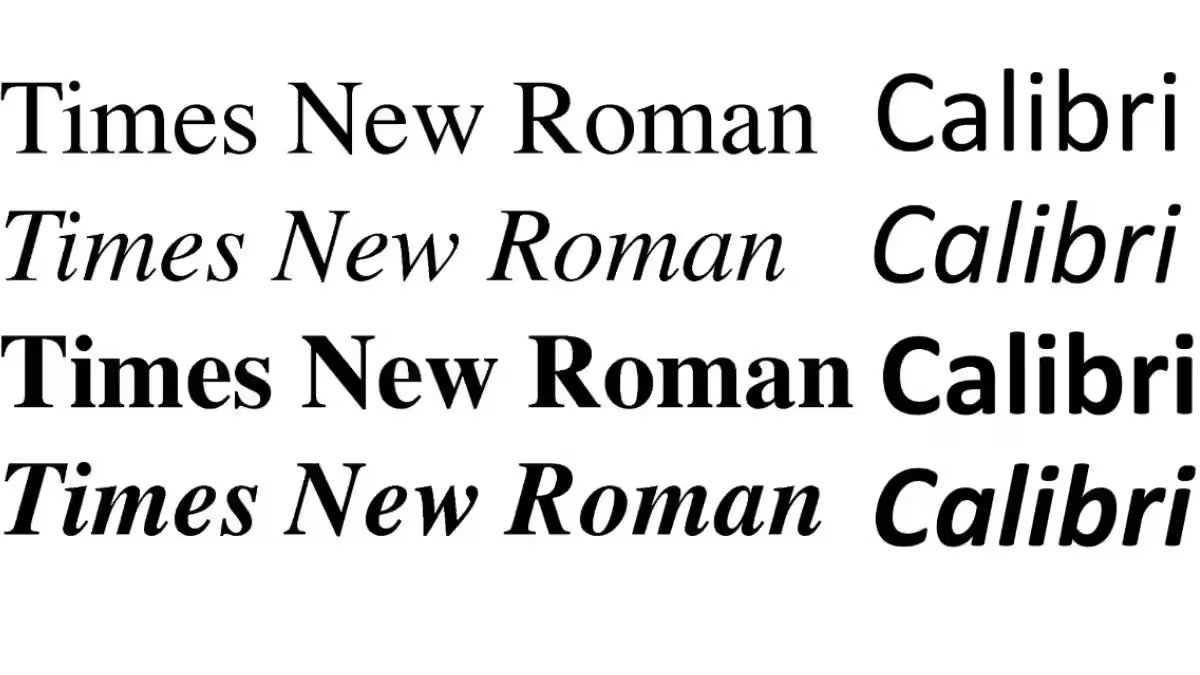
US Secretary of State Marco Rubio has ordered the State Department to ditch Calibri typeface and return to Times New Roman for all official documents. The Calibri font was introduced during the Biden administration to help people with visual disabilities read more easily
US Secretary of State Marco Rubio has ordered the State Department to ditch Calibri typeface and return to Times New Roman for all official documents, undoing a change made under the previous administration.
“To restore decorum and professionalism to the Department’s written work products and abolish yet another wasteful DEIA program, the Department is returning to Times New Roman as its standard typeface,” a cable sent to
US diplomats on Wednesday said, according to Reuters.
But what’s behind this sudden “font reversal”? And why was Calibri being used in the first place?
Here’s a simple breakdown.
How Calibri found its place in White House
The move undoes the Biden administration’s update to using Calibri in official department documents in 2023. They argued that people with visual disabilities could read it more easily since it is more pared down, lacking decorative features.
Calibri is a sans serif typeface, meaning it’s a cleaner font without any extra lines attached to the letters compared to Times New Roman. This can make it easier to read for people with dyslexia or vision problems, some experts say.
The decision to abandon Calibri on the grounds of it being a so-called ‘wasteful diversity font’ is both hilarious and regrettable,” creator of Calibri typeface, Lucas de Groot, told The Independent.
“Calibri was specifically designed to enhance readability on modern computer screens and was selected by Microsoft in 2007 to replace Times New Roman as the default font in the Office suite. There were sound reasons for moving away from Times: Calibri performs exceptionally well at small sizes and on standard office monitors, whereas serif fonts like Times New Roman tend to appear more distorted.”
“Serif fonts are often perceived as more traditional, but they are also more demanding to use effectively,” he added. “While a skilled typographer can, in theory, produce excellent results with Times, using it in its default digital form is not considered professional practice.”
Why is Trump switching back to Times New Roman?
The
Trump administration has ordered all official papers to return to Times New Roman, starting Wednesday.
According to the State Department spokesperson, the move aligns with the president’s “One Voice for America’s Foreign Relations” directive. The typeface, they said, is considered “more formal and professional.”
Supporters argue that serif flourishes make letters look more elegant and easier to distinguish, even if they add some visual clutter.
Serif fonts are also widely associated with tradition, ceremony and formality. Rubio’s order notes that Times New Roman has long been used by the White House, the Supreme Court, other government entities and even on the side of Air Force One.
Many diplomats, however, are unhappy. Morale has already taken a hit due to the changes Rubio has introduced at the department, reports The New York Times. Still, some traditionalists had earlier complained about the Biden administration’s shift to Calibri.
Blinken had also increased the standard font size from 14-point to 15-point, requiring extra keystrokes that some found annoying.
The reversal comes as President Donald Trump pushes to eliminate what he describes as “woke” and “
DEI” policies across the federal government.
In January, he signed an executive order to end “radical and wasteful government DEI programmes and preferencing.”
Since then, federal employees working on DEI initiatives have reportedly been placed on leave, and agencies have been urged to wind down such efforts.
Some actions, including attempts to curb DEI programmes in schools, have been struck down in court.
With input from agencies
End of Article