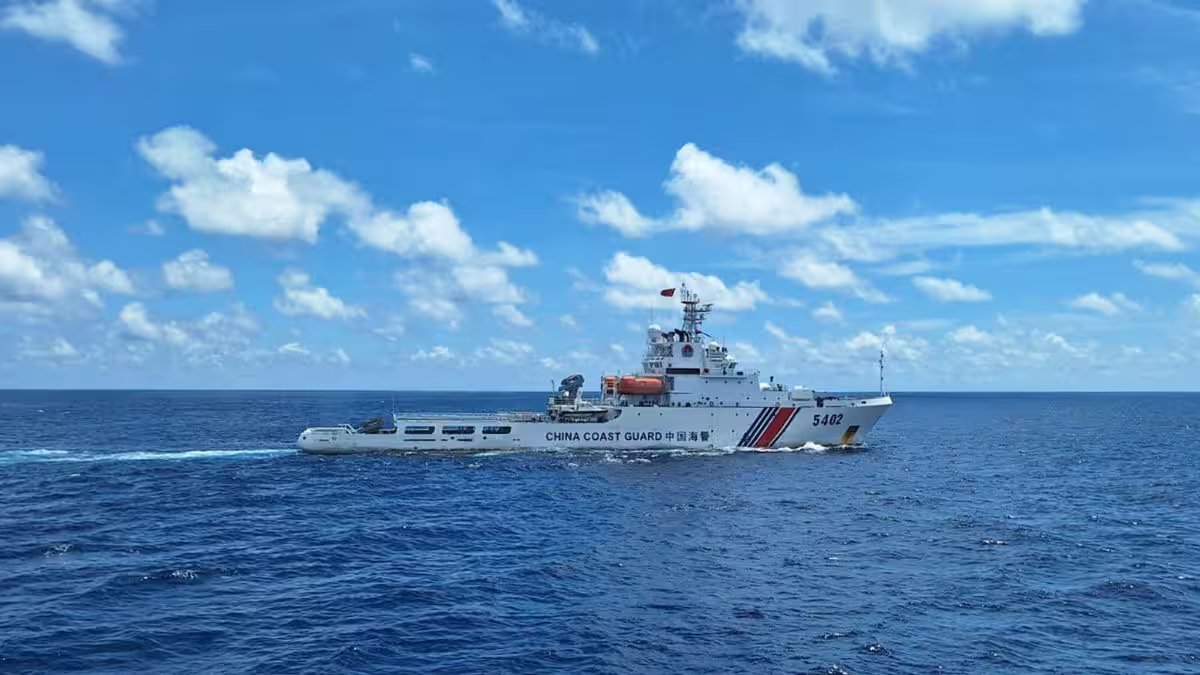
Chinese forces fired three flares from an island toward a Philippine plane undertaking a routine patrol Saturday in the disputed South China Sea, but the incident did not cause any problem and the aircraft proceeded with its surveillance mission, the Philippine coast guard said.
The Philippine coast guard reported on Saturday that a Chinese-held outpost in the disputed South China Sea fired three flares toward a Philippine surveillance aircraft during a routine patrol. Despite the incident, officials said the plane continued its mission without interruption.
The flares were launched from Subi Reef, one of the features occupied and fortified by China, though Philippine authorities said the exact distance between the flares and the aircraft—a Cessna Grand Caravan operated by the Bureau of Fisheries and Aquatic Resources—could not immediately be determined.
Beijing did not offer a comment on the episode. China claims almost the entire South China Sea and regularly warns foreign aircraft it believes are encroaching on what it asserts is its airspace. Its forces have in the past used flares from both island outposts and military aircraft to signal that other planes should leave the area.
According to the Philippine coast guard, which joined the fisheries bureau for the monitoring flight, onboard cameras captured the moment the flares were fired. The agencies said the plane was conducting a lawful overflight at the time.
“These flights aim to monitor the marine environment, assess the status of fisheries resources and ensure the safety and welfare of Filipino fishermen in the West Philippine Sea,” the coast guard said, using the Philippine name for the stretch of the South China Sea that Manila claims.
The Philippine patrol plane spotted a Chinese hospital ship, two Chinese coast guard ships and 29 suspected militia ships anchored in the waters off Subi, the Philippine coast guard said.
Subi is one of seven disputed and mostly submerged reefs which China turned more than a decade ago into what are now island bases in the Spratlys, the most hotly disputed region of the South China Sea. The artificial islands are protected by a missile system and three of them have military-grade runways, according to U.S. and Philippine security officials.
Aside from Subi, the Philippine patrol plane flew near six other disputed islands, reefs and atolls, including Sabina, an uninhabited disputed shoal, where it monitored a Chinese navy ship. “This vessel repeatedly issued radio challenges against the Bureau of Fisheries and Aquatic Resources aircraft while it was flying well within Philippine sovereign rights,” the Philippine coast guard said.
“All safe and mission accomplished,” Jay Tarriela of the Philippine coast guard said of Saturday’s surveillance flight.
The United States has no territorial claims in the sea passage but has patrolled the waters for decades and repeatedly warned it’s obligated to defend the Philippines, its oldest treaty ally in Asia, if Filipino forces come under an armed attack, including in the South China Sea.
Vietnam, Malaysia, Brunei and Taiwan have also been involved in the long-seething disputes in the resource-rich waters.
With inputs from agencies
End of Article