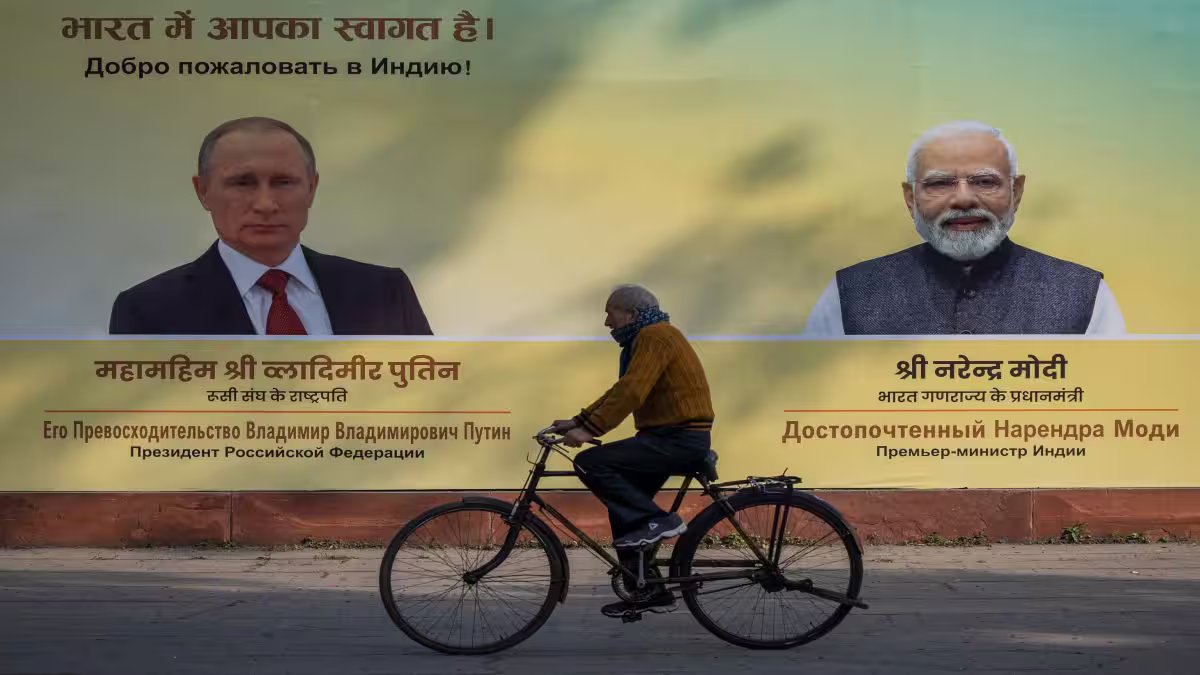
Today (December 4) is a big day for India with the world’s eyes on the Capital. The reason: Russian President Vladimir Putin will arrive this evening for a two-day State visit even as the West heaps pressure on Moscow to end the war against Ukraine.
The
Russian president is expected to arrive this evening in Delhi following which he will have a private dinner with Prime Minister Narendra Modi at his residence, 7 Lok Kalyan Marg. The official engagements between the two will be carried out tomorrow (December 5) during which several deals — ranging from defence to labour — are expected to be signed.
Ahead of his visit to India, Putin said that he will discuss expanding Indian imports to Russian markets, adding that Moscow intends to continue deepening economic engagement with its key partners, including India and China. Speaking at the VTB Investment Forum in Moscow on Tuesday evening, Putin said, “I and Prime Minister Narendra Modi will discuss Indian imports during the upcoming visit”, noting that bilateral trade volumes with both India and China have risen sharply over the past three years.
If you want to catch up on more of
Putin’s India visit, click here
As we await the Russian strongman’s arrival, let’s take a look at the big signings expected to be carried out.
A mega arms deal, including S-500s and Su-57 jets
When Russia’s Putin and India’s Modi sit down for talks,
defence cooperation will feature prominently in their discussions. After all, New Delhi’s defence cooperation with Moscow is a long-standing one, with the European giant being the country’s largest supplier of military hardware.
According to people in the know, talks on acquiring an advanced version of Russia’s S-400, the
S-500 Prometheus, are expected. India has been delighted with the performance of the S-400 air defence system during Operation Sindoor against Pakistan and seek to purchase more of this weaponry in order to boost national security.
Experts note that the S-500 is a more advanced version of the S-400, expanding air defence into the near-space layer. With an interception range of roughly 500–600 kilometre and a strike altitude of 180–200 km, it functions as a strategic, national-level shield, rather than a conventional battlefield system.
In addition to talks on the S-500, discussions will also be held on Russia providing the
Su-57 fighter jet to India. After retiring the MiG-21 earlier in September, the Indian Air Force is in need of aircraft to plug the gap.
Confirming that the Su-57 fighter jet is on the agenda, Kremlin spokesperson Dmitry Peskov said, “I have no doubt it will be discussed during the visit. The issue of Su-57s certainly will be on the agenda during the coming Putin visit to India.”
Earlier, Moscow also offered
unrestricted access to technology for the new fifth-generation Su-57 stealth fighter jet to Delhi. The company behind the Su-57 said that the proposal was that it would supply the jets initially, and along the way, production would shift to India.
Trade deals and a 2030 roadmap
Apart from defence deals, Putin and Modi are expected sign a programme for the development of strategic cooperation areas in the economy by 2030.
Moreover, it is learnt Putin and Modi are expected to sign deals under the trade basket through which Indian exports to Russia are expected to significantly increase in areas of pharmaceuticals, agriculture, food products and consumer goods.
The move comes amid concerns in New Delhi over a
ballooning trade deficit in favour of Russia. India’s annual procurement of goods and services from Russia amounts to around $65 billion, while Russia’s imports from India stand around $5 billion.
Officials said India is also looking at boosting cooperation in the fertiliser sector. Russia supplies three to four million tonnes of fertilisers to India annually.
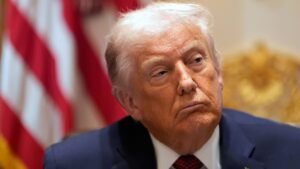
According to Ajay Srivastava of the Global Trade Research Initiative, New Delhi is also expected to pursue long-term crude contracts with non-US-sanctioned Russian firms. This comes as India has been sanctioned by US President Donald Trump for its purchase of Russian crude amid the Ukraine war.
Labour pact
One of the most significant agreements that Putin and Modi are expected to sign off on is mobility, allowing easier recruitment of Indian workers by Russia. This comes after officials on both sides completed negotiations on the labour mobility agreement.
This pact will establish a framework for legal migration, protection of workers’ rights and expansion of skilled Indian manpower in Russia, at a time when the nation is feeling an acute shortage of qualified and skilled workers.
According to sources, the agreement will ensure legal protection for existing Indian workers and open pathways for thousands of new professionals in industries such as construction, textiles, engineering and electronics.
Moscow-based Indian Business Alliance has praised this agreement, with its president Sammy Manoj Kotwani telling news agency PTI, “India has one of the world’s most dynamic and skilled workforce and Russia is undergoing a major industrial transformation. This agreement creates a win-win opportunity for both sides — providing skilled manpower for Russia’s economy while ensuring secure and dignified employment for Indian professionals.”
Deepening civil nuclear cooperation
Putin’s India visit will also see India and Russia deepening its civil nuclear cooperation. News agency PTI reported that the Russian Cabinet has cleared the signing of a memorandum of understanding (MoU) to deepen bilateral cooperation with New Delhi in civil nuclear energy during President Putin’s visit to the country on December 4-5.
The Kremlin’s spokesperson Dmitry Peskov said Rosatom CEO Alexei Ligachev will be carrying a whole portfolio of proposals, including for cooperation in building small modular reactors, to be tabled and expected to be signed at the summit talks in New Delhi.
RuPay–Mir cooperation
There are also reports that Putin and Modi may sign off on a deal, which sees the joining of RuPay and Mir. The Mir payments system, owned by a subsidiary of the Central Bank of Russia, was first envisioned as a replacement for Visa and Mastercard following Moscow’s invasion of Crimea in 2014.
Earlier, in February, India’s ambassador to Russia Vinay Kumar said, “The issue of accepting Russian Mir banking cards in India is under active discussion, with prospects for resolution appearing positive. Indian diplomatic and commercial missions are facilitating negotiations between India and Russia to establish mutual acceptance of the Mir payment system alongside India’s RuPay cards.”
However, there is a fear that India may face further Western scrutiny over this deal. In fact, the United States previously threatened to sanction foreign financial institutions connected to Russia’s Mir payments system.
We shall wait to see what are the actual big outcomes of Putin’s visit to India, but for now there’s excitement in Delhi ahead of the Russian leader’s arrival. s
With inputs from agencies
End of Article