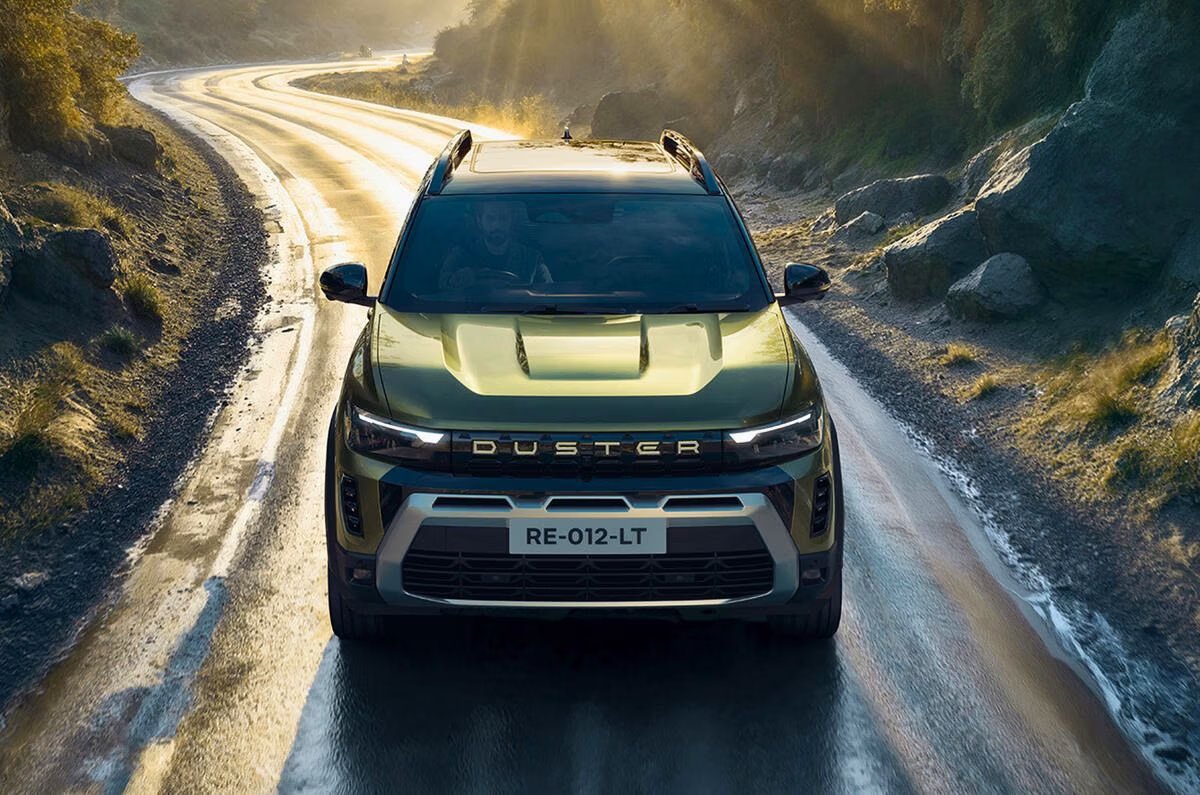
Renault is finally gearing up for a proper comeback in India, and the next-generation Duster is set to lead that charge. The new Duster will take on rivals like the Tata Sierra, Hyundai Creta and Kia Seltos, while also going up against strong hybrid competitors such as the Toyota Hyryder, Maruti Suzuki Grand Vitara and Victoris. Apart from the turbo petrol engines that were expected, Renault has also confirmed that the new Duster will be offered with a strong hybrid powertrain from Diwali 2026 onwards. Called the E Tech system, Renault says it draws from its experience and expertise in Formula 1.
Renault Duster strong-hybrid engine: everything you should know
The strong hybrid Duster uses a naturally aspirated 1,789cc four-cylinder petrol engine paired with two electric motors, one acting as a generator and the other driving the wheels. Combined, the system produces 154.2PS and 172Nm, and is supported by a 1.4kWh battery pack.
Unlike the Toyota hybrid system seen on the Hyryder, Grand Vitara and Victoris, Renault’s E Tech setup works differently. The Duster’s hybrid combines a petrol engine with electric drive and a battery, and sends power to the wheels through a multi-mode automatic gearbox. While Toyota’s full hybrid uses an e-CVT and a power split device for a largely step-free driving feel, Renault’s hybrid transmission uses fixed gear ratios and can shift between them. This means engine rpm is expected to rise and fall more like a conventional automatic, and you may notice gear engagements as it switches between electric drive, engine drive, or a combination of both. It also uses a larger 1.4kWh battery pack compared to Toyota’s 0.76kWh unit.
As with any full hybrid, the efficiency gains come from low-speed electric running, regenerative braking, and the ability to keep the petrol engine off when it is not needed. However, real-world fuel economy will still depend on traffic conditions, speed, ambient temperature and driving style.
However, the
Other engine options
The strong hybrid is expected to help make up for the absence of a diesel engine option on the new Duster. However, hybrid tech is not cheap, which is why Renault will also offer two more straightforward turbo petrol engines.
The first is the familiar 1.0-litre turbo petrol engine seen on the Nissan Magnite. It makes 100PS and is expected to be offered with either a 6-speed manual or a CVT automatic. The second option will be the more powerful 1.3 litre four cylinder turbo petrol engine, producing 163PS and 280Nm. While its power figure is close to that of the strong hybrid, it stands out with a much stronger torque output. This engine will be paired with a 6-speed DCT gearbox.